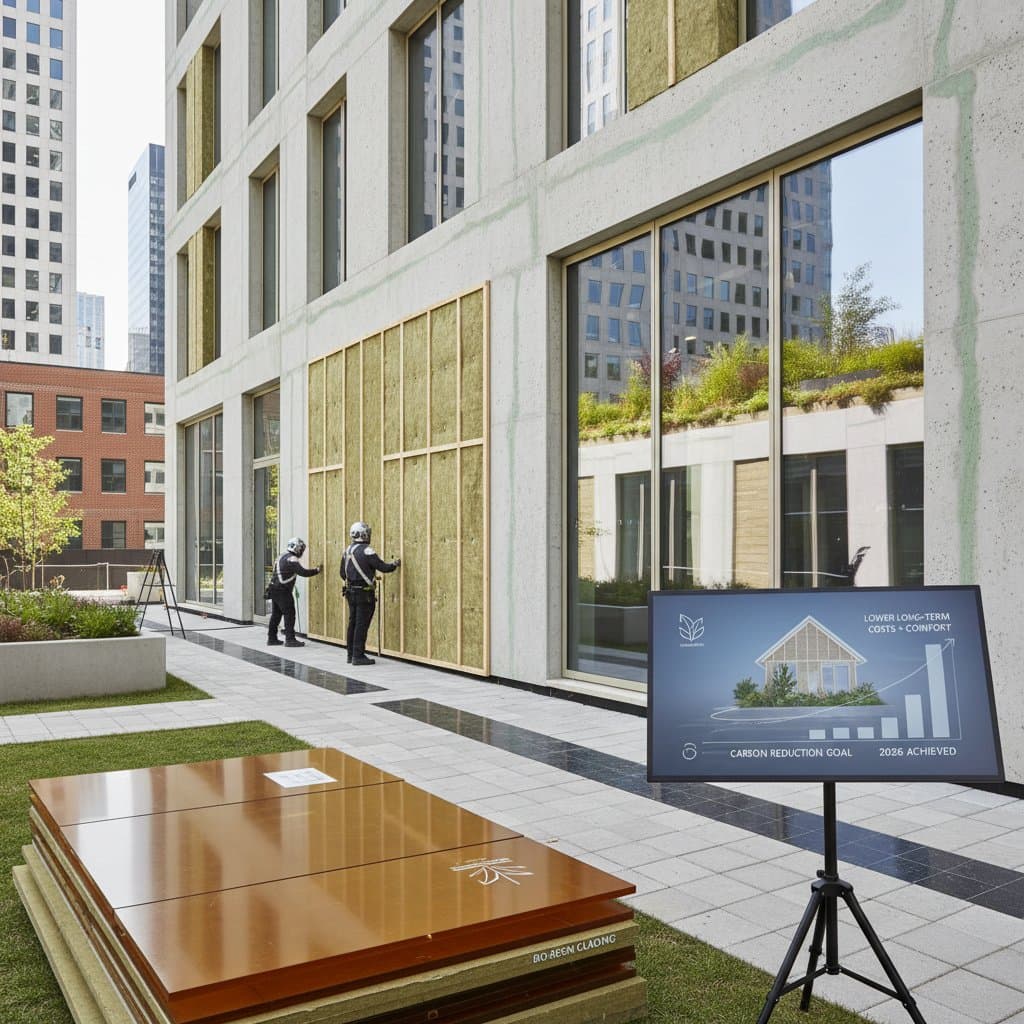
The Future of Building: Carbon-Neutral Costs in 2026
Envision entering a newly constructed home that exudes freshness, solidity, and tranquility, with every structural element designed in harmony with the planet. Building materials evolve rapidly, often outpacing general awareness. Discussions with contractors and suppliers increasingly focus on achieving carbon neutrality without exceeding financial limits.
The Challenge of Achieving Carbon Neutrality
For those planning renovations or new constructions, the phrase carbon-neutral appears frequently. This objective, once ambitious, now proves feasible. The construction sector advances toward materials and techniques that offset or eliminate carbon emissions entirely. Homeowners must consider the implications for budgets and decision-making processes.
Conventional concrete, steel, and insulation carry substantial carbon footprints. Production and transportation demand significant energy, while curing and processing release carbon. Transitioning to sustainable alternatives involves more than substituting products; it requires reimagining home design and construction methods.
Key Carbon-Neutral Materials
Carbon-neutral materials achieve equilibrium by balancing emissions from production against absorption, reuse, or offsets. Prominent innovations include concrete blends with recycled aggregates that sequester carbon rather than emit it. Certain manufacturers develop concrete that captures carbon dioxide during the curing phase. Such materials deliver performance comparable to traditional mixes, often with refined surface qualities.
Several notable options gain traction in regional markets:
- Carbon-neutral concrete: Incorporates recycled aggregates and carbon-injected curing processes to sequester emissions.
- Cross-laminated timber: A renewable wood alternative robust enough for load-bearing applications.
- Recycled steel: Minimizes waste and energy consumption in manufacturing.
- Bio-based insulation: Derived from sources such as hemp, wool, or cellulose, providing breathable and thermally efficient barriers.
These selections diminish a project's overall carbon impact while preserving strength and longevity.
Cost Analysis and Projections
Initial expenses for carbon-neutral materials exceed those of conventional choices. For instance, a cubic yard of carbon-neutral concrete may incur a modest premium over standard varieties. Recycled steel and bio-based insulation similarly elevate upfront costs. However, enduring benefits arise from diminished energy demands, superior durability, and available tax incentives across numerous jurisdictions.
Consider these expense categories:
- Concrete alternatives: Anticipate a slight elevation in price, typically less than expenditures on high-end finishes.
- Timber framing: Cross-laminated timber streamlines installation through prefabricated panels, reducing labor requirements.
- Insulation enhancements: Bio-based variants command higher per-square-foot rates yet substantially decrease heating and cooling expenditures.
- Integrated energy systems: Combining these materials with advanced HVAC or solar installations amplifies financial returns.
In one project, the adoption of recycled wood fiber insulation incurred additional initial outlay, but it ensured consistent thermal performance during cold seasons, justifying the expense through heightened comfort and reduced noise.
Actionable Steps for Homeowners
To pursue carbon-neutral objectives in building or renovation, proceed incrementally and strategically. Comprehensive overhauls prove unnecessary; prioritize elements with the greatest influence, such as concrete foundations and wall insulation, then expand accordingly.
Implement these steps:
- Engage regional suppliers: Inquire about carbon-neutral concrete or recycled options available locally. Numerous facilities now offer eco-friendly product ranges.
- Verify certifications: Seek Environmental Product Declarations or equivalent validations to substantiate sustainability assertions.
- Optimize design for efficiency: Strategic orientation, ample natural lighting, and effective ventilation inherently lower emissions.
- Incorporate reuse: Integrate salvaged wood, heritage fixtures, or reclaimed stone to enhance uniqueness and curb waste.
- Select durable finishes: Opt for long-lasting materials that require infrequent replacements, thereby reducing cumulative carbon emissions.
The Distinct Experience of Carbon-Neutral Homes
Beyond metrics of emissions and finances, carbon-neutral construction fosters a unique living environment. Improved indoor air quality, natural material aesthetics, and stronger spatial connections emerge as hallmarks. Surfaces may weather gracefully, and thermal consistency prevails throughout daily cycles. These nuances elevate overall comfort and serenity.
The application of lime-based plaster, for example, imparts a subtle, matte finish to walls that interacts elegantly with ambient light, blending contemporary style with inherent stability.
Regional Developments and Support Resources
Various locales cultivate robust ecosystems for carbon-neutral practices. Suppliers innovate with eco-conscious concrete formulations and plant-derived insulation. Consult building supply outlets or engage contractors versed in sustainable methods. In select areas, enterprises produce carbon-sequestering blocks or hemp composites at competitive rates.
To observe these innovations firsthand, attend regional sustainable home tours or construction expositions. Direct interactions with practitioners reveal real-world performance insights. Experiencing carbon-capturing concrete in practical settings bridges conceptual understanding with tangible application.
Sustained Benefits of Thoughtful Choices
Upon completion of a carbon-neutral home or renovation, the selected strategies yield ongoing advantages. Diminished maintenance demands, reduced utility expenses, and a salubrious setting integrate into routine existence. This evolution in building transcends fleeting trends; it cultivates environments attuned to planetary well-being.
Progress requires no grand overhaul. Initiate with a single material, enhancement, or refined procedure. Each choice accumulates impact. In the realized space, the alignment of sensory pleasure with ecological responsibility affirms that carbon neutrality represents accessibility rather than extravagance.