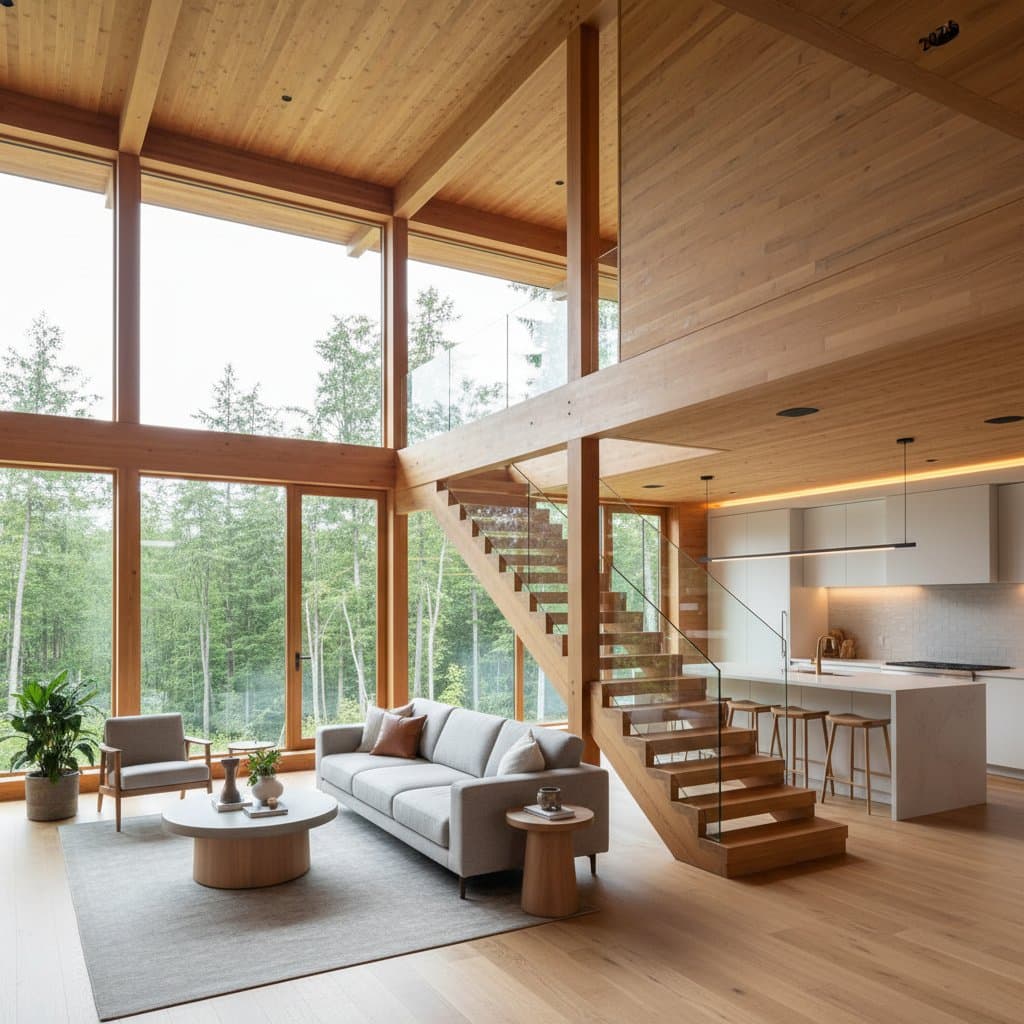
Understanding Mass Timber in Residential Construction
Mass timber represents an innovative approach to building materials, particularly for multi-story homes. This engineered wood product consists of layers of lumber glued together under pressure, creating strong structural elements. Builders use it to construct walls, floors, and roofs that rival traditional steel or concrete in performance.
Cross-laminated timber, or CLT, forms the backbone of mass timber applications. Panels made from this material stack alternating grain directions for enhanced stability. Homeowners benefit from structures that withstand heavy loads while maintaining a lightweight profile.
The shift toward mass timber addresses longstanding challenges in urban housing. Developers now erect taller residences with fewer resources, opening possibilities for denser, greener communities.
Key Advantages: Streamlined Construction Processes
One primary benefit of mass timber lies in its ability to accelerate building timelines. Prefabricated panels arrive on site ready for assembly, much like large-scale puzzle pieces. Teams stack and connect these components in days, rather than weeks, cutting overall project duration by up to 30 percent.
This efficiency stems from off-site manufacturing. Factories produce precise elements under controlled conditions, minimizing weather delays and on-site errors. For a three-story home, workers might complete the frame in under a week, allowing quicker progression to interior finishes.
Beyond speed, mass timber reduces labor demands. Fewer workers handle heavy lifting, as panels weigh less than equivalent concrete slabs. This approach not only lowers costs but also enhances worker safety through simplified installation methods.
Environmental Impact: A Path to Lower Carbon Footprints
Mass timber significantly cuts carbon emissions compared to conventional materials. Wood sequesters carbon during growth, locking it into building components for decades. A typical CLT panel stores more carbon than the energy required to produce it, creating a net positive environmental effect.
Construction with mass timber generates 45 percent less embodied carbon than steel frameworks. This metric includes emissions from harvesting, processing, and transportation. Builders avoid the high-energy demands of concrete curing, which releases substantial greenhouse gases.
Long-term sustainability extends to energy efficiency. Mass timber homes insulate naturally, reducing heating and cooling needs by 20 to 30 percent. Homeowners enjoy lower utility bills while contributing to broader climate goals through durable, recyclable structures.
Aesthetic and Livability Enhancements
Mass timber introduces a unique warmth to residential interiors. Exposed wooden surfaces create serene, biophilic environments that promote well-being. Unlike cold concrete finishes, CLT panels offer a tactile, natural texture that integrates seamlessly with modern design.
Designers leverage the material's versatility for custom features. Curved elements or intricate joinery become feasible, allowing personalized home layouts. A multi-story residence might feature open-plan living areas with wooden beams that visually connect floors.
Acoustic benefits further elevate livability. Mass timber absorbs sound effectively, dampening noise in urban settings. Families in dense neighborhoods experience quieter spaces, fostering relaxation and productivity.
Practical Steps for Implementing Mass Timber
Homeowners interested in mass timber begin by consulting certified architects familiar with wood engineering. These professionals assess site conditions and zoning regulations to ensure compliance. Early planning identifies opportunities for hybrid designs, blending timber with other materials for optimal results.
Next, select reputable suppliers who adhere to sustainability standards. Verify that timber sources from responsibly managed forests to maintain ecological integrity. Prefabrication timelines require coordination with contractors experienced in modular assembly.
Budgeting plays a crucial role. Initial costs may align with traditional methods, but long-term savings from efficiency offset investments. Factor in incentives like green building rebates that support eco-friendly projects.
- Evaluate local building codes for height limits on timber structures.
- Conduct a feasibility study to compare material options.
- Partner with engineers to model seismic and fire performance.
- Monitor progress with digital tools for prefabricated components.
Emerging Trends and Projections for 2026
By 2026, mass timber adoption in residential projects will expand rapidly. Advances in fire-retardant treatments address safety concerns, enabling taller builds in seismic zones. Cities worldwide update codes to accommodate wood high-rises, spurring innovation.
Hybrid systems combine mass timber with steel reinforcements for enhanced durability. These configurations support five- to ten-story homes, ideal for affordable housing initiatives. Manufacturers invest in automation, further reducing costs and waste.
Global supply chains strengthen as more regions certify sustainable forestry. This growth ensures accessible materials for diverse markets, from suburban developments to urban infills. The trend signals a broader movement toward regenerative building practices.
Realizing the Value of Mass Timber Homes
Choosing mass timber delivers multifaceted returns for homeowners and communities. Quicker builds free up resources for community enhancements, while lower emissions align with planetary health imperatives. The natural allure of wood fosters enduring spaces that evolve with residents.
Investors recognize the material's role in resilient portfolios. Properties with mass timber command premiums due to energy savings and market demand for green features. This choice positions homes as assets in a sustainable future.
Ultimately, mass timber bridges tradition and progress. It revives wood's historical prominence in construction while meeting contemporary demands for efficiency and ecology. Families secure legacies in structures that stand strong and breathe easy.