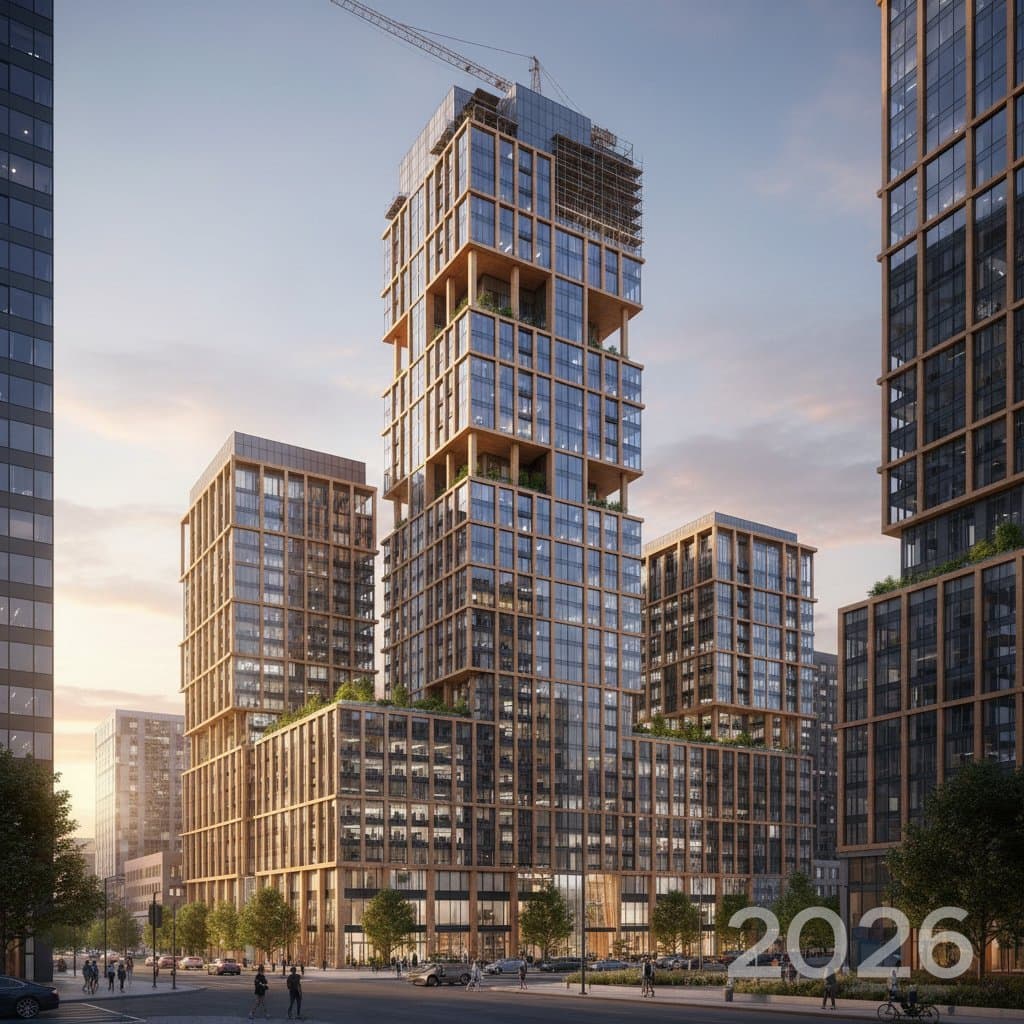
TL;DR / KEY TAKEAWAYS
- Mass timber towers receive expanded code approvals, paving the way for taller and more sustainable high-rise developments.
- Cross-laminated timber (CLT) and glulam revolutionize the construction of mid- and high-rise buildings with enhanced efficiency.
- Builders, designers, and homeowners will observe increased integration of wood in urban skylines, supported by rigorous engineering and safety validations.
Highlights
- Mass timber consists of engineered wood panels designed for superior strength and fire resistance.
- Updated code approvals permit greater building heights and expanded footprints.
- CLT serves as the primary material, frequently combined with glulam beams for structural support.
- Construction with mass timber yields quicker timelines, inviting aesthetics, and reduced environmental impact.
Reasons for Enthusiasm Surrounding Taller Timber Towers
The appeal of taller timber towers stems from a blend of practical advantages and environmental benefits. Concrete and steel have dominated construction for decades, yet they incur substantial carbon emissions. Mass timber reverses this trend by sequestering carbon within the wood, while sourcing from sustainably managed forests maintains ecological balance.
Beyond sustainability, mass timber offers construction efficiencies. Panels undergo prefabrication off-site, arrive prepared for assembly, and install with limited waste generation. This process resembles assembling a large-scale, precision-engineered puzzle, streamlining project timelines.
During a visit to a mid-rise timber construction site, the team exceeded schedule expectations by several weeks. The superintendent remarked, “We are building faster and cleaner than we ever did with concrete.” Such experiences highlight the material's transformative potential.
Challenges in Mass Timber Construction
Innovations like mass timber present obstacles that require attention. These issues, however, prove surmountable with proper planning.
Key challenges include:
- Supply chain reliability. Access to CLT and glulam production varies by region, and transportation may increase expenses.
- Fire safety perceptions. Although tests demonstrate that mass timber chars protectively rather than burns rapidly, some building officials require additional reassurance.
- Contractor expertise. Teams accustomed to traditional methods may lack familiarity with prefabricated wood systems, necessitating targeted training.
- Moisture management. Wood's affinity for absorbing water demands vigilant weather protection throughout the construction phase.
Progress accelerates as projects accumulate knowledge, with teams exchanging insights to refine techniques and overcome barriers.
Safety Considerations for Tall Mass Timber Buildings
Mass timber proves safe for high-rise applications, thanks to advanced engineering principles. Panels feature sufficient thickness; during a fire, the exterior chars, insulating the interior core and substantially slowing combustion.
Extensive fire testing confirms that CLT sustains structural stability longer than conventional wood products. Integration with contemporary sprinkler systems further fortifies the building's safety profile.
A fire engineer once explained, “People imagine kindling, not a solid log.” This analogy underscores the distinction: mass timber represents dense, engineered material subjected to rigorous extreme-condition evaluations, far removed from ordinary lumber.
Planning Connections in Mass Timber Projects
Effective joints form the foundation of mass timber success. Bolts, plates, and concealed connectors ensure seamless integration. In one project, selecting an optimized connector variant accelerated installation by several days, demonstrating the value of deliberate design choices.
Implications for Homeowners and Smaller-Scale Builders
Mass timber extends beyond skyscrapers to influence residential and community projects. Developers of boutique apartments, townhouses, and civic centers increasingly adopt this material for its versatility.
Consider a multi-family residence evoking a contemporary cabin atmosphere, or a backyard studio erected from CLT panels within days. These applications bring the warmth and personalization of wood to modest scales, mirroring the innovations driving taller structures.
FAQ
Q: What heights can mass timber buildings achieve under the new codes?
A: The updated regulations support substantially greater elevations, rendering multi-story residential and commercial edifices entirely feasible.
Q: Does mass timber cost more than concrete or steel?
A: Initial material expenses may exceed those of alternatives, yet reductions in labor, accelerated timelines, and lighter foundation requirements frequently offset the difference.
Q: What maintenance does mass timber demand?
A: After enclosure and protection, it functions comparably to other structural materials. Regular inspections and humidity management preserve its condition.
Q: Is mass timber suitable for seismic areas?
A: Affirmative, with notable effectiveness. Wood's inherent flexibility aids in absorbing and dissipating seismic energy, a feature appreciated by structural engineers.
Integrating Mass Timber into Future Projects
As code approvals take effect in 2026, mass timber positions itself as a cornerstone of sustainable urban growth. Builders gain tools for efficient, low-carbon construction, while cities benefit from resilient, aesthetically pleasing developments. Professionals should evaluate local supply options and partner with experienced engineers to capitalize on these advancements, fostering environments that harmonize human needs with planetary health.