Quick Overview
- A 2-1 buydown provides a reduced mortgage interest rate that increases gradually over the initial years, resulting in significant early savings.
- Builders or lenders generally fund this benefit as an incentive for buyers.
- This approach can reduce interest and payments by about $18,000 in the first two years, offering financial flexibility during the transition to homeownership.
Current Market Drivers for 2-1 Buydowns
Builders promote 2-1 buydowns to accelerate home sales in environments with elevated interest rates. High rates often deter potential buyers, leading to hesitation. This buydown delivers instant payment relief without requiring a reduction in the home's listing price.
In my professional experience collaborating with builders, they prefer to assist with monthly payments rather than decrease the sale price. Such a strategy maintains stable neighborhood valuations while delivering substantial value to buyers. The builder or lender advances a portion of the interest upfront, allowing buyers to transition smoothly to the full rate later. This arrangement benefits both parties: buyers receive affordable entry payments, and sellers achieve quicker transactions.
To illustrate, consider a $400,000 mortgage at a 7 percent note rate. Without the buydown, the first-year payment might total $2,661 monthly, including principal, interest, taxes, and insurance. With the 2-1 buydown, it drops to approximately $2,261 in year one and $2,461 in year two, yielding those notable savings.
Common Pitfalls to Avoid with a 2-1 Buydown
The primary error occurs when buyers view the reduced payment as a long-term feature. The interest rate rises after the initial two years, so thorough financial planning proves essential.
Consider these key precautions:
-
Avoid reallocating savings unwisely. The monthly reduction, often $400 to $500, may encourage unnecessary spending on lifestyle enhancements. Direct these funds into a dedicated savings account instead. This practice builds a buffer for the upcoming payment increase.
-
Verify the funding source. The buydown must originate from the seller, builder, or lender without drawing from buyer funds. If a proposal suggests incorporating it into the loan balance, reject it as an authentic incentive.
-
Evaluate refinancing possibilities. Should market rates decline within two years, refinancing before the full rate applies could secure a lower permanent rate. Discuss this option with your lender during the loan process.
-
Examine all loan documents carefully. Confirm the exact timing and mechanics of payment adjustments. Request a detailed amortization schedule from your lender, outlining payments year by year.
Addressing these details upfront prevents future complications and ensures the buydown serves its intended purpose.
Key Benefits Appreciated by Homeowners
- Instant payment reduction that eases cash flow from day one.
- No out-of-pocket costs since builders or lenders finance the adjustment.
- Foreseeable rate increases that allow for proactive budgeting.
- Financial cushion amid initial expenses like moving and furnishings.
- Refinancing potential to capitalize on favorable rate changes before the buydown expires.
Clients frequently share that the 2-1 buydown enabled their first home purchase by bridging the gap between readiness and commitment. This tool transforms daunting financial hurdles into manageable steps.
Integrating a 2-1 Buydown During Home Construction
For those in the construction phase or selecting interior features, inquire about the 2-1 buydown immediately. Builders can allocate the credit prior to closing, integrating it seamlessly into the purchase agreement.
Implement these practical strategies:
Strategy 1: Consult your lender promptly. Obtain a comprehensive payment projection spanning all years of the loan. This visualization clarifies the short-term benefits and long-term obligations.
Strategy 2: Allocate savings strategically. A first-year reduction of several hundred dollars provides an opportunity to bolster reserves. Reserve these amounts for property taxes, home improvements, or future payment offsets.
Strategy 3: Monitor interest rate trends. If rates decrease before the buydown period concludes, initiate a refinancing discussion with your lender. This move could establish a more advantageous rate indefinitely.
By acting early, buyers maximize the buydown's impact and align it with their overall financial timeline.
Case Study: A Successful 2-1 Buydown Application
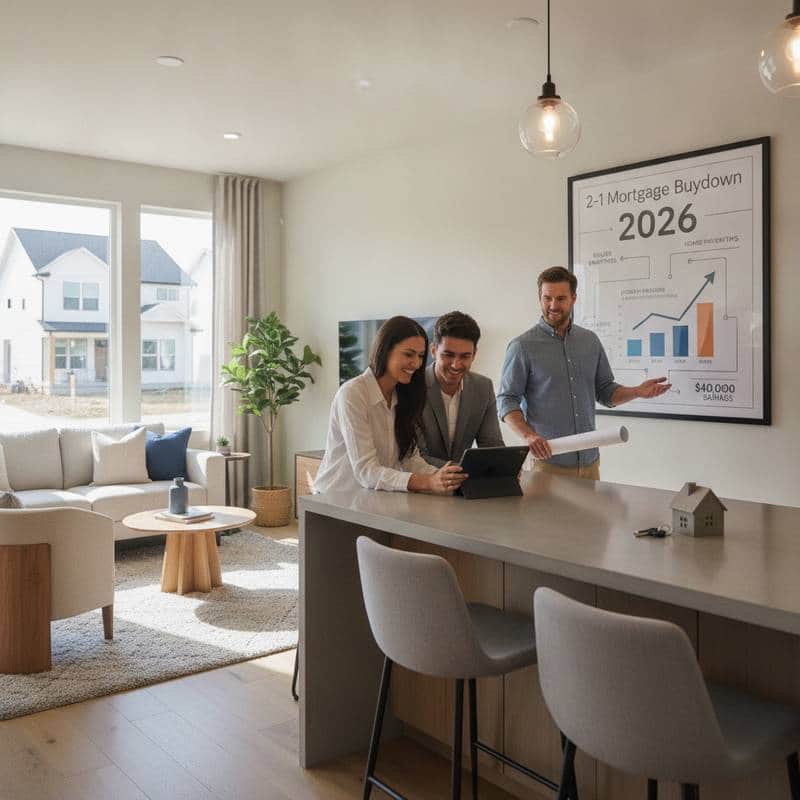
Recently, a couple purchasing a new construction home opted for a builder-funded 2-1 buydown. Their monthly payment began at $1,950 rather than $2,450, creating a $500 difference.
They channeled the savings into an emergency fund and backyard enhancements. When the payment increased, they had established stability, accumulated reserves, and explored refinancing options.
They told me later that the buydown gave them breathing room when everything else about moving felt expensive. That’s exactly what it’s meant to do.
This example demonstrates how the buydown supports practical adjustments, turning potential stress into structured progress.
Steps to Implement a 2-1 Buydown
Homebuying involves a blend of anticipation and uncertainty, particularly regarding interest rates and timelines. The 2-1 buydown addresses these concerns by simplifying the entry into ownership.
Begin by discussing availability with your builder or lender during initial negotiations. Review how the buydown integrates with your loan terms and confirm all associated costs remain external to your finances. Finally, develop a two-year financial plan that incorporates the payment progression, ensuring sustained affordability.
This proactive approach not only secures immediate savings but also positions you for long-term homeownership success.