Understanding the 2-1 Buydown: A Strategy to Reduce Early Mortgage Costs
Homebuyers often face challenges with elevated interest rates that increase monthly payments. A 2-1 buydown provides a targeted solution by temporarily lowering the effective interest rate during the initial years of the loan. This approach allows buyers to manage cash flow more effectively while transitioning into homeownership.
Defining the 2-1 Buydown
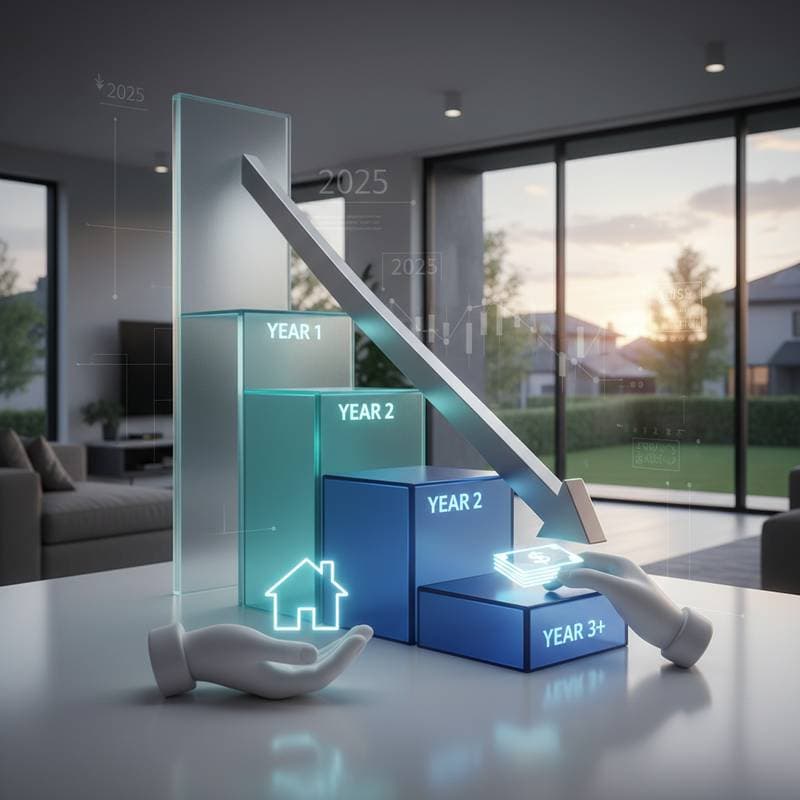
A 2-1 buydown functions as a temporary interest rate reduction on a mortgage. For the first year, the rate decreases by two percentage points below the permanent rate. In the second year, it decreases by one percentage point, after which the loan reverts to the full permanent rate for the remainder of the term.
Consider a permanent rate of 7 percent on a 30-year fixed mortgage. The first year applies a 5 percent rate, the second year a 6 percent rate, and subsequent years the original 7 percent rate. The lender subsidizes the difference through prepaid funds deposited at closing, typically sourced from the seller or builder.
This structure delivers immediate financial relief during the adjustment period of homeownership, when expenses such as moving and furnishing can strain budgets.
Calculating Potential Savings
The 2-1 buydown can generate substantial savings in the early years, often totaling around $40,000 over the first two years for a typical loan. These savings stem from reduced interest payments, not a direct reduction in principal or home price.
For a $500,000 mortgage at 7 percent, monthly payments at the full rate approximate $3,326. With the buydown, first-year payments drop to about $2,326, yielding roughly $1,000 monthly savings. Second-year payments rise to approximately $2,826, providing $500 monthly savings. Over 24 months, these reductions accumulate to significant relief, freeing funds for other priorities like home improvements or savings.
Buyers can use this period to stabilize finances or monitor market conditions for refinancing opportunities when rates decline.
Funding Sources for the Buydown
Sellers and builders commonly finance the buydown to enhance property appeal in competitive markets. In periods of high interest rates or slowing sales, this incentive proves more prevalent than price reductions, preserving the seller's proceeds while attracting qualified buyers.
Buyers qualify for the loan based on the permanent rate, ensuring no compromise on creditworthiness. If no seller contribution exists, buyers may cover the cost at closing, though this option requires careful evaluation against overall affordability.
Ideal Scenarios for Implementing a 2-1 Buydown
This strategy suits buyers anticipating income increases or planning to refinance within a few years. It provides a buffer during the initial homeownership phase, when financial pressures peak.
Professionals in growing fields or families expecting salary advancements benefit most. The buydown aligns with goals of securing a desired property without immediate payment burdens.
However, buyers must assess long-term capacity. Post-second-year payments revert to the full rate, potentially increasing by 20 to 30 percent. Projections confirm sustainability before proceeding.
Potential Drawbacks and Mitigation Strategies
The primary limitation involves the temporary nature of the rate reduction. Payments adjust upward after year two, which may surprise unprepared borrowers. To counter this, allocate a portion of early savings into a dedicated reserve fund.
Funding dynamics also warrant attention. Seller-financed buydowns maximize buyer benefits, but self-funding elevates closing costs and diminishes upfront advantages. Consult lenders to model various funding scenarios and quantify net gains.
Market volatility adds another layer; if rates do not decline as anticipated, refinancing may not materialize. Diversify planning by exploring adjustable-rate mortgages or other rate strategies as alternatives.
Steps to Implement a 2-1 Buydown
Incorporate the buydown into the mortgage application during the offer negotiation phase. Lenders compute the required subsidy amount based on the rate reductions and deposit it into an escrow account at closing.
The escrow funds the interest differential monthly during the discount period. Include provisions in the purchase agreement if the seller funds it, with oversight from real estate agents and lenders to clarify payment transitions.
Verify eligibility with the mortgage provider early, as not all loan programs support buydowns. Documentation ensures seamless execution.
Current Relevance in the Mortgage Landscape
Elevated rates in 2025 have sidelined many potential buyers, yet the 2-1 buydown restores accessibility. It enables entry into the market without prolonged waits for rate normalization, benefiting both buyers seeking stability and sellers aiming for quicker transactions.
This tool fosters equitable housing dynamics by bridging short-term affordability gaps in a high-rate environment.
Key Considerations for Buyers
Evaluate these factors to determine suitability:
- Obtain detailed payment projections from lenders, including all loan phases.
- Stress-test budgets against the full-rate payments starting in year three.
- Negotiate for seller or builder contributions, especially in buyer-favorable markets.
- Monitor economic indicators for refinancing timing post-purchase.
- Explore lender-specific buydown promotions that may offset costs.
Thorough due diligence positions the 2-1 buydown as a strategic asset for informed homeownership decisions.