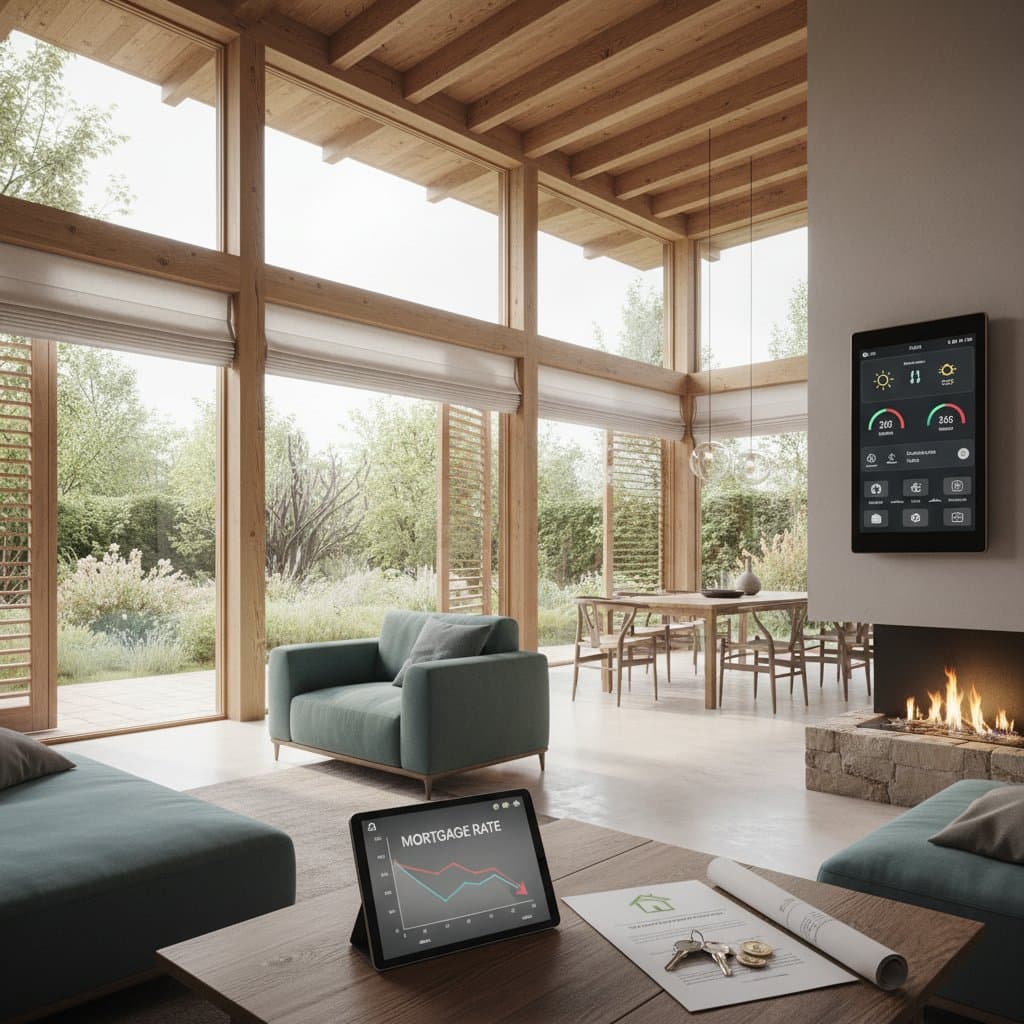
Understanding Lower Mortgage Rates for Climate-Resilient Homes
Consider the implications of a home engineered to face intensifying weather patterns. Such properties not only safeguard occupants but also appeal to lenders through reduced risk profiles. Recent trends show that climate-resilient designs now qualify for lower interest rates, making them a strategic choice for long-term financial planning.
The Rising Focus on Climate Resilience in Home Design
Home construction priorities have evolved with environmental challenges. Traditional emphases on aesthetics and convenience now incorporate durability against floods, heat, and storms. Financial institutions recognize that resilient homes experience fewer claims and retain value, prompting incentives like reduced lending rates.
This shift stems from data-driven insights. Properties with resilience features demonstrate lower maintenance costs and higher stability during adverse events. Builders increasingly adopt these elements as core components, aligning with broader sustainability goals.
Defining Climate-Resilient Home Features
Climate resilience encompasses practical adaptations tailored to regional risks. It extends beyond aesthetic green elements to include structural and systemic enhancements that mitigate damage.
Key examples include:
- Flood-resistant materials like concrete slabs, pressure-treated wood, and hydrophobic insulation.
- Elevated foundations or pilings in vulnerable low-lying areas.
- Impact-rated windows and metal-reinforced roofs for wind-prone zones.
- Advanced HVAC systems with zoning for efficient temperature control.
- Integrated solar arrays and energy storage to maintain functionality during grid failures.
These features lower the probability of significant damage, which directly influences lender assessments. Certifications from bodies like the U.S. Green Building Council can verify compliance, unlocking financial advantages.
Mechanisms Behind Rate Reductions for Resilient Properties
Lending decisions hinge on property risk evaluation. Resilient homes score favorably by minimizing potential for value depreciation or repair expenses. Programs such as Fannie Mae's green financing initiatives offer rate discounts for qualifying builds.
During the loan application, provide builder specifications or third-party audits detailing resilience measures. Lenders may review compliance with updated building codes or energy standards like ENERGY STAR. Approval often results in rate reductions of 0.25 to 0.5 percent, translating to substantial savings over a 30-year term.
This approach signals a market transformation. Resilience transitions from optional upgrade to essential criterion for optimal financing.
Evaluating the Financial Impact
Initial construction costs for resilient features may exceed standard builds by 5 to 10 percent. However, offsets through lower rates, insurance discounts, and operational savings quickly balance the equation.
Break it down as follows:
- Reduced interest rates decrease monthly payments by hundreds of dollars annually.
- Durable components cut repair frequency and emergency expenditures.
- Energy-efficient designs lower utility costs by up to 20 percent.
- Enhanced marketability boosts resale prices by 3 to 7 percent in high-risk areas.
Over time, these benefits compound, positioning resilient homes as economically superior investments.
Steps to Pursue Climate-Resilient Financing
Engage lenders at the planning stage to identify available incentives. Inquire about portfolios supporting sustainable or disaster-resistant properties, including those from federal agencies like the FHA.
Collaborate with architects and contractors experienced in local hazards. For coastal sites, prioritize elevation and erosion controls; for arid regions, emphasize water conservation and fire-resistant exteriors. Incremental decisions, such as permeable paving or sloped grading, amplify overall effectiveness.
View resilience as an integrated strategy. It permeates every aspect, from structural engineering to site preparation, ensuring comprehensive protection.
Balancing Design, Comfort, and Durability
Resilient homes achieve harmony between form and function. They incorporate natural light, breathable spaces, and tactile materials that enhance daily living without compromising strength.
Contemporary palettes draw from natural hues like muted greens and warm neutrals, fostering a sense of environmental attunement. Paired with passive cooling and smart automation, these designs promote well-being while optimizing resource use.
The outcome extends beyond survival. It creates environments that adapt seamlessly to changing conditions, rewarding occupants with sustained livability.
Actionable Strategies for Implementation
Incorporate resilience through targeted selections:
- Source regionally appropriate materials tested for local weather extremes.
- Enhance envelope performance with high-R-value insulation and airtight sealing.
- Integrate site features like bioswales or drought-tolerant vegetation to manage water flow.
- Explore incentives for on-site renewables, such as tax credits for photovoltaic installations.
- Secure documentation of features to support financing applications.
Sustaining Value Through Resilient Living
A well-built resilient home evolves with its inhabitants. It maintains efficiency across seasons, absorbs weather impacts gracefully, and reinforces a proactive stance toward environmental stewardship.
The core value lies in reliability. Financial perks like lower rates enhance accessibility, but the enduring assurance of a fortified sanctuary defines true worth.