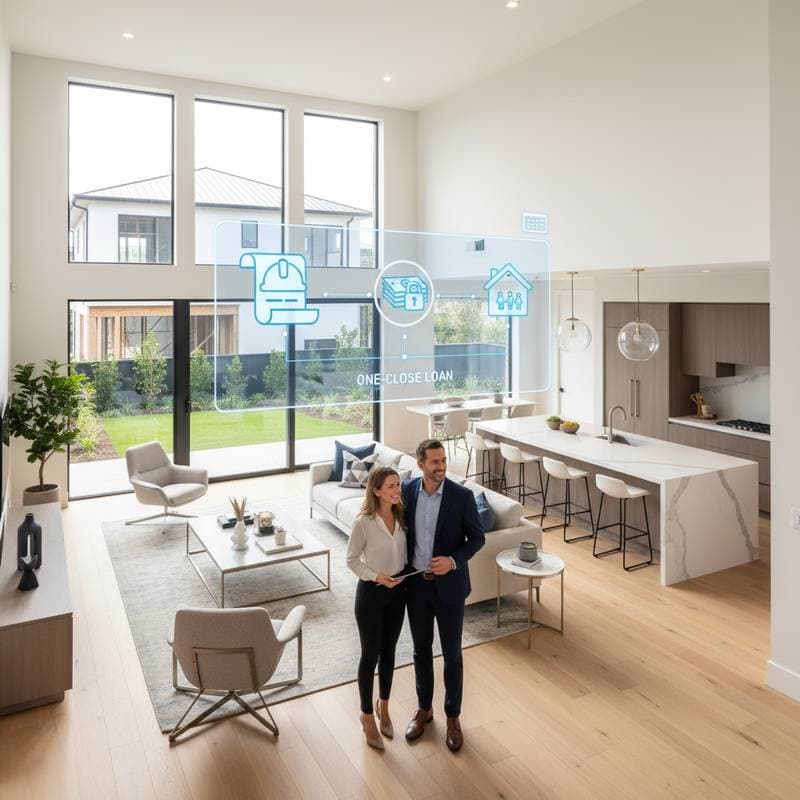
Why 2026 One-Close Loans Revolutionize Home Building
Picture a vacant lot ready for development, with architectural plans in hand. Excitement builds alongside concerns about financing. Traditional methods involve separate construction loans and permanent mortgages, leading to multiple closings and escalating fees. One-close loans address these challenges by integrating both phases into a single process, offering stability and efficiency for builders and homeowners alike.
The Challenges of Traditional Construction Financing
Traditional financing requires a short-term construction loan to cover building costs. Interest accrues on disbursed funds as work progresses. Upon completion, borrowers refinance into a permanent mortgage, incurring additional closing costs, credit evaluations, and delays.
This dual process often overwhelms homeowners with paperwork and uncertainty. It transforms home building into a protracted endeavor, suitable mainly for those with ample resources and tolerance for complexity. The separation between construction and long-term financing creates inefficiencies that one-close loans eliminate.
Introducing the One-Close Loan Structure
A one-close loan, also known as a construction-to-permanent loan, unifies construction financing and the permanent mortgage under one agreement. Borrowers submit a single application, undergo one qualification, and complete one closing. This approach minimizes administrative burdens and provides continuity throughout the project.
During construction, the lender disburses funds to the builder in scheduled draws based on progress milestones. At completion, the loan converts automatically to a standard mortgage without further appraisals or requalification. This seamless transition ensures predictable funding and reduces overall project risks.
Benefits for Builders and Homeowners
Both parties gain from the one-close model's reliability. Builders receive steady funding, enabling consistent project timelines. Homeowners secure financing terms upfront, avoiding market fluctuations.
Key advantages include:
-
Rate Protection
Lock in mortgage rates before construction starts. This shields against interest rate increases during the build phase, providing budget certainty from day one. -
Streamlined Administration
Handle one set of documents instead of two. This cuts down on redundant fees and coordination efforts, allowing focus on construction details like material selections. -
Cost Reductions
Avoid duplicate closing expenses, such as title searches and origination fees. Savings can reach several thousand dollars, redirectable toward enhancements like energy-efficient windows or custom cabinetry. -
Accelerated Completion
Eliminate refinancing delays post-construction. Move directly into occupancy, shortening the overall timeline by weeks or months.
Step-by-Step Process for One-Close Loans
Understanding the workflow helps prospective builders prepare effectively.
-
Obtain Pre-Approval
Consult lenders specializing in construction-to-permanent loans. Provide financial details for an assessment of borrowing capacity, establishing a realistic budget early. -
Select Builder and Finalize Plans
Partner with a licensed contractor experienced in lender requirements. Submit detailed blueprints and cost breakdowns for loan approval, ensuring alignment on project scope. -
Apply and Close the Loan
After plan verification, execute the closing. Financing secures both construction draws and the eventual mortgage, marking the start of funded progress. -
Monitor Construction Draws
Funds release in phases as inspections confirm milestones, such as foundation completion or framing. Pay interest only on amounts used during this period. -
Automatic Conversion
Upon final inspection and certificate of occupancy, the loan shifts to permanent status. Begin full principal and interest payments without additional steps.
This structured sequence replaces ad-hoc financing with organized advancement.
Key Factors to Evaluate Before Proceeding
One-close loans offer simplicity, yet informed decisions require attention to specifics.
-
Down Payment Requirements
Prepare for 10 to 20 percent of the total project cost, similar to conventional mortgages. Explore lender programs for reduced amounts, particularly for qualified first-time builders. -
Interest Rate Dynamics
The initial rate applies to the permanent phase, offering protection against rises. If rates fall, refinancing remains an option post-conversion, though stability typically prevails. -
Draw Schedule Alignment
Confirm agreement between builder and lender on fund release timing. Detailed schedules prevent bottlenecks and maintain momentum. -
Lender Selection
Prioritize local institutions with construction expertise. They often provide tailored terms and quicker processing, based on established builder relationships.
Tangible Impacts on the Building Experience
Home building involves numerous variables, from weather impacts to supply chain issues. A one-close loan stabilizes the financial element, enabling concentration on design and execution.
From the outset, secured terms foster confident planning. No interim requalifications disrupt progress. At project end, immediate occupancy follows without financing hurdles, enhancing the transition to homeownership.
This reliability influences choices, such as investing in durable materials without fear of shifting loan conditions.
Side-by-Side Comparison of Financing Options| Feature | Traditional Two-Loan Approach | One-Close Loan |
|---------|-------------------------------|----------------|
| Closings Required | Two | One |
| Rate Lock Point | Post-construction | Pre-construction |
| Qualification Rounds | Two | One |
| Closing Expenses | Incurred twice | Incurred once |
| Permanent Loan Shift | Manual refinance | Automatic conversion |
| Timeline Efficiency | Limited | Enhanced |
| Overall Predictability | Variable | Consistent |This overview highlights how one-close loans reduce redundancies and enhance control.
Budgeting Essentials for Construction Projects
Savings from one-close structures aid affordability, but prudent planning remains essential. Allocate a 10 percent contingency for unforeseen costs like material price hikes.
Interest payments during construction apply only to drawn funds, keeping initial outlays low. Anticipate the jump to full mortgage payments upon completion by modeling cash flow in advance.
Track expenses with tools like spreadsheets to balance construction needs against long-term homeownership costs.
Evolving Landscape of Residential Construction
One-close loans democratize custom home building by lowering entry barriers. More individuals, including newcomers, can pursue personalized designs without navigating complex lending.
Builders gain from reliable cash flow, supporting efficient operations and broader project acceptance. This fosters a more dynamic construction sector, benefiting suppliers and local economies through sustained activity.
Steps to Secure Your One-Close Financing
Begin by identifying lenders with proven construction-to-permanent offerings. Inquire about rate structures, fee schedules, and compatibility with your builder.
Assemble project specifics, including bids and timelines, to expedite approval. With financing aligned, advance toward a home that reflects your priorities, unencumbered by financing complexities.
This integrated approach ensures the building process supports your goals, culminating in a seamless path to occupancy.