Biochar Concrete: Carbon-Negative Building Hits Mainstream
A small, uneven block of concrete sat behind a local materials yard. From a distance, it appeared ordinary, yet upon lifting it, the texture felt lighter. The owner noted that it contained biochar. Biochar enters construction from gardening applications, yet this encounter revealed its revolutionary potential.
What Is Biochar Concrete?
Biochar concrete incorporates biochar, a fine, porous carbon materialplant matter without oxygen, to replace a portion of traditional cement or aggregate. This process sequesters carbon that would otherwise release into the atmosphere. In concrete, biochar enhances sustainability and often improves material performance.
Traditional concrete offers durability but contributes significantly to global emissions through cement production. Biochar concrete achieves carbon negativity by absorbing more carbon than it emits. Researchers and builders demonstrate its viability through ongoing tests and applications.
The Role of Biochar in Construction
Biochar functions like a carbon-based sponge. Its pores capture gases, moisture, and nutrients in soil, while in concrete, they improve strength and thermal properties. The key advantage is long-term carbon storage; once integrated, the carbon remains sequestered for centuries.
This approach redefines everyday materials. A patio, driveway, or foundation can contribute to air quality improvement. Sustainability becomes tangible and structural.
Appearance and Sensory Qualities
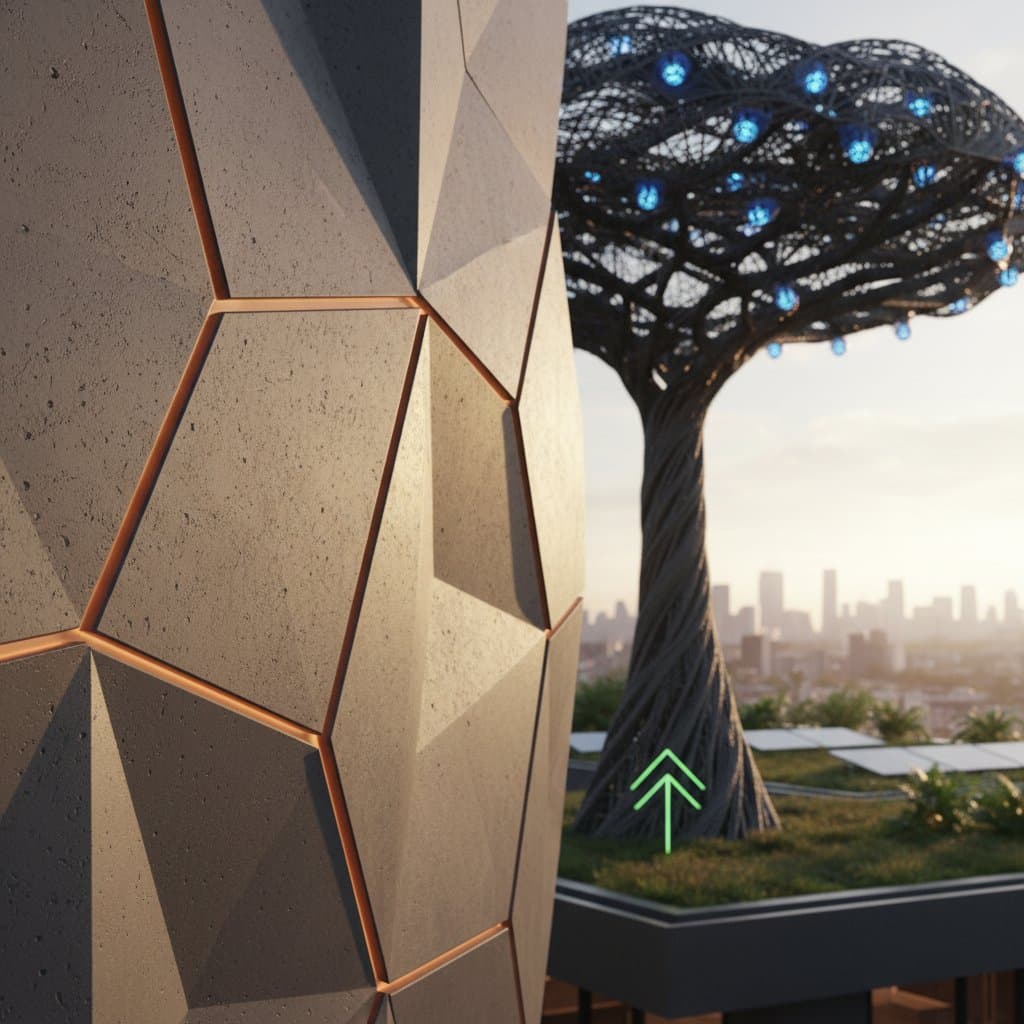
Biochar concrete resembles traditional concrete visually, with a possible slightly darker tone based on the formulation. Designers incorporate this hue for subtle contrasts with elements like pale timber or whitewashed brick. Finishes range from raw, textured surfaces to polished, stone-like smoothness.
The material aligns with nature rather than imitating it. This integration supports both performance and aesthetic integrity.
Applications for Biochar Concrete
Biochar concrete suits any standard concrete use, yet excels in specific scenarios:
- Interior floors and panels, where the tone provides warmth and visual depth.
- Exterior paving and retaining walls, benefiting from porosity that aids water management.
- Precast blocks or tiles, highlighting sustainable choices in prominent features.
Builders often source biochar from local biomass, such as agricultural waste, fostering regional identity. This practice transforms nearby residues into foundational elements.
Key Benefits in Practice
Biochar concrete delivers advantages beyond carbon sequestration:
- Enhanced insulation. Porosity improves thermal efficiency, stabilizing indoor temperatures.
- Reduced weight. Certain blends facilitate easier handling and transportation.
- Minimized cracking. Biochar regulates internal moisture levels.
- Waste diversion. Sources typically include agricultural or forestry byproducts headed for disposal.
The technology continues to develop. Optimal mix ratios require testing, and outcomes depend on biochar origin. Transition from labs to commercial sites accelerates steadily.
Cost Considerations and Implementation
Initial costs for biochar concrete exceed those of standard mixes due to emerging production scales. Expenses vary with local biochar availability and project size. As supply grows, prices stabilize, offset by benefits like lower transport emissions, reduced structural demands, and eligibility for carbon credits.
For small-scale projects or renovations, consult local suppliers about biochar options or custom formulations. Smaller producers accommodate trials, particularly for decorative or non-structural uses.
Maintenance mirrors traditional concrete. Apply sealants to maintain color and resist stains. Outdoors, the material develops an attractive patina over time, avoiding the fade common in standard concrete.
Alignment with Contemporary Design Movements
Biochar concrete supports the rise of carbon-aware materials, complementing trends in authentic, eco-focused aesthetics. It pairs with earthy palettes, recycled components, and textured surfaces.
In minimalist patios, modern kitchen floors, or feature walls, it provides both visual interest and environmental value. This choice conveys intentional stewardship without aesthetic compromise.
Advancing Sustainable Builds with Biochar
Envision a floor that remains cool in summer, firm underfoot, and environmentally beneficial. Materials with inherent purpose create more meaningful spaces. Biochar concrete integrates seamlessly as an upgraded familiar option.
For upcoming renovations or constructions, explore biochar projects. Examine samples for tone and texture variations. As the material evolves, it underscores how routine elements can contribute to global repair.
Consider the potential in every poured slab. Beyond familiarity, it represents a step toward lighter, more responsible construction.