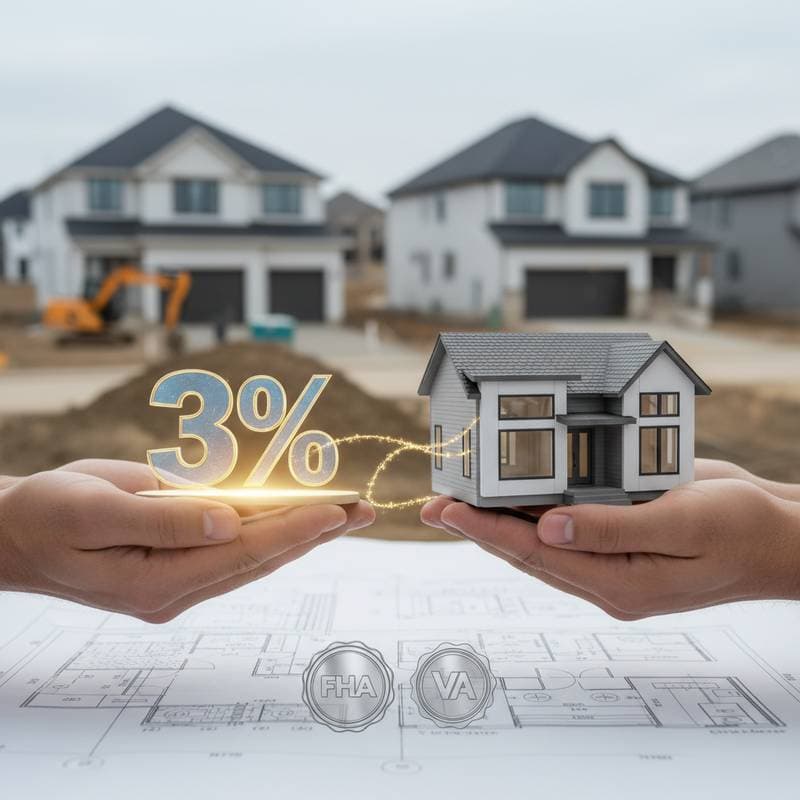
Buyers Pursue Low-Rate Opportunities in New Construction
New home developments present a compelling option for buyers seeking affordability in a high-interest environment. Assumable mortgages at approximately 3% allow qualified purchasers to inherit favorable loan terms from builders. This approach contrasts sharply with prevailing rates that exceed 6% or 7%, making such deals highly attractive for immediate financial relief.
These opportunities arise primarily in FHA- and VA-backed financing, which builders use to enhance marketability. Buyers who act promptly can secure payments that align with budgets strained by recent rate increases. The result is not only lower costs but also a pathway to ownership that feels accessible once again.
Understanding Assumable Mortgages
Assumable mortgages enable a buyer to adopt the seller's existing loan, including its interest rate and remaining term. In new builds, builders often originate these loans to finance construction, then transfer them to end buyers. This mechanism preserves low rates from periods of historically affordable borrowing, such as 2020 or 2021.
FHA loans, insured by the Federal Housing Administration, and VA loans, guaranteed by the Department of Veterans Affairs, qualify for assumption in most cases. Buyers must meet specific criteria, including credit scores typically above 620 and debt-to-income ratios under 43%. Conventional loans rarely offer this feature, limiting availability to government-backed options.
Eligibility and Assumption Process
Not every mortgage supports assumption, so buyers must verify loan type early in the search. FHA assumptions require lender approval and often an application fee of up to 0.5% of the loan balance. VA loans provide similar flexibility but may involve a funding fee of 0.5% for non-veterans assuming the loan.
The process unfolds in three key steps:
-
Submit an application to the existing lender, providing financial documentation for qualification.
-
Undergo credit and income verification to confirm repayment ability.
-
Close the transaction, assuming the loan balance and financing any equity gap through cash or a second mortgage.
Experienced lenders streamline this, often completing assumptions in 30 to 45 days, compared to 45 to 60 days for new loans.
Builders' Incentives for Low Rates
Builders introduce assumable mortgages to address inventory challenges in competitive markets. Properties with inherited 3% rates appeal to price-sensitive buyers, reducing time on market by up to 20%. This strategy proves effective in regions with softening demand, such as suburban expansions outside major cities.
Many builders collaborate with preferred lenders to originate FHA or VA loans at reduced rates. Additional incentives, like rate buydowns covering the first year's interest, further lower effective costs. These partnerships ensure smooth transfers and maintain project momentum.
Key Considerations for Buyers
Assumable mortgages demand careful evaluation to avoid surprises. The primary challenge involves bridging the difference between the loan balance and the home's sale price, which can reach 20% or more in appreciating markets. Buyers prepare by saving for this gap or exploring bridge financing options.
Lender approval remains essential, even for assumptions, with scrutiny on employment stability and reserves. Transfer fees range from $300 to $900, while FHA loans carry ongoing mortgage insurance premiums of 0.55% annually. Consulting a mortgage advisor early uncovers these elements and aligns them with personal finances.
Financial Impact of Low Rates
Quantifying the benefits reveals substantial long-term value. For a $400,000 home with a $320,000 assumable loan at 3%, monthly principal and interest payments total approximately $1,350. At 7%, the same loan amount rises to $2,130, creating a $780 monthly savings that accumulates to over $280,000 in interest over 30 years.
Lower rates direct more payments toward principal, fostering quicker equity growth. Buyers achieve 20% equity in about five years versus eight at higher rates. This positions homeowners for future refinancing or sales with stronger financial footing.
Regional Examples and Strategies
Local builders increasingly promote assumable financing through targeted campaigns. Developments by firms such as Horizon Homes in the Midwest feature signage highlighting 3% rate takeovers, drawing buyers from adjacent states. These efforts succeed by emphasizing verifiable savings in marketing materials.
Regional lenders facilitate faster processing, often waiving certain fees for repeat builder partnerships. Buyers inquire directly during site visits, requesting assumption details even if not advertised. This proactive approach uncovers unlisted opportunities in growing areas like Texas or Florida suburbs.
Steps to Capitalize on Assumable Loans
Buyers position themselves by preparing finances in advance. Obtain prequalification from multiple lenders to identify assumption-friendly options and establish buying power. Review credit reports for errors that could delay approval.
Engage real estate professionals familiar with new construction deals. They negotiate terms and coordinate with builders for seamless transitions. Monitor listings on builder websites and platforms like Zillow for keywords such as "assumable rate" or "FHA financing available."
Detailed inquiries cover loan balance, exact rate, and expiration dates, as incentives tie to specific inventory. Acting within 30 days of interest often secures the best terms before rates adjust.
Benefits of Strategic Home Financing
Securing an assumable low-rate mortgage extends advantages beyond initial savings. Fixed payments provide budget predictability amid economic uncertainty, allowing funds for maintenance or upgrades. Homeowners build wealth steadily, with equity serving as a foundation for future goals.
This financing choice combines the appeal of new construction—warranties, modern features, and energy efficiency—with fiscal prudence. Buyers who navigate the process thoughtfully gain not only a home but enduring financial security. The combination elevates homeownership from a transaction to a sustainable investment.