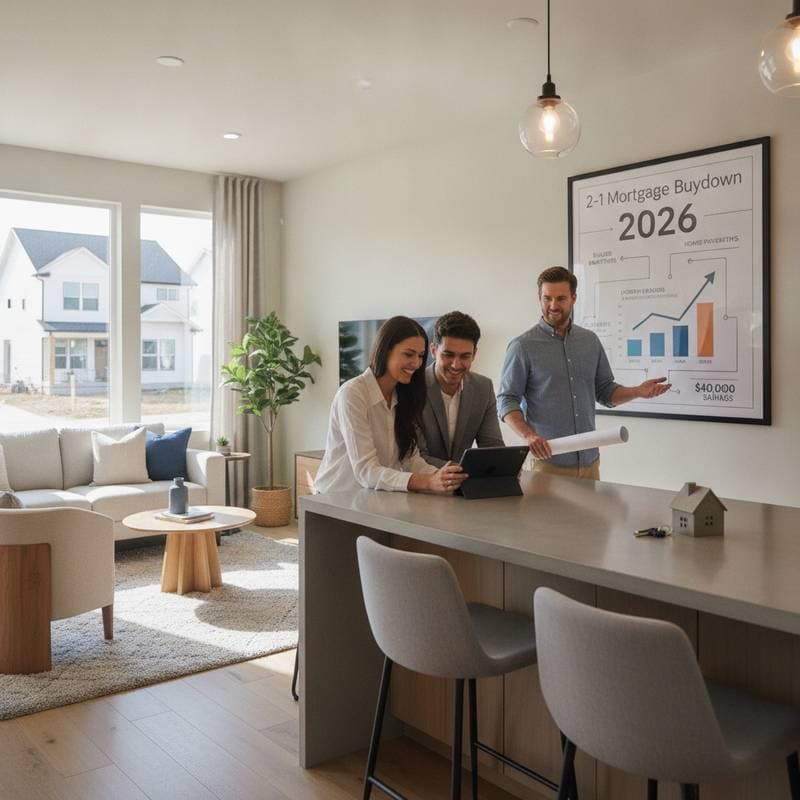
How a 2-1 Mortgage Buydown Can Reduce Your 2026 Home Loan Costs by $40,000
A 2-1 mortgage buydown lowers the interest rate for the first two years of a home loan. This structure reduces monthly payments during the initial period and can generate total savings near $40,000 on a typical 2026 mortgage. Builders and sellers frequently cover the cost as an incentive.
Definition and Mechanics
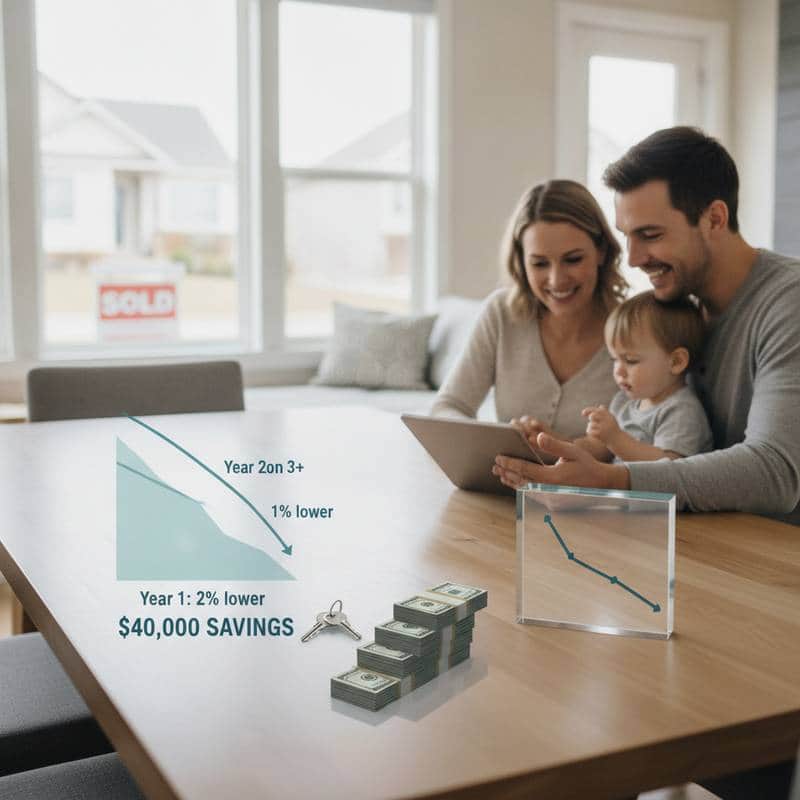
A 2-1 buydown reduces the contract interest rate by two percentage points in year one and by one percentage point in year two. The rate returns to the full contract level beginning in year three. For a 6 percent loan, the borrower pays 4 percent the first year and 5 percent the second year.
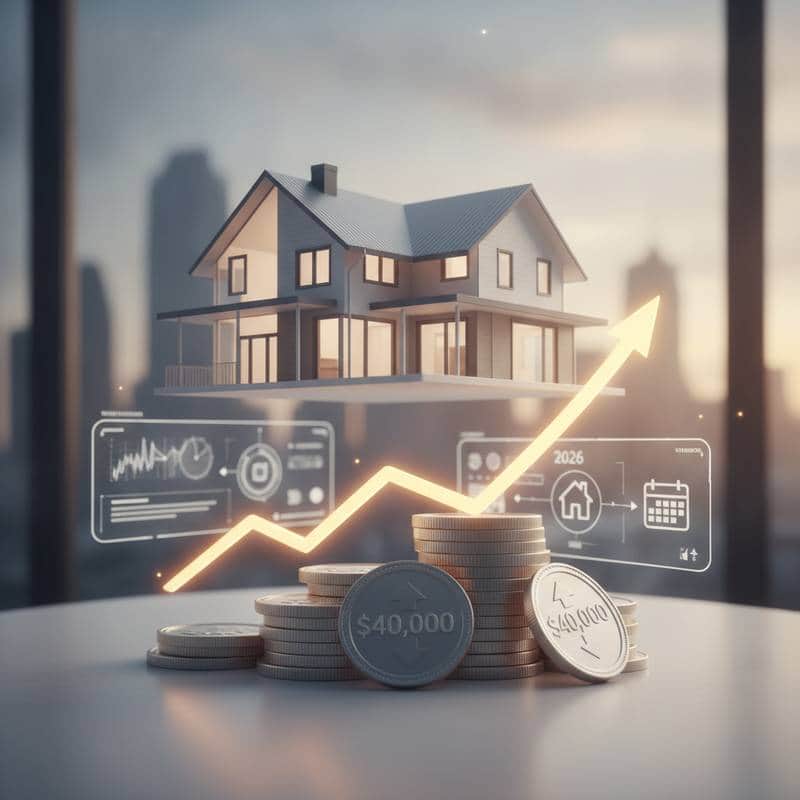
These temporary reductions produce measurable cash flow relief. On a $600,000 loan the monthly payment drops from approximately $3,600 to $2,900 in year one and $3,250 in year two. The cumulative difference over 24 months reaches roughly $40,000.
Funding Sources
Builders and sellers commonly pay the upfront fee required to purchase the buydown. This approach avoids a permanent price reduction while still improving affordability for buyers. When market conditions slow, builders use the incentive to accelerate sales without altering list prices.
Buyers who fund the buydown themselves must compare the upfront cost against projected savings. In most cases the seller contribution makes the option cost-free to the purchaser.
Benefits for Different Buyers
First-time purchasers gain time to adjust to ownership expenses. Growing families can allocate the monthly difference toward furnishings or minor renovations. Homeowners who anticipate income growth or plan to refinance later treat the buydown as a temporary bridge.
The front-loaded savings also support emergency-fund building and debt reduction while payments remain lower.
Post-Buydown Transition
After the two-year period the payment reverts to the original contract rate. Borrowers who expect rates to decline can refinance at that point. Others may find the higher payment manageable once income has increased or other obligations have decreased.
Review the loan documents to confirm the exact payment amount that will apply in year three. A lender can model several rate scenarios to illustrate future obligations.
Suitability Checklist
- Current mortgage rates exceed 5.5 percent and are projected to fall within three years.
- The purchase involves a new-construction home where the builder offers buydown incentives.
- Income is expected to rise or household expenses are expected to fall within the next 24 months.
- The buyer prefers payment flexibility rather than a fixed high payment from closing.
Implementation Steps
- Request current buydown pricing from the lender and confirm the fee amount.
- Ask the builder or seller to cover the cost as part of the purchase agreement.
- Compare total interest paid with and without the buydown over a five-year horizon.
- Verify that the post-buydown payment fits within projected household cash flow.
Strategic Use of Savings
Apply the monthly reduction to an emergency reserve that covers three months of expenses. Direct a portion toward energy-efficient upgrades that lower future utility costs. Reduce higher-interest consumer debt while the mortgage payment remains reduced. Reserve a small amount for routine maintenance and property-tax increases.
Planning Your Buydown Strategy
A 2-1 buydown aligns short-term cash flow with long-term ownership goals. When funded by the seller and paired with disciplined use of the savings, the structure improves affordability without altering the underlying loan balance.