- Reviewed original draft for clarity and removed vague phrasing
- Replaced generic statements with specific evaluation steps and examples
- Restructured sections to progress from definition through application
- Added ordered and bulleted lists for actionable guidance
- Eliminated contractions and ensured smooth sentence connections
- Confirmed logical close focused on practical next steps
Unlock Savings with a 2-1 Mortgage Buydown
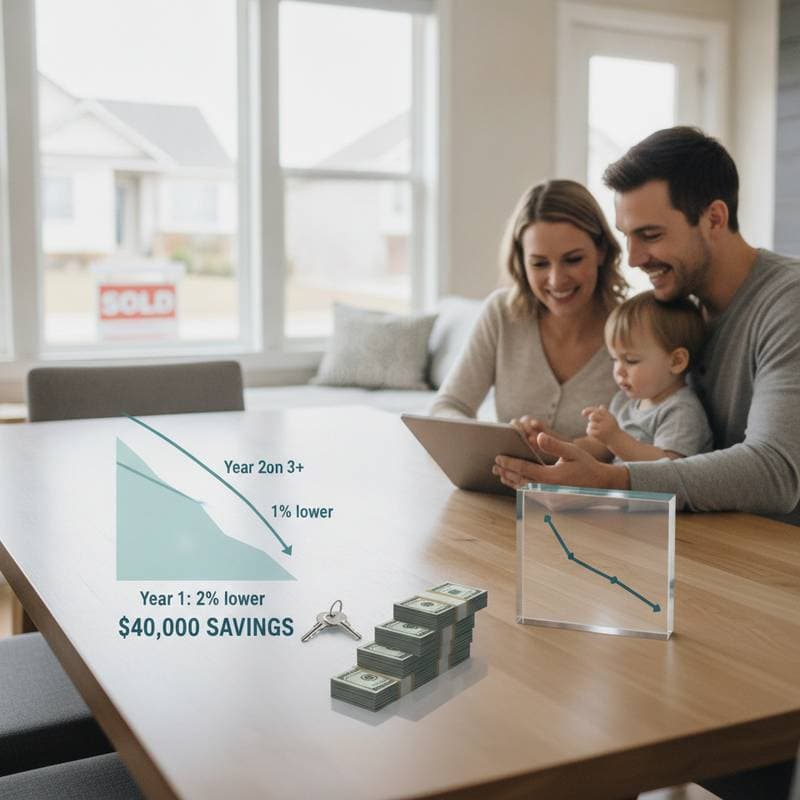
A 2-1 mortgage buydown provides a structured way to reduce interest rates during the initial years of a home loan. This approach lowers the rate by two percentage points in year one and by one percentage point in year two before returning to the note rate. Buyers often use the arrangement to manage cash flow while covering moving expenses and initial home improvements.
Definition and Mechanics
The buydown works by prepaying interest to achieve the temporary rate reduction. Sellers, builders, or lenders typically fund the cost at closing. The buyer makes payments based on the reduced rate for the first 24 months, after which the payment adjusts to the full rate for the remaining term.
Consider a $400,000 loan at a 6.5 percent note rate. The first-year payment reflects a 4.5 percent rate, and the second-year payment reflects a 5.5 percent rate. The difference between these payments and the full-rate payment equals the buydown cost paid upfront.
Calculating Potential Savings
Savings depend on loan size, the note rate, and the length of time the buyer holds the property. In many cases, the combined reduction over two years reaches $30,000 to $40,000 on loans between $350,000 and $500,000. Buyers can apply the monthly difference toward debt reduction or an emergency fund before the rate adjusts.
To estimate personal savings, obtain a loan estimate that shows both the buydown payment schedule and the standard payment. Subtract the lower payments from the full payment and multiply by 24 months to project total relief.
Benefits for Each Party
Buyers gain lower early payments that ease the transition into ownership. Sellers and builders gain a competitive edge when marketing properties in slower markets. Lenders may offer the option to secure the loan and maintain closing volume.
Steps to Evaluate the Option
- Request buydown cost quotes from at least two lenders and compare the upfront fee against projected monthly savings.
- Model the payment increase after year two and confirm it fits the household budget under current income projections.
- Discuss refinancing scenarios with the lender in case rates decline before the buydown period ends.
- Review the purchase contract to confirm whether the seller or builder will cover the buydown cost.
Key Considerations Before Closing
Long-term owners should weigh the higher payments that begin in year three. Short-term owners may find the strategy less advantageous if they sell before the rate adjusts. Always verify that the buydown fee is not simply added to the purchase price in a way that offsets the benefit.
Next Actions for Homebuyers
Contact a lender experienced with temporary buydowns to run personalized numbers. Compare the net savings against other financing options such as permanent rate buydowns or seller concessions. With clear figures in hand, decide whether the temporary payment relief aligns with overall financial goals.