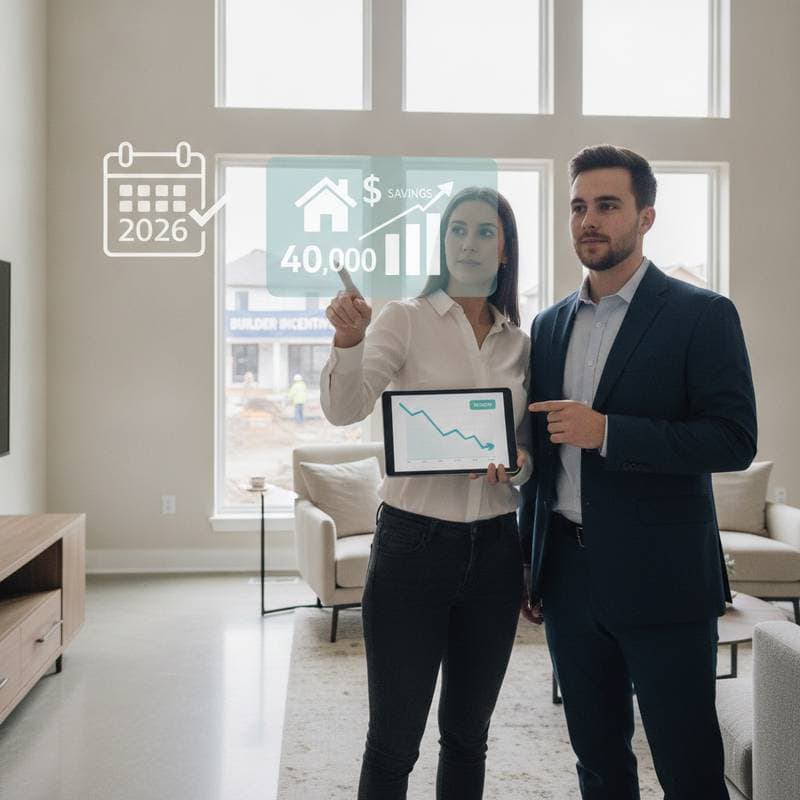
Lowering Early Mortgage Payments
A 2-1 mortgage buydown reduces interest rates temporarily. This approach cuts payments in the first two years of homeownership. Buyers gain immediate budget flexibility during the transition period.
The strategy works through an upfront payment to the lender. That payment covers the difference between the reduced rate and the full rate. Builders or lenders often fund this cost as a purchase incentive.
How the Rate Structure Functions
The buydown lowers the interest rate by two points in year one. It then reduces the rate by one point in year two. The loan returns to the original rate starting in year three.
Consider a six percent note rate. The first-year payment uses a four percent rate. The second-year payment uses a five percent rate. After that period the payment reflects the full six percent rate.
Current Builder Incentives
Builders offer buydowns to maintain home prices while improving affordability. This method attracts buyers who focus on monthly cash flow. The builder avoids price reductions that could affect future resale values.
Qualified buyers receive the benefit without additional out-of-pocket costs at closing. The arrangement preserves the property value for the seller. Payment relief helps new owners manage initial expenses such as furnishings and minor upgrades.
Calculating Potential Savings
On a four hundred thousand dollar loan the monthly reduction reaches several hundred dollars in year one. Savings decrease slightly in year two but remain meaningful. Total savings over the two-year period can approach forty thousand dollars.
These funds support several priorities. Homeowners allocate them toward furniture purchases. Others direct savings to small renovation projects. Some build emergency reserves or reduce existing debts.
Preparing for Rate Adjustment
Buyers must qualify for the loan using the full note rate from the start. This requirement ensures long-term affordability. Planning includes setting aside a portion of early savings to cover future payment increases.
Many owners use the lower-payment window to improve income or pay down other obligations. Refinancing remains an option if rates decline later. The buydown serves as a temporary bridge rather than a permanent solution.
Steps to Arrange a Buydown
- Contact lenders early to confirm buydown availability and review sample payment schedules.
- Inquire with builders about current incentive packages tied to new construction homes.
- Compare multiple offers to identify which party funds the buydown and how it affects closing costs.
- Review full-term budget projections with the lender to confirm ability to manage the standard payment.
- Verify all buydown terms appear in writing within the final loan documents.
Funding Costs and Process Timeline
The buydown cost typically ranges from ten to fifteen thousand dollars for mid-sized loans. Builders or lenders frequently cover this amount. Self-funding adds the expense to upfront closing costs.
Setup follows the standard mortgage timeline. Appraisal, underwriting, and closing steps remain unchanged. An additional disclosure form details the temporary rate schedule.
Key Loan Requirements
Conventional, FHA, and VA loans support buydowns, though individual lender policies differ. Property taxes and insurance stay constant, so total payment reductions may appear smaller than interest savings alone. Unused buydown funds may apply to payoff if refinancing occurs early.
Benefits for New Homeowners
Early ownership often brings unplanned expenses such as repairs or higher utility costs. Reduced payments provide margin to address these items without strain. Owners can focus on establishing household routines and making targeted improvements.
Exploring Available Options
Contact a local mortgage specialist to request payment comparisons with and without a buydown. Discuss current builder programs in target neighborhoods. Review the resulting numbers against personal financial goals before proceeding.