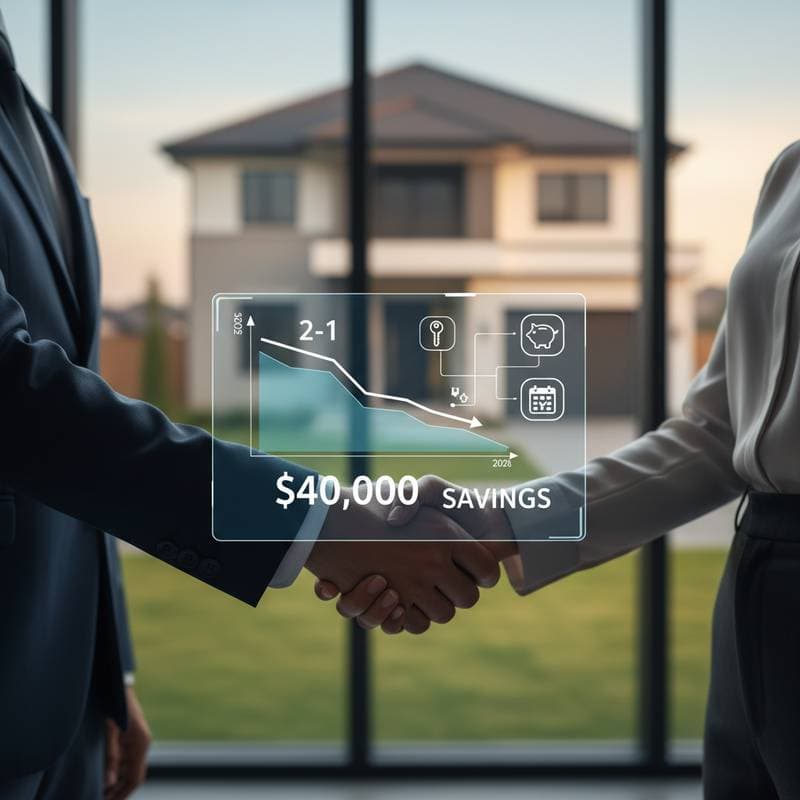
2-1 Buydown Eases First Years of Homeownership
A 2-1 mortgage buydown reduces interest rates temporarily. This approach lowers payments during the initial two years of a loan. Buyers gain time to adjust to ownership costs while preserving long term financial plans.
Current Market Challenges for Buyers
Mortgage rates remain variable. Higher rates reduce purchasing power and increase monthly obligations. Many qualified buyers hesitate when payments exceed expectations by several hundred dollars.
A 2-1 buydown addresses this gap. It delivers lower rates early in the loan term. The structure provides measurable relief without altering the permanent rate.
Mechanics of a 2-1 Buydown
The program reduces the note rate by two percentage points in year one. The rate drops by one percentage point in year two. Full contract rate applies from year three forward.
Consider a 7 percent mortgage. Year one payments reflect a 5 percent rate. Year two payments reflect a 6 percent rate. An escrow account funded at closing covers the difference.
Seller or builder contributions typically supply the escrow funds. Properly structured buydowns generate up to 40000 dollars in combined savings over two years.
Builder Incentives and Market Impact
Builders apply buydowns to maintain sales velocity. They allocate incentive budgets to rate reductions rather than price cuts. This preserves community values while delivering tangible monthly savings to buyers.
Sales teams present buydown options alongside standard features. The immediate payment reduction proves more compelling than abstract future benefits.
Advantages for Homeowners
Lower early payments create financial flexibility. Buyers allocate resources to furnishings, repairs, and reserves instead of stretching for the mortgage. The cushion also supports refinancing if rates decline before year three.
Steps to Obtain a 2-1 Buydown
- Confirm buydown eligibility with a lender before selecting a property.
- Request seller or builder contributions during negotiations.
- Request side by side payment comparisons from the lender.
- Verify escrow documentation in closing papers.
- Prepare a budget that accommodates the full payment in year three.
Quantified Savings Example
Monthly reductions often reach 1500 to 2000 dollars in year one. Savings approximate half that amount in year two. Total first year and second year relief can approach 40000 dollars on larger loans.
Buyers frequently direct portions of these savings toward immediate home improvements such as flooring or lighting upgrades.
Important Limitations
The rate reduction remains temporary. Qualification occurs at the full note rate. Only third party contributions fund the buydown. Refinancing remains available if market conditions improve.
Comparison with Alternative Mortgage Tools
Adjustable rate mortgages introduce ongoing payment uncertainty. Permanent discount points require buyer funded closing costs. A 2-1 buydown shifts costs to the seller while delivering predictable short term relief.
Regional Program Variations
Many markets combine buydowns with closing cost credits. Local lenders maintain partnerships that expedite processing. Resale transactions can incorporate seller contributions when offers specify buydown funding.
Three two one buydowns extend relief across three years in select communities. The two one structure remains the most widely available option.
Budget Planning Recommendations
Allocate a portion of monthly savings to emergency reserves. Practice the full payment amount in advance by directing the difference to a dedicated account. Maintain regular contact with the lender regarding refinance timing.
Documentation and Compliance
Confirm escrow account setup in writing. Review the amortization schedule for exact payment changes. Request a year by year payment outline from the lender prior to closing.
Selecting Service Providers
Work with lenders that supply clear calculators and timelines. Ask for total buydown cost, funding source, and year three payment amount. Transparent responses indicate experienced partners.
Transition After Closing
Early payment relief supports orderly move in and customization. Consistent budgeting ensures smooth adjustment when the permanent rate begins. Homeowners maintain ownership stability through proactive financial habits.