TL;DR
- Homebuilders offer mortgage buydowns to assist buyers in affording new homes.
- A buydown involves the builder funding a reduced interest rate for the initial years of the loan.
- This approach lowers monthly payments during the adjustment period to homeownership, providing financial flexibility.
Understanding Mortgage Buydowns
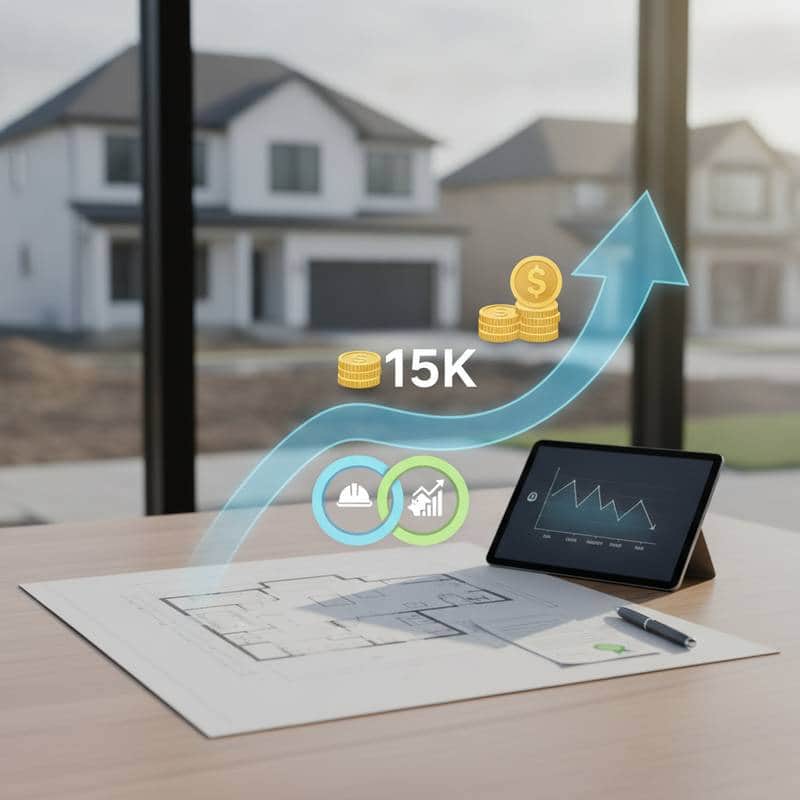
A mortgage buydown occurs when the builder or seller provides upfront funds to decrease the borrower's interest rate for a defined period. This results in reduced monthly payments during that time, after which the rate reverts to the original level. Builders use this strategy to attract buyers in competitive markets where high rates deter purchases.
The benefit lies in easing the transition to homeownership. Buyers face fewer immediate financial pressures, allowing resources for other essentials such as moving expenses or home improvements. However, this incentive requires careful consideration to ensure long-term affordability.
Mechanics of a Temporary Buydown
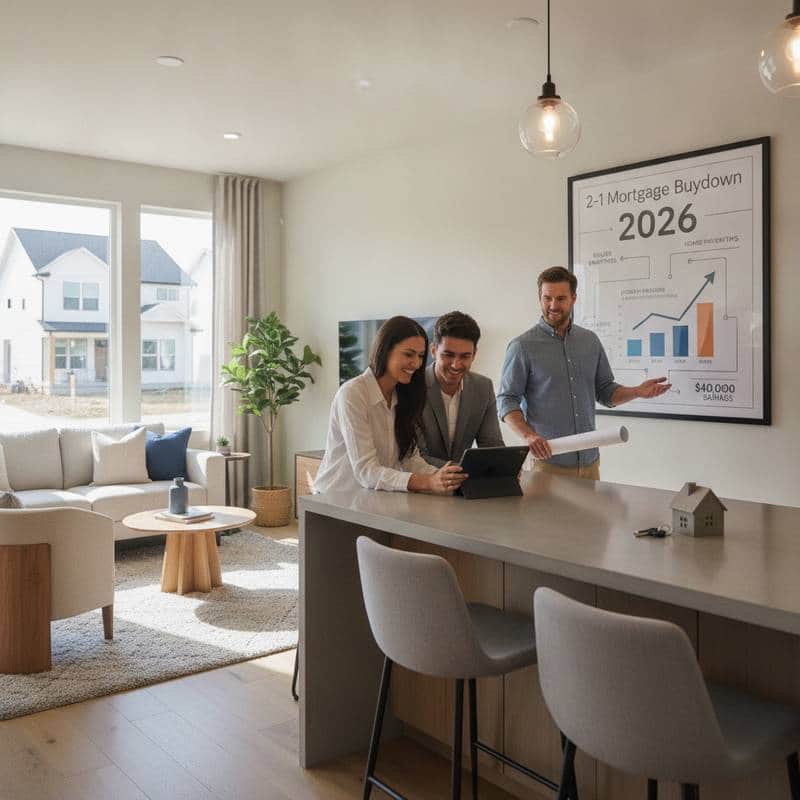
Consider a scenario with a permanent loan rate of 6.5 percent on a $400,000 mortgage. A 2-1 buydown reduces the effective rate by two percentage points in the first year to 4.5 percent and by one percentage point in the second year to 5.5 percent. From the third year onward, the rate returns to 6.5 percent.
This structure yields tangible savings. At 6.5 percent, the principal and interest payment approximates $2,528 per month. In the first year at 4.5 percent, it drops to about $2,024, saving roughly $504 monthly. The second year at 5.5 percent brings the payment to approximately $2,273, saving around $255 per month. These funds can support initial costs like furnishings or utility setup.
The builder finances the buydown by depositing money into an escrow account, which subsidizes the interest difference. Lenders calculate this as a temporary adjustment, ensuring the loan remains viable based on the full rate.
Common Pitfalls in Builder Buydowns
Buyers must avoid assuming the reduced rate persists indefinitely. The temporary nature demands preparation for the eventual increase. Request a full amortization schedule from the lender to visualize payments over the loan term.
Key Considerations
- Clarify the Duration. Confirm the exact length of the reduced rate period, such as one, two, or three years, and any variations like a 3-2-1 structure.
- Evaluate the Builder's Contribution. Inquire about the total amount the builder allocates toward the buydown, as this influences the depth of the rate reduction.
- Verify Qualification Standards. Lenders base approval on the permanent rate, so the buydown does not affect eligibility; review your debt-to-income ratio accordingly.
- Budget for the Rate Adjustment. During the lower payment phase, allocate the savings into a dedicated fund to cover the future increase without disruption.
Addressing these elements prevents surprises and supports informed decision-making.
Complementary Builder Incentives
Builders frequently combine buydowns with additional perks to enhance appeal. These packages address various buyer needs, from upfront costs to customization.
- Closing Cost Assistance. The builder may cover a portion of fees, such as origination or appraisal charges, reducing out-of-pocket expenses at settlement.
- Upgrade Credits. Allocate funds toward selecting premium flooring, cabinetry, or energy-efficient appliances, adding value without extra cost.
- Interest Rate Locks. Secure the rate at the time of contract to protect against market fluctuations during construction delays.
Negotiation plays a crucial role. For instance, if a builder proposes a $10,000 incentive, propose dividing it between a buydown for payment relief and upgrades for personalization. This tailored approach maximizes benefits.
The Rising Trend of Builder Buydowns
Recent marketing emphasizes special financing options, reflecting builders' response to buyer caution amid elevated rates and prices. These programs make new homes accessible by front-loading affordability, encouraging commitments in a hesitant market.
Monitor offerings closely, as they evolve with economic shifts. A well-structured buydown can bridge the gap between current challenges and future stability, prompting action for ready buyers.
Frequently Asked Questions
How long do builder buydowns typically last?
Most buydowns span one to three years. Common configurations include the 2-1 model, with deeper reductions early on, or extended versions like 3-2-1 for gradual adjustments.
Do buydowns affect loan approval?
No, approvals rely on the permanent rate. The temporary subsidy does not alter qualification criteria.
Can buyers extend a buydown?
Extensions depend on the builder's program. Some allow additional funding at renewal, but this requires negotiation before closing.
Steps to Evaluate and Secure a Buydown
Begin by comparing multiple builders' offers, focusing on the net savings and terms. Consult a mortgage professional to model scenarios based on your finances. Once selected, document all details in the contract to ensure execution.
This preparation positions buyers to leverage buydowns effectively, achieving homeownership with minimized risk and optimized benefits.