TL;DR
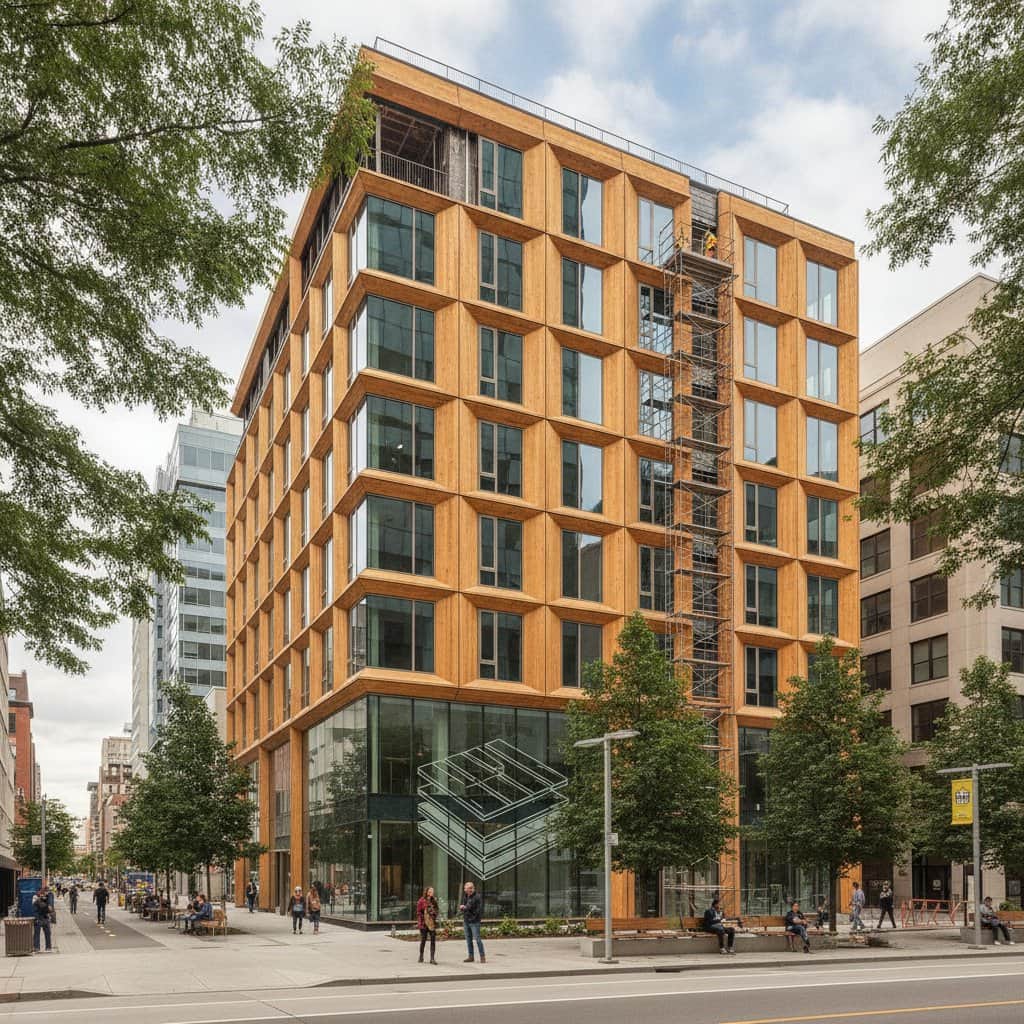
- Cross-laminated timber (CLT) revolutionizes tall building construction by integrating strength, aesthetic appeal, and sustainability.
- Construction professionals favor CLT for its rapid assembly, reduced weight compared to concrete, and diminished carbon emissions.
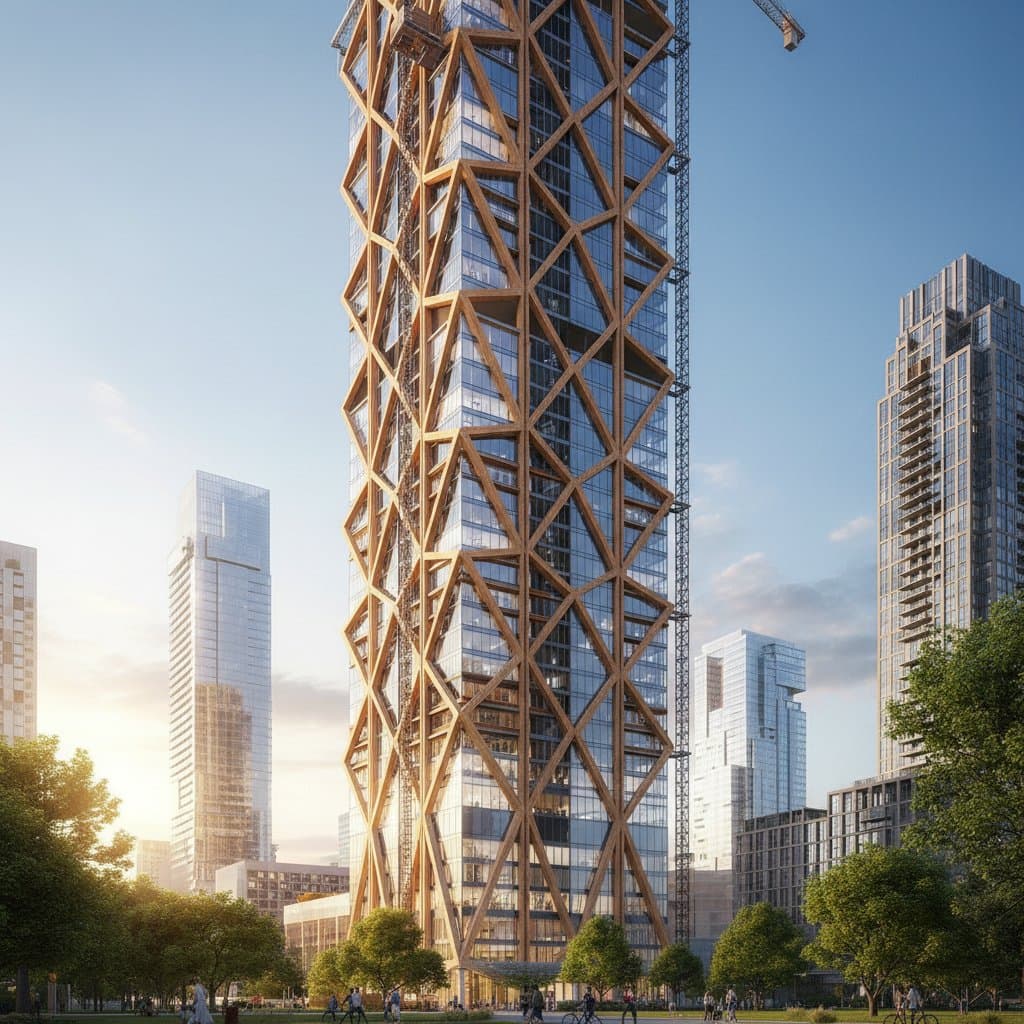
- The adoption of mass timber skyscrapers marks a strategic evolution toward more intelligent and environmentally responsible building practices.
Key Advantages of CLT in Construction
- Reduced weight facilitates simpler transportation and quicker on-site assembly.
- Diminished carbon emissions occur because wood sequesters carbon during growth rather than releasing it during production.
- Natural warmth in aesthetics fosters welcoming interior environments.
- Factory precision ensures precise panel fits and reduces construction waste.
- Flexible applications suit residential, commercial, and high-rise urban structures.
The Shift Toward CLT in Urban High-Rises
Sustainability drives this transformation. Traditional urban construction contributes significantly to global emissions, as concrete and steel production demands substantial energy and releases substantial carbon dioxide. CLT reverses this pattern. Trees capture carbon during growth, and this carbon remains sequestered within the wood when incorporated into structures.
A CLT building thus serves as a carbon sink for decades, supporting municipal efforts to achieve environmental targets. Beyond environmental benefits, CLT offers practical advantages. Prefabricated panels, being lightweight and pre-engineered, enable faster erection with reduced reliance on heavy machinery. This efficiency benefits developers through shorter timelines and minimizes disturbances for surrounding communities.
Transforming Architectural Design with CLT
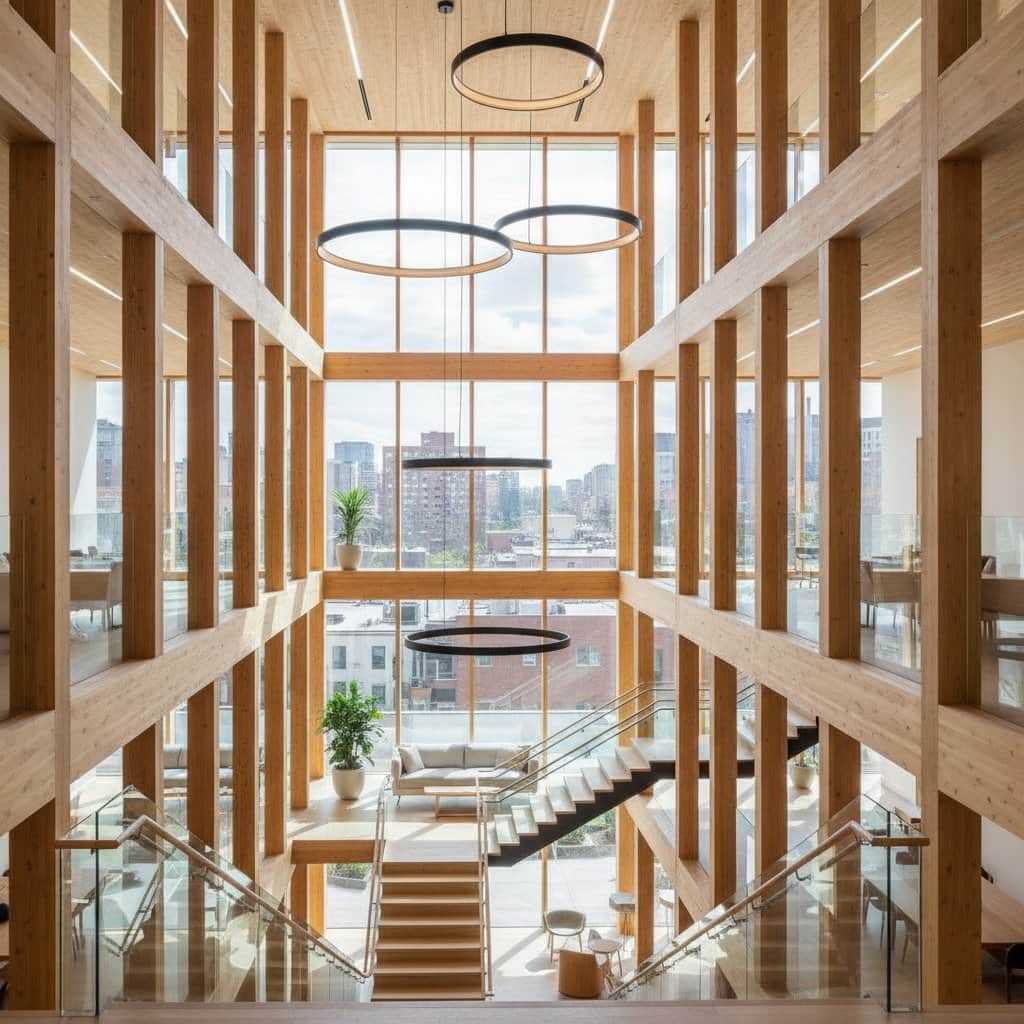
CLT alters the design process profoundly. The inherent texture of wood imparts immediate warmth to spaces, a quality absent in concrete environments. Even in commercial high-rises, interiors become serene, acoustically superior, and more attuned to natural elements.
Load-bearing CLT panels eliminate the need for extensive framing, drywall, and insulation layers. This results in streamlined designs, refined surfaces, and increased usable floor area. Architects appreciate the opportunity to expose the timber, merging structural integrity with visual elegance.
Comparing CLT to Conventional Materials
Consider the following analysis:
Concrete and Steel:
- Ideal for extreme heights and heavy loads.
- Substantial weight, elevated carbon footprint, and extended curing and assembly periods.
- Often perceived as stark or utilitarian without additional treatments.
Cross-Laminated Timber:
- Sufficient strength for mid-rise to high-rise applications up to 18 stories or more.
- Lightweight, renewable resource that sequesters carbon.
- Prefabrication accelerates construction timelines.
- Provides an inherently warm and organic appearance.
CLT does not supplant concrete universally. Hybrid systems often prove optimal, such as concrete bases paired with CLT superstructures. This approach leverages the strengths of each material in appropriate contexts.
Notable CLT Projects Worldwide
Several pioneering CLT structures demonstrate the material's potential globally. These include towers exceeding 12 stories, featuring timber cores atop concrete foundations, and fully timber-based designs that emphasize both engineering and visual harmony.
Success in these projects builds regulatory confidence and advances building standards. Each advancement encourages subsequent developments to push boundaries in height and innovation.
Optimal Applications for CLT
CLT excels in initiatives that harmonize functionality with visual appeal, such as mid-rise residential complexes, office towers, educational facilities, and civic buildings. It proves particularly valuable in retrofits and expansions where weight constraints demand robust yet light solutions.
For projects pursuing rigorous sustainability certifications, CLT simplifies compliance. Thoughtful integration can achieve superior energy performance while delivering biophilic interiors that enhance occupant well-being.
Implications for Builders and Property Owners
This evolution expands choices for construction endeavors. Developers and homeowners gain access to resilient, eco-conscious options that enhance livability.
Exposed timber captivates residents with its visual charm, while also improving indoor air quality and reducing operational costs. Construction teams value the reliability of prefabricated systems, which streamline workflows after initial planning.
The movement transcends novelty; it reflects a deliberate optimization of proven resources.
Implementing CLT Effectively
To incorporate CLT, engage architects and engineers experienced in mass timber. Prioritize early collaboration, as panels require custom fabrication. Align objectives around environmental impact, budget, and design from the outset.
Anticipate adjustments in planning phases, including detailed upfront specifications that yield swift on-site progress. Reconsider approaches to surface treatments, sound control, and utility integration. The outcome typically yields structures that exude vitality and superior performance.
The emergence of cross-laminated timber redefines priorities in construction. Strength and sustainability converge seamlessly, enabling taller edifices that support planetary health.
Frequently Asked Questions
Can CLT structures endure as long as those built with concrete?
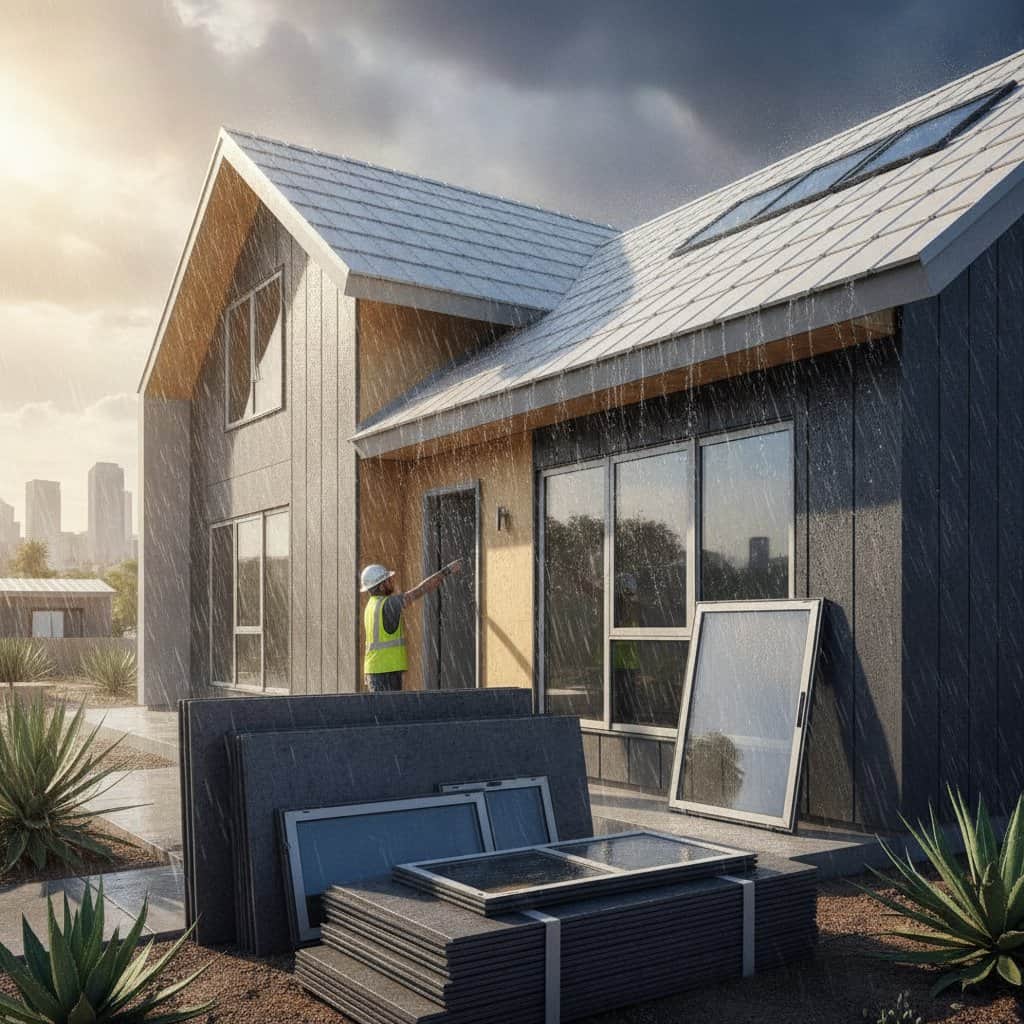
Yes. Proper design details and ongoing maintenance ensure CLT buildings last for generations. Effective moisture control and protective coatings are essential for longevity.