TL;DR
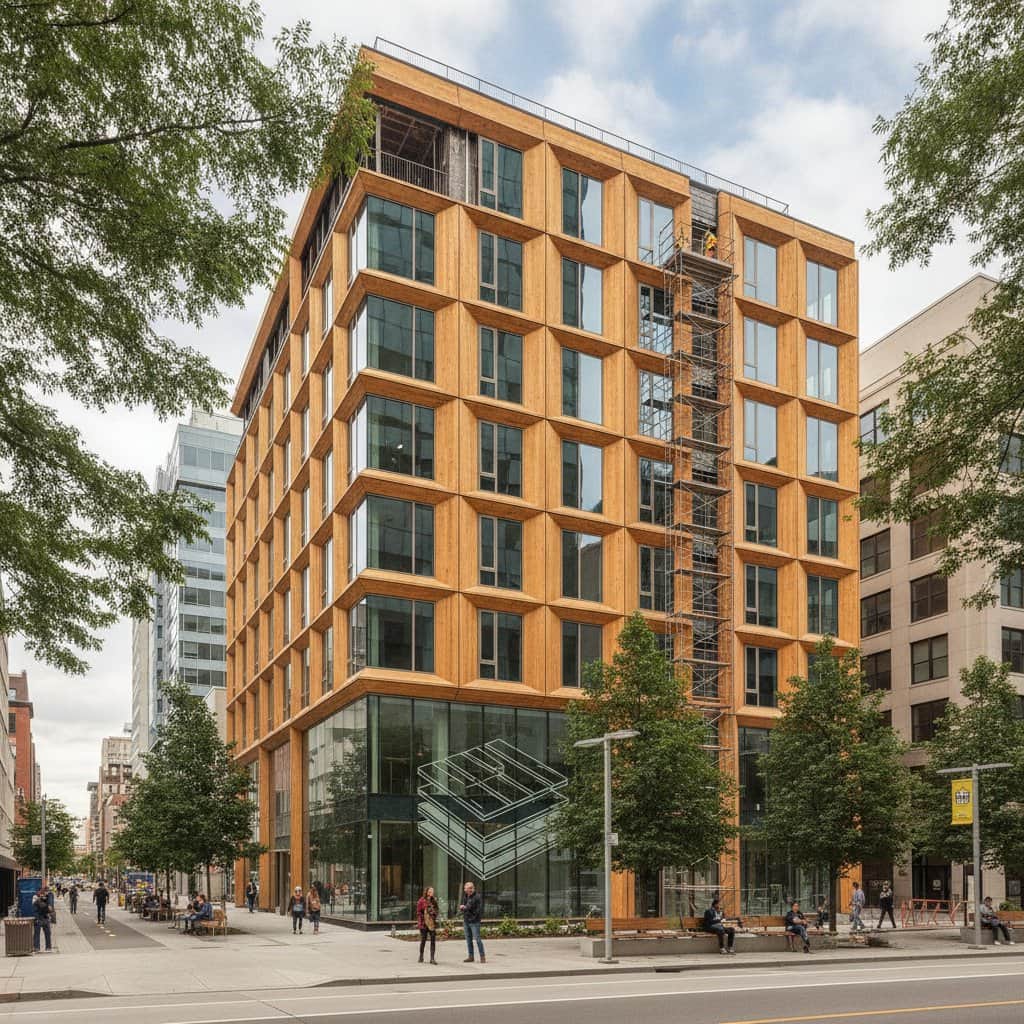
- Mass timber redefines wood-based construction by integrating sustainability with robust fire safety features.
- These engineered products provide exceptional strength, dimensional stability, and adherence to building codes.
- Construction professionals value mass timber for its inviting aesthetics, accelerated assembly, and minimal environmental impact.
What Is Mass Timber?
Mass timber encompasses a range of engineered wood products formed by bonding or fastening layers of lumber into large, solid structural elements.
Key variants include:
- Cross-Laminated Timber (CLT): Composed of lumber boards layered and adhesively bonded with alternating grain directions, these panels serve as floors, walls, and roofs.
- Glulam (Glued Laminated Timber):lumber layers with parallel grain orientations, ideal for beams and columns.
- Nail-Laminated Timber (NLT): Assembled by nailing boards side by side, commonly applied in floor and ceiling systems.
This approach merges smaller wood pieces into robust components, delivering the natural appeal and thermal comfort of wood alongside the reliability of traditional materials like steel or concrete.
Reasons Builders Adopt Mass Timber
Construction professionals select mass timber for its distinct advantages over conventional options.
Accelerated Construction:
Prefabricated panels arrive on site precisely dimensioned, minimizing assembly time, reducing scheduling risks, and limiting unforeseen issues.
Improved Site Conditions:
Compared to concrete pouring or steel erection, mass timber projects generate less waste, dust, and noise, fostering a more controlled work environment.
Environmental Benefits:
Sourced from renewable forests, mass timber sequesters carbon during its lifecycle, supporting low-emission building practices.
Enhanced Aesthetics:
The material's exposed surfaces offer rich wood grains, subtle color variations, and organic textures that blend contemporary style with inviting warmth.
Professionals who experience mass timber structures often note the unique sensory qualities, from visual harmony to acoustic softness.
Mass Timber Versus Concrete and Steel
For those familiar with established materials, mass timber offers competitive performance across key metrics.
Structural Integrity and Mass:
Lighter than concrete or steel, mass timber maintains high load-bearing capacity. This reduced weight allows for shallower foundations in many designs, potentially lowering overall expenses.
Construction Efficiency:
Modular panels enable rapid erection; entire building levels can assemble in days rather than weeks.
Fire Performance:
While concrete resists ignition, steel softens at elevated temperatures. Mass timber forms a protective char layer that insulates the unburned core, preserving structural integrity in line with fire codes.
Economic Considerations:
Initial material costs align with steel or concrete based on regional supply and project scope. However, efficiencies in labor, timeline, and foundation requirements frequently yield net savings.
Sustainability Profile:
Mass timber excels with its renewable sourcing, carbon storage, and lower production energy demands compared to cement or metal fabrication.
Design Versatility:
Unlike the stark finishes of concrete or the impersonal sheen of steel, mass timber introduces natural elements that enhance occupant well-being.
Evaluating Mass Timber for Projects
Mass timber suits a variety of applications, particularly where sustainability and visual appeal matter.
Consider these factors for custom residences, commercial offices, or mid-rise developments:
- Does the design incorporate visible wood elements?
- Is achieving a low-carbon footprint a priority?
- Can the project team address the detailed prefabrication planning?
Affirmative responses indicate strong potential for integration.
Frequently Asked Questions
What distinguishes CLT from standard plywood?
CLT consists of thick lumber boards cross-layered for structural load-bearing in walls, floors, and roofs. Plywood, made from thin veneers, primarily provides sheathing for non-structural uses and lacks comparable strength.
Is mass timber suitable for multi-story structures?
Yes, updated building codes permit mass timber in high-rise applications, leveraging its proven strength for elevations previously reserved for non-wood materials.
Does mass timber cost more than concrete?
Costs vary by region and vendor. Material prices may exceed concrete, but expedited construction and simplified foundations often result in comparable or reduced total expenses.
Does mass timber require additional fire protection?
The inherent charring mechanism offers built-in resistance, satisfying many codes without extras. Certain designs incorporate intumescent coatings or encasements to fulfill stringent local standards.
How does mass timber perform in moist environments?
Proper detailing ensures durability; avoid prolonged water contact by applying sealants and vapor barriers as needed.
Integrating Mass Timber into Built Spaces
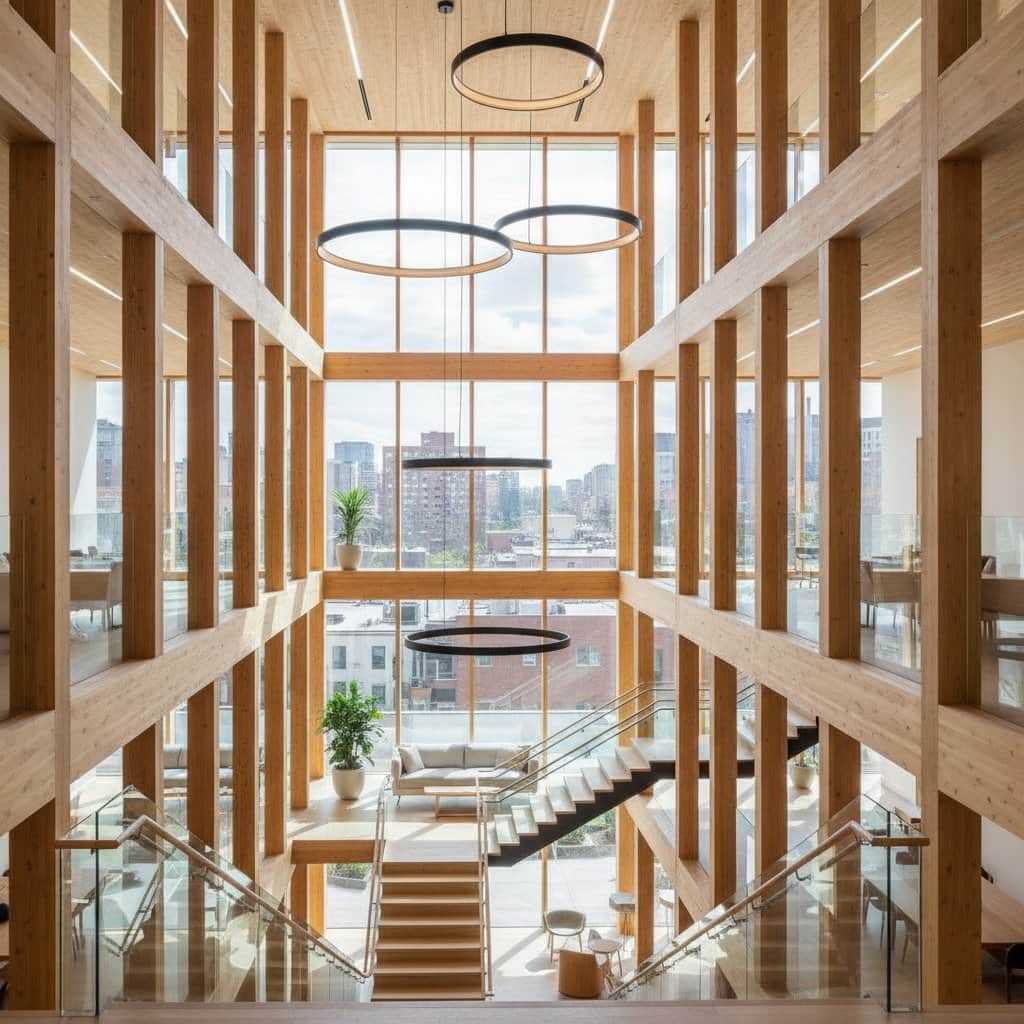
Upon completion, mass timber environments reveal their full character through subtle wood scents, tactile surfaces, and serene acoustics. These qualities create spaces that resonate with users in ways industrial materials seldom achieve.
For those considering adoption, begin with modest scales such as accessory structures or renovations. This approach allows direct assessment of performance before scaling to larger endeavors.
Mass timber demands thoughtful preparation yet delivers enduring value through resilience, safety, and ecological responsibility. Consult specialists, visit exemplary installations, and envision its role in future designs to appreciate this evolving material.