Secure a 5.9% Construction Loan Rate Before Rates Increase
Imagine surveying the plot of land designated for your new home. The ground remains freshly prepared, and the atmosphere buzzes with potential. You envision the structure rising, the custom kitchen taking shape, and the outdoor living space ready for gatherings. However, when financing enters the discussion, enthusiasm tempers slightly. Construction loan rates continue to ascend, and each incremental rise translates to elevated monthly obligations once construction concludes.
Professionals in the field often face this scenario, balancing figures and projections to determine the impact of timely decisions. The insight reveals significant potential savings. Obtaining a 5.9% rate prior to impending increases preserves thousands in interest over the loan duration and establishes cost certainty, allowing concentration on the construction process.
This opportunity demands strategic action rather than haste. The following sections explain the concept of rate locking for construction loans, its operational mechanics, and integration with project schedules and financial plans.
The Importance of Locking a 5.9% Rate
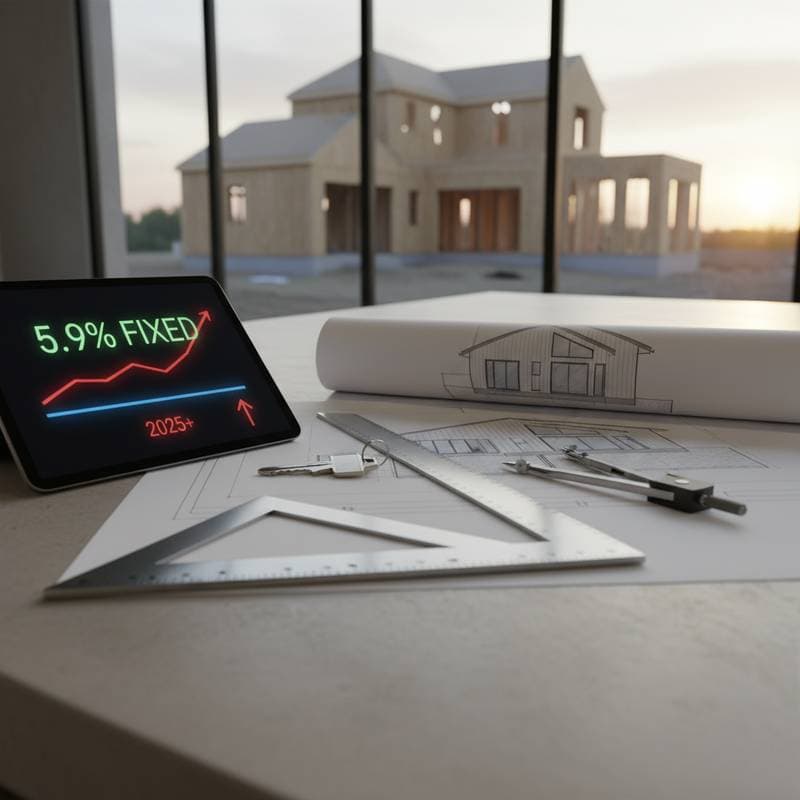
A locked 5.9% construction loan rate provides essential predictability. The lender commits to maintaining that rate for a defined duration throughout the construction phase, irrespective of fluctuations in the wider financial environment.
Key benefits include:
- Financial certainty: Precise knowledge of interest obligations during the build eliminates uncertainty.
- Shield from increases: Should market rates escalate, the secured rate remains unchanged.
- Enhanced planning: Fixed costs enable accurate forecasting for optional features, enhancements, and interior setups without repeated financial adjustments.
This approach mirrors locking in material costs before price surges, applying the same foresight to loan terms.
Evaluating Lenders and Rate Lock Features
Lenders vary in their handling of construction financing. Certain institutions focus on builder-specific loans, while others view them as specialized offerings. Effective comparison extends beyond surface rates to encompass comprehensive terms.
Essential Factors to Assess:
- Lock period length: Verify coverage aligns with the full anticipated construction timeline.
- Transition provisions: Understand the process and conditions for converting to a long-term mortgage.
- Extension capabilities: Confirm options for prolonging the lock if delays occur.
- Regional knowledge: Local providers frequently possess deeper insight into area-specific construction paces and regulatory requirements compared to larger entities.
In regions where builders collaborate closely with community banks, consult your builder for recommendations. Experience indicates that regional lenders provide greater adaptability in extensions, given their familiarity with variable project timelines.
To conduct a thorough evaluation, request detailed quotes from at least three lenders. Prepare a spreadsheet to track rates, fees, and lock durations side by side. This method highlights discrepancies and reveals the most advantageous option. Additionally, review online lender ratings and seek feedback from recent borrowers in your community to gauge reliability and responsiveness.
Aligning Timing with Your Construction Schedule
Construction projects seldom adhere strictly to initial projections. Factors such as inclement weather, supply chain disruptions, or administrative delays can extend durations. Selecting a lock period with adequate margin proves crucial for completion without added costs.
Practical strategies for timing include:
- Incorporate extra time: For a projected ten-month build, opt for a twelve-month lock when available.
- Maintain lender communication: Provide regular updates on progress to preempt issues.
- Inquire about extensions upfront: Many lenders permit brief overages for a modest fee; clarify policies early.
In one instance, persistent rainfall delayed framing, yet proactive updates secured a no-cost 30-day extension from the lender. Consistent dialogue fosters such accommodations and prevents unnecessary expenses.
Further, develop a detailed project timeline with your builder, incorporating milestones like foundation pouring and roofing completion. Share this with your lender during the application to tailor the lock period precisely. If your build involves custom elements prone to delays, such as imported fixtures, consider a lock with built-in flexibility from the outset.
Regional Lending Options for Construction Projects
Local financial institutions often excel in construction lending. Credit unions, community banks, and programs affiliated with builders deliver competitive rates alongside adaptable conditions.
Positive outcomes frequently arise from lenders attuned to custom builds, who navigate local permitting efficiently and synchronize with builder workflows. Network within your locality; builders typically identify efficient partners versus those hindered by bureaucracy.
Review your builder's endorsed lender roster, as established partnerships may yield superior lock agreements or waived charges. Nonetheless, perform independent comparisons of rates, service levels, and contract fine print. Attend local real estate or builder association events to gather firsthand insights from others who have navigated similar financings.
For those in rural or suburban areas, explore farm credit services or specialized construction arms of regional banks, which may offer rates below national averages due to lower overhead. Always verify licensing and stability through state banking departments to ensure legitimacy.
Steps to Finalize Your Rate Lock
Pursuing a 5.9% construction loan rate transcends mere cost reduction. It instills assurance throughout the project. With stable financing, attention shifts to design choices and quality execution, free from market volatility concerns.
To proceed, initiate contact with selected lenders for pre-approval, providing build plans and budget estimates. Negotiate lock terms based on your timeline, and document all agreements in writing. This preparation positions you to commence construction with financial clarity, maximizing the value of your investment in a custom home.