Key Takeaways
- Homebuilders implement mortgage rate buydowns to enhance the affordability of monthly payments.
- A buydown involves the builder funding a portion of the buyer's mortgage interest in advance, which reduces the effective interest rate for a temporary or permanent period.
- These measures assist buyers in meeting qualification criteria more readily and provide assurance when committing to a new home purchase.
Why Rate Buydowns Attract Homebuyers
Rate buydowns offer several advantages that appeal to prospective buyers navigating a high-interest-rate environment. First, they deliver lower initial monthly payments, which eases immediate financial pressure and allows budgets to accommodate homeownership more comfortably. Second, since the builder funds these incentives, they do not increase the home's purchase price, preserving the overall value of the property.
Additionally, buydowns provide flexibility for future financial planning. Buyers retain the option to refinance if market rates decline, potentially locking in even lower costs long-term. Overall, these incentives expand buying power without requiring buyers to overextend their current financial resources, making new home purchases more accessible.
The Mechanics of Savings Through Builder Buydowns
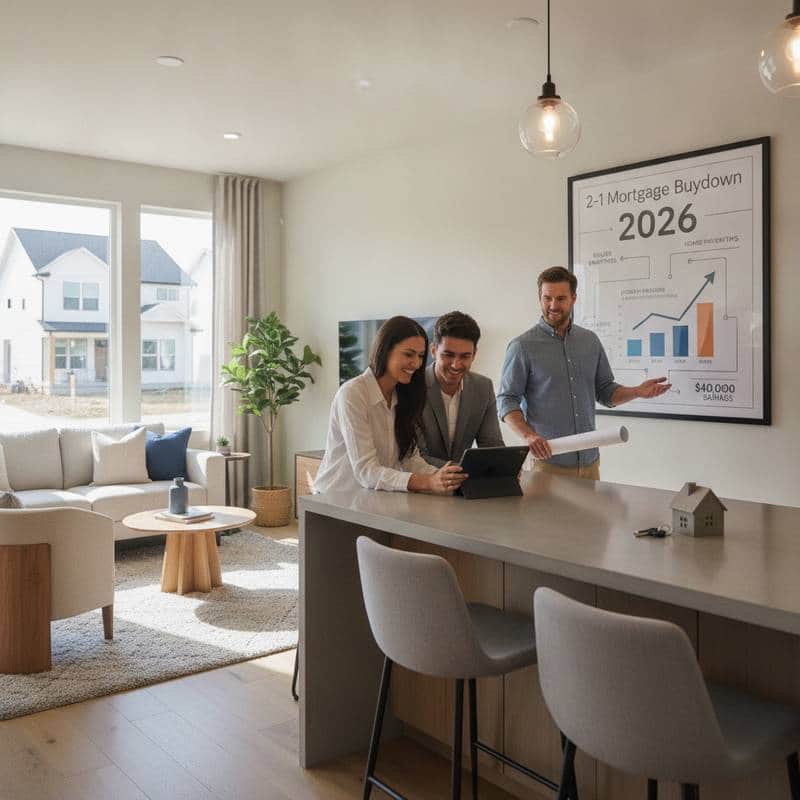
Consider a scenario where a standard mortgage rate stands at 7 percent. A 2-1 buydown adjusts this rate to 5 percent for the first year and 6 percent for the second year, before reverting to the full 7 percent. The builder pays the difference in interest costs directly to the lender, which can result in savings of several thousand dollars during the initial years.
This upfront relief creates valuable financial flexibility. Buyers often apply the reduced payments toward accelerating debt repayment on credit cards or student loans, or they build emergency savings to prepare for potential refinancing opportunities. In one case, a client utilized the monthly savings to install a new backyard patio shortly after moving in. The client noted that this upgrade made the home feel complete from the start, avoiding years of delayed improvements due to tight finances.
To maximize these benefits, buyers should calculate the total savings based on their loan amount and the buydown structure. For instance, on a $400,000 loan, a 2 percent rate reduction in the first year could save approximately $8,000 in interest. Such precise calculations help buyers appreciate the tangible impact on their household budget.
Comparing Buydowns to Price Reductions
The choice between a rate buydown and a price cut hinges on individual financial objectives and homeownership plans. A price reduction directly decreases the loan principal, fostering greater long-term equity buildup as payments contribute more toward ownership. However, if interest rates remain elevated, the monthly payment may not decrease substantially, limiting short-term relief.
In contrast, a rate buydown maintains the original purchase price while immediately lowering monthly obligations. This approach suits buyers anticipating a short-term stay or planning to refinance once rates fall. For long-term residents, a price cut often yields superior results by reducing the total interest paid over the loan's life.
Buyers can evaluate options using a simple framework:
Price Reduction
- Lowers the borrowed amount and accelerates equity growth.
- Builds wealth over time through reduced principal.
- Offers limited immediate impact on cash flow if rates are high.
Rate Buydown
- Preserves the home's listed price for negotiation purposes.
- Provides instant payment relief to support early homeownership costs.
- Aligns well with strategies involving future refinancing.
Ultimately, short-term homeowners may favor buydowns for their quick affordability boost, while long-term owners benefit more from price adjustments that enhance overall financial position.
Strategies for Effective Home Financing Decisions
When considering a new construction home, inquire about available incentives at the outset of discussions with builders. Many maintain exclusive arrangements with preferred lenders, which can yield customized buydowns or additional credits not accessible through independent sources. Early awareness of these options strengthens your position in negotiations.
Strategy 1: Initiate Incentive Discussions Promptly.
Raise questions about buydowns and related perks before finalizing any purchase agreement. Committing without exploring these can diminish opportunities to secure extras, such as credits for closing costs or enhancements like premium flooring.
Strategy 2: Obtain Multiple Loan Quotes.
Consult at least two lenders to benchmark the buydown's value. Even if the builder's partner provides the incentive, an external quote reveals whether it truly optimizes your terms or if alternatives offer better overall rates.
Strategy 3: Align Choices with Long-Term Plans.
For those anticipating refinancing, a temporary buydown suffices to bridge the gap. Seek permanent reductions if stability matters more, as they eliminate future payment increases.
Strategy 4: Budget for Full-Rate Scenarios.
Lower payments tempt easy enthusiasm, yet they often prove temporary. Model your finances assuming the original rate applies from day one to ensure sustainable planning and avoid surprises.
Common Questions on Builder Rate Buydowns
Can buyers combine a buydown with additional builder incentives?
Yes, in many cases. Builders frequently permit stacking, such as pairing a buydown with assistance for closing costs or appliance upgrades. Verify any limits on total credits through the lender to understand the full package.
How does a buydown affect mortgage qualification?
It improves qualification by basing approval on the reduced initial rate. Lenders assess affordability using these lower payments, which can expand eligibility for buyers near income thresholds.
What occurs if rates drop after a temporary buydown?
Buyers gain the advantage of even lower payments through refinancing. The buydown's early savings position individuals to act swiftly without financial strain.
Do buydowns impact home resale value?
No direct impact exists, as the incentive attaches to the loan, not the property. However, the full purchase price remains, supporting strong resale potential.
Securing Lasting Financial Advantages
Builder rate buydowns represent a strategic tool for entering homeownership amid challenging rates. By lowering initial costs without inflating prices, they empower buyers to build equity and adapt to market shifts. Evaluate these options thoughtfully to align with your goals, ensuring a purchase that supports both immediate needs and future stability.