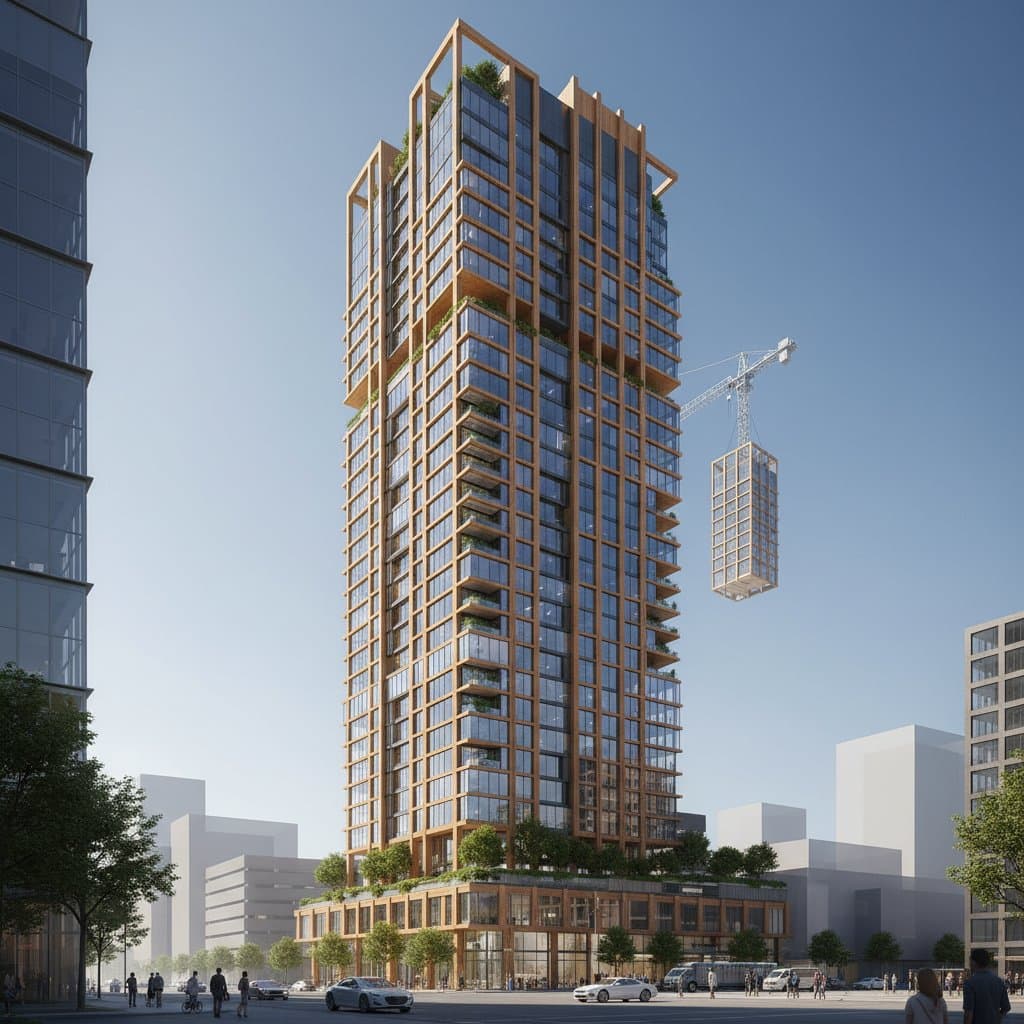
Mass Timber Towers Now Approved Under 2026 Building Codes
Mass timber construction represents a significant shift in high-rise building practices. With the approval of taller timber structures under the 2026 International Building Code (IBC), developers gain access to innovative materials that combine sustainability with structural integrity. This update addresses long-standing concerns about fire safety and seismic performance, paving the way for widespread adoption of wood-based high-rises.
Engineers and architects have long viewed mass timber as a viable alternative to traditional materials like steel and concrete. Composed of large, engineered wood panels such as cross-laminated timber (CLT) and glued-laminated timber (glulam), these systems offer prefabrication advantages that streamline construction timelines. The 2026 codes raise height limits to 18 stories for Type IV-A construction, enabling projects that were previously restricted by outdated regulations.
Understanding Mass Timber Fundamentals
Mass timber differs from conventional wood framing through its use of dense, layered assemblies that provide exceptional strength. CLT panels, for instance, consist of odd-numbered layers of lumber glued crosswise, creating a material that resists bending and shear forces effectively. Glulam beams, formed by bonding smaller lumber pieces under pressure, support expansive spans in floors and roofs.
These components arrive on-site pre-fabricated, reducing on-site labor and waste. Builders assemble them much like large-scale Legos, which accelerates erection phases compared to pouring concrete or welding steel. The result is a lighter structure that demands less robust foundations, lowering overall project costs in many urban settings.
Fire performance has historically deterred timber use in tall buildings, but modern treatments and design strategies mitigate risks. Char rates for mass timber predictably slow fire spread, allowing structures to maintain integrity longer than expected. The 2026 codes incorporate these insights, mandating encapsulation and sprinkler systems that align timber with non-combustible standards.
Key Changes in the 2026 Building Codes
The 2026 IBC introduces flexible provisions for mass timber under Chapter 6, specifically expanding Type IV classifications. Type IV-A now permits buildings up to 85 feet in height with non-combustible cladding, while Type IV-C allows up to 270 feet under stricter fire-resistance ratings. These adjustments stem from extensive testing by organizations like the International Code Council, which validated timber's performance in full-scale fire and earthquake simulations.
Seismic considerations receive equal attention, as mass timber's ductility absorbs shocks better than rigid concrete frames in some scenarios. Codes require detailed engineering analyses, including dynamic modeling, to ensure stability in high-risk zones. Developers must collaborate with certified professionals to navigate these requirements, but the framework encourages innovation without compromising safety.
Approval processes simplify for jurisdictions adopting the 2026 codes, reducing permitting delays that plagued earlier projects. Local amendments may vary, so teams should consult regional authorities early. This standardization fosters confidence among insurers and financiers, who previously hesitated to back timber high-rises.
Advantages of Mass Timber in High-Rise Construction
Sustainability drives much of the enthusiasm for mass timber. Wood sequesters carbon during growth, and using it in buildings locks away emissions that would otherwise enter the atmosphere from steel production or cement manufacturing. A mid-rise timber tower can offset up to 50 percent more carbon than an equivalent concrete structure over its lifecycle.
Construction speed emerges as a primary benefit. Prefabricated elements enable parallel workflows: while panels ship from factories, site preparation advances simultaneously. Projects that once took years now complete in months, minimizing disruptions in dense urban environments. This efficiency translates to substantial savings, with reports indicating 20 to 30 percent reductions in schedule-related costs.
Cost competitiveness extends beyond timelines. Lighter loads reduce foundation expenses, particularly on challenging soils. Material prices for mass timber have stabilized as supply chains mature, making it comparable to steel in many markets. Developers also leverage incentives like tax credits for green building certifications, enhancing financial viability.
Aesthetic and wellness aspects add value. Timber's warm tones and natural textures create inviting interiors that boost occupant satisfaction. Biophilic design principles, supported by mass timber, correlate with improved productivity and health outcomes in studies. Architects integrate exposed elements to foster connections with nature, differentiating projects in competitive real estate landscapes.
Implementing Smart Planning for Timber Projects
Successful mass timber towers demand strategic planning from inception. Begin with feasibility studies that assess site conditions, code compliance, and supply availability. Engage multidisciplinary teams early, including structural engineers versed in wood dynamics and sustainability consultants to optimize environmental impacts.
- Evaluate local code adoption timelines to align project schedules.
- Source materials from certified sustainable forests to meet certification standards.
- Design for modularity, allowing future adaptations like tenant fit-outs.
- Incorporate hybrid systems, blending timber with steel accents for enhanced performance.
- Plan logistics meticulously, as large panels require specialized transport and cranes.
Budgeting requires attention to volatility in lumber markets, though long-term contracts mitigate risks. Insurance providers increasingly offer tailored policies for timber builds, reflecting improved risk profiles. Training workers on assembly techniques ensures quality, as improper connections can undermine structural goals.
Challenges persist, such as moisture management during storage and erection. Codes specify protective measures, like sealed packaging and rapid installation, to prevent warping. Acoustic performance also warrants focus; while timber excels in vibration damping, additional insulation may be necessary for urban noise control.
Real-World Applications and Lessons Learned
Projects worldwide demonstrate mass timber's potential. The 18-story Mjøstårnet in Norway, completed before the 2026 codes, showcased glulam and CLT in a hybrid design that withstood harsh climates. Closer to home, the T3 Minneapolis office tower integrated timber elements for energy efficiency, achieving LEED Platinum status.
These examples highlight adaptability. In seismic areas like the Pacific Northwest, engineers combine timber cores with concrete bases for resilience. Cost analyses from such builds reveal savings in labor and materials, with payback periods under five years through operational efficiencies.
Lessons include the importance of stakeholder buy-in. Educating clients on timber's durability dispels myths, while showcasing prototypes builds momentum. As codes evolve, retrofitting existing structures with mass timber extensions offers opportunities for sustainable urban renewal.
Embracing Timber for Sustainable Urban Growth
The 2026 building codes mark a turning point for mass timber towers, enabling developers to prioritize environmental responsibility without sacrificing performance. Faster construction, reduced emissions, and enhanced livability position timber as a cornerstone of future cities. By adopting these systems, the industry moves toward resilient, resource-efficient built environments that benefit generations to come.
Professionals who integrate mass timber early in planning reap rewards in innovation and market edge. As adoption grows, expect broader availability and refined techniques that further solidify its role in high-rise development.