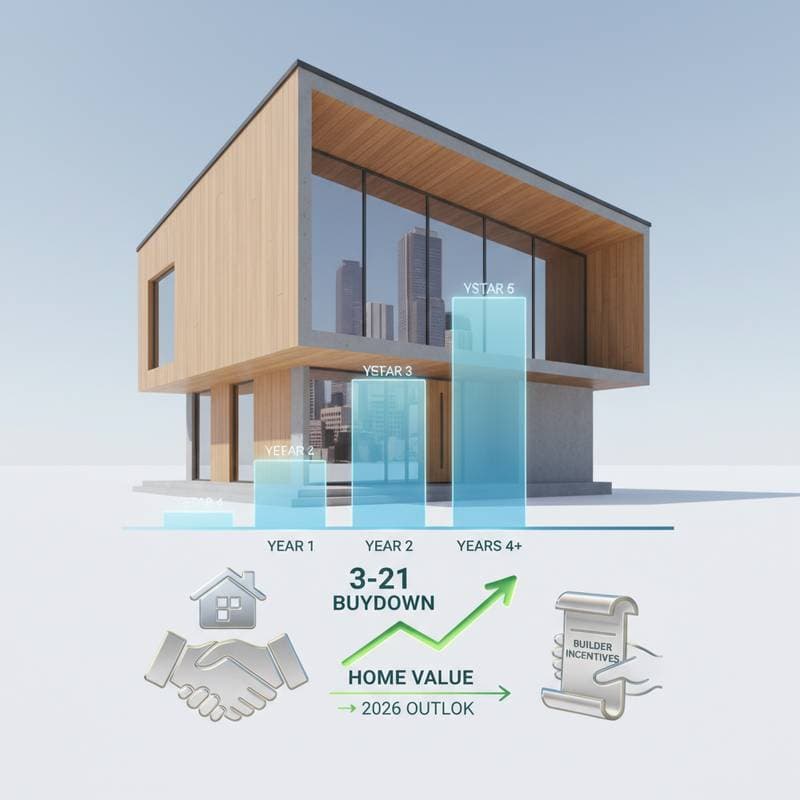
Builder Incentives on the Rise: Temporary Buydowns Mitigate 2026 Mortgage Rates
Imagine entering a model home filled with the scent of fresh lumber and paint. A sales representative presents a brochure featuring appealing kitchen images and mentions a rate buydown that reduces mortgage payments for the initial years. For those tracking housing market developments, this offer holds significant value. Builder incentives have existed for years, yet they experience a notable resurgence, with temporary buydowns leading the way.
Signs in developing neighborhoods often advertise reduced monthly payments or builder-funded rate adjustments. These promotions support a strategy that assists buyers in managing mortgage affordability while enabling builders to sell inventory efficiently. In periods of elevated interest rates, buydowns provide a practical connection between financial constraints and homeownership goals.
This approach has proven effective in practice. Acquaintances purchased a new construction home last year with a 2-1 temporary buydown, which lowered their first-year payment sufficiently to cover a kitchen island upgrade. They referred to it as an interior design bonus, and the arrangement succeeded well.
The following sections explain why builders emphasize buydowns, key considerations before committing, and their potential impact on purchasing decisions.
Key Features of Temporary Buydowns
Temporary buydowns follow standard configurations:
- 1-0 Buydown: The interest rate decreases by one percentage point during the first year.
- 2-1 Buydown: The rate reduces by two points in the first year and one point in the second year, then returns to the original level.
- 3-2-1 Buydown: The rate falls by three points in the first year, two points in the second, and one point in the third, before reverting to the base rate.
Consider a permanent mortgage rate of 6.5 percent. Under a 2-1 buydown, payments reflect a 4.5 percent rate in the first year, 5.5 percent in the second, and 6.5 percent thereafter. The builder finances the difference through an upfront payment held in escrow to offset the lower monthly amounts.
During my first home purchase, such options were unavailable. Calculations focused on paint selections rather than financing strategies. In retrospect, a temporary buydown would have alleviated financial pressures in the initial months when budgets were tight.
Strategic Reasons for Builder Buydown Investments
Builders implement buydowns as deliberate business decisions rather than charitable gestures. Unsold homes generate substantial holding costs, exceeding the expense of funding a buydown. These incentives sustain employment for construction teams, maintain subcontractor relationships, and support steady cash flow.
Buydowns also safeguard pricing stability. Direct price reductions risk alienating prior buyers who paid full amounts and could affect property appraisals. In comparison, buydowns represent short-term adjustments that preserve the documented sale price, aligning with marketing objectives and valuation requirements.
In various markets, builders collaborate with designated lenders experienced in incentive programs. These lenders oversee escrow accounts and ensure adherence to lending regulations, while builders provide the funds at closing. This partnership streamlines the process for buyers and frequently incorporates benefits such as lowered closing costs.
Evaluating Costs and Overall Value
For a midrange home, a 2-1 buydown typically requires a few thousand dollars from the builder, treated as a promotional investment. For buyers, this translates to monthly savings of several hundred dollars in the early ownership years. Such relief distinguishes between financial strain and stability.
When evaluating properties, assess the complete offer. One builder may propose a higher base price paired with a buydown and closing cost support. Another could lower the price without financing aids. Request comprehensive payment projections to compare ongoing costs beyond initial figures.
Regional lenders deliver customized guidance. Community banks and credit unions in active construction areas often work with builders to design buydowns suited to local incomes and home values. In booming new-build markets, these collaborations proliferate.
Strategies for Reviewing Builder Incentives
Builders promote buydowns through varied messaging, such as emphasizing introductory rates or initial payment reductions. Clarity remains essential. Insist on comparative estimates illustrating payment changes over the loan term.
Sales centers increasingly feature charts that detail payment variations. This practice aids buyers in understanding immediate advantages alongside future obligations. Previously, some offers appeared in obscured details, but current market dynamics demand straightforward presentations.
While visiting model homes, document incentive materials in a notebook or via photographs. Review them later, away from on-site distractions like ambient scents or lighting effects. Builders modify offers based on economic shifts, so timing affects availability.
Implications for the Housing Market
The increase in builder incentives demonstrates innovation amid challenges. In restrictive financing environments, these tools maintain buyer interest without resorting to price cuts or forfeiting sales.
This pattern signals builder optimism regarding future stability. Expectations of refinancing opportunities or adjusted affordability underpin these offers. Builders avoid buydowns if default risks loom upon rate normalization, indicating anticipated equilibrium.
Buyers gain from this forward-looking stance. For new construction purchases, the present market presents opportunities for homes with controlled payments and supplementary features. Thoroughly examine conditions and verify alignment with long-term financial plans.
Steps to Secure a Buydown Offer
Start by identifying builders active in your target area and inquire about current incentives during initial consultations. Gather written details on buydown structures, including rate reductions, durations, and funding sources.
Consult an independent mortgage advisor to model scenarios against your budget. Verify that the buydown integrates with your loan type and does not introduce hidden fees. At closing, confirm escrow setup and payment schedules in the final documents.
By following these steps, buyers position themselves to leverage buydowns effectively, enhancing affordability without compromising future financial health.