TL;DR
- Pre wiring a home for battery storage now saves substantial money and prevents future complications.
- Upcoming building code changes will require battery ready wiring in new construction.
- Early preparation maintains flexibility for solar additions and improves overall home efficiency.
What Battery Ready Wiring Means
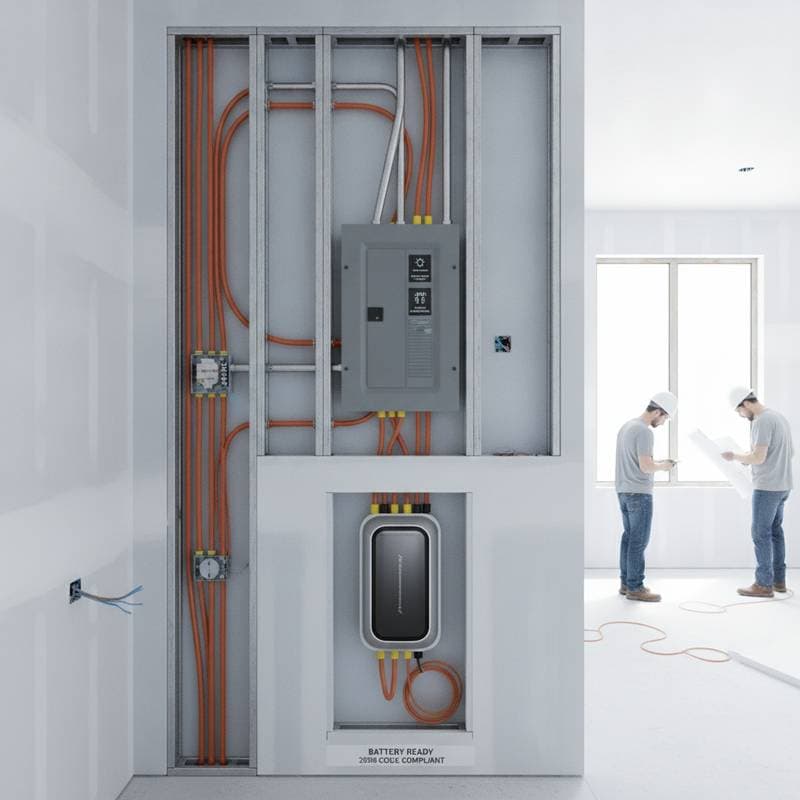
A battery ready home includes electrical infrastructure and allocated space for a future storage system. Installation of the battery itself can occur later. Typical elements include conduit runs from the main panel to a designated battery area, an electrical panel with sufficient capacity for added loads, dedicated wall space in a garage or utility room, and proper labeling along with safety disconnects.
This approach resembles installing plumbing lines during initial construction for a bathroom that will be completed later. The pathways remain available without disruption to finished surfaces.
Mistakes to Avoid During Pre Wiring
The primary error involves delaying planning until after rough in work is complete. Coordination among the builder, electrician, and any solar provider should begin at the project outset.
Additional issues include selecting an unsuitable battery location such as a warm laundry area instead of a cool, accessible garage wall. Another common oversight is omitting conduit runs from the main panel to the planned storage spot. Insufficient panel capacity often forces expensive replacements later, while missing labels and documentation complicate future work. Finally, failing to align the pre wire plan with potential solar integration reduces system effectiveness.
Steps for Effective Pre Wiring
Plan finishes before finalizing electrical layouts to avoid blocking the intended battery wall area with cabinets or storage units. Discuss panel sizing with the electrician, focusing on busbar ratings and main breaker capacity to accommodate future solar and storage demands.
Install conduit runs during the rough in phase from the main panel to the chosen battery location. Reserve adequate wall space and clearance for a unit roughly the size of a large suitcase. Label all circuits, conduits, and subpanels clearly and store a diagram with home records.
Advantages of Early Preparation
Homeowners gain the ability to add energy storage later with minimal construction impact. The setup supports greater independence from the grid once solar is incorporated. Resale appeal increases because buyers recognize the reduced energy costs and modern infrastructure. Compliance with forthcoming codes simplifies inspections and transactions.
Case Study of Cost Savings
A recent project involved a new home where conduit was run from the main panel to a garage wall despite no immediate solar plans. After occupancy, the owners added a battery system in half a day at roughly one third the cost paid by neighbors. The absence of drywall repairs or new wiring accounted for the difference.
Common Questions
Pre wiring does not require immediate battery installation. The work can be completed at any future point. Proper documentation helps inspections proceed smoothly because requirements are already met. Unused conduit and space do not create problems and retain value at resale. Licensed electricians should perform all work to satisfy safety codes. The process typically requires one or two days during the rough in stage.
Next Actions for Homeowners
Discuss battery ready provisions with the builder and electrician during initial planning meetings. Specify conduit routes, panel capacity, and labeled documentation in the construction contract. This preparation positions the home for straightforward energy upgrades without repeated structural changes.