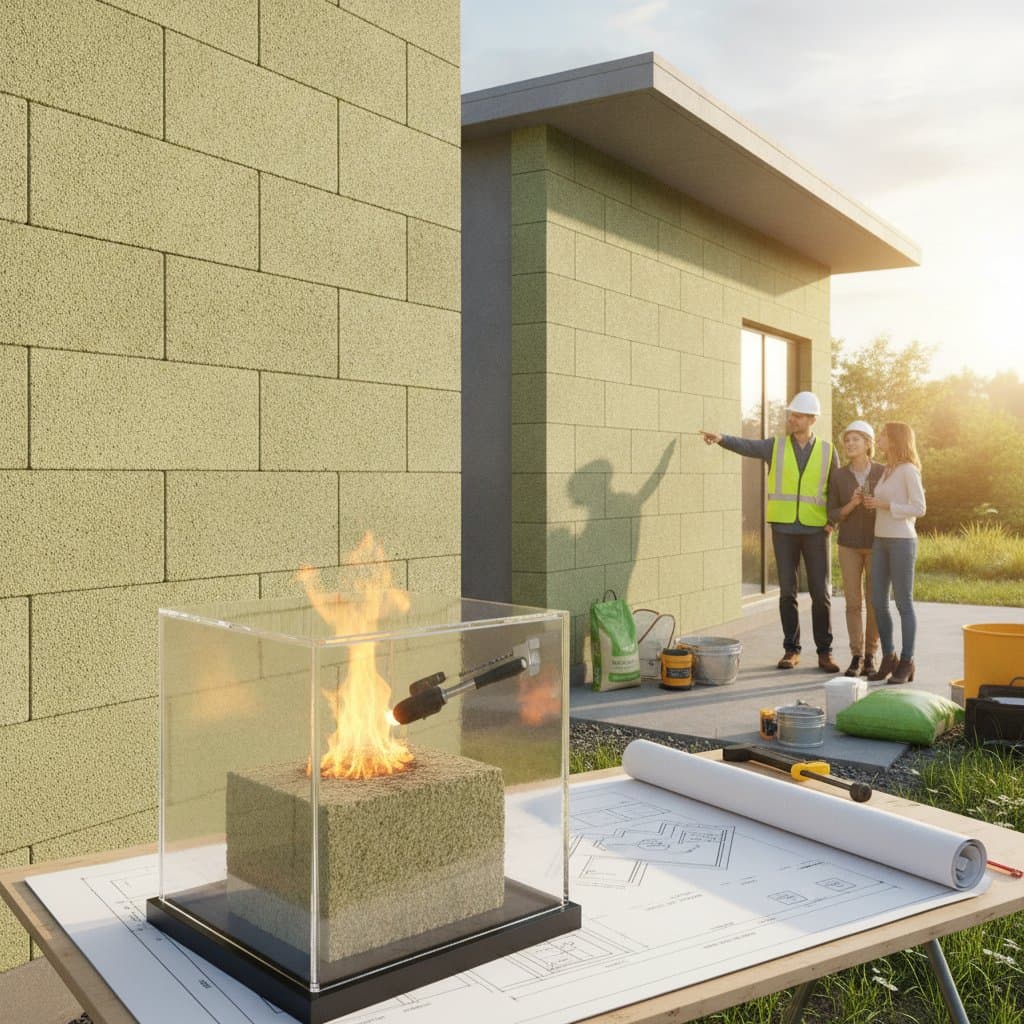
Fire-Resistant Hempcrete Wins Building Code Approval
Hempcrete has received formal building code approval based on demonstrated fire resistance. This development allows wider use in residential and commercial projects where safety standards apply. The material combines the woody core of the hemp plant with lime and water to form a solid yet permeable wall system.
Composition and Basic Properties
Hempcrete consists of hemp hurds, a lime-based binder, and water. After mixing and curing, the result is a lightweight block that remains permeable to air and vapor. The material stays warm to the touch and resists ignition when exposed to flame.
Builders note that the mixture requires no added chemical fire retardants. Homeowners observe stable indoor humidity levels throughout seasonal changes. These traits arise directly from the natural interaction between the hemp core and the lime binder.
Significance of Code Approval
Approval removes previous barriers that limited hempcrete to experimental or small-scale applications. Insurers and building inspectors can now evaluate projects against established performance data. Architects gain the ability to specify the material in regions with strict fire and energy codes.
Communities located in wildfire-prone areas receive an additional option for non-combustible wall construction. The approval process included testing for flame spread, smoke development, and structural integrity under heat. These results support broader adoption without custom engineering approvals.
Performance Characteristics
Hempcrete resists fire by forming a surface char layer that protects the interior structure. It also provides thermal mass that moderates indoor temperature swings. The lime component absorbs and releases moisture, which reduces the risk of condensation and mold growth inside wall cavities.
Additional documented attributes include the following:
- Rapid growth cycle of the source crop with minimal irrigation needs.
- Low embodied energy compared with Portland cement products.
- Compatibility with vapor-open finish systems such as lime plasters.
- Service life measured in decades when protected from direct weather exposure.
- Ease of cutting and shaping on site with standard carpentry tools.
Design Integration Options
The natural tone of cured hempcrete accepts a range of surface finishes. Coastal projects often pair it with timber cladding and light lime washes. Urban interiors receive smooth polished coats that accept matte paints in neutral earth tones.
Applications range from full load-bearing walls to interior partition panels and continuous insulation layers. Feature walls highlight the textured surface while exterior rainscreen assemblies protect the material from bulk water.
Cost and Long-Term Considerations
Initial material and labor costs exceed those of conventional insulation or concrete masonry. Energy modeling shows reduced heating and cooling loads that offset the premium over time. Maintenance remains limited to periodic inspection of protective coatings and roof overhangs.
Projects in humid or high-wind climates benefit from the material moisture-buffering capacity. Proper detailing at foundations and roof junctions prevents saturation and extends service life.
Selection Criteria for New Construction
Specify hempcrete when project goals include fire performance, vapor permeability, and low-carbon materials. Coordinate early with suppliers to confirm regional availability and crew training requirements. Verify that local amendments to the building code recognize the approved listings before final design.