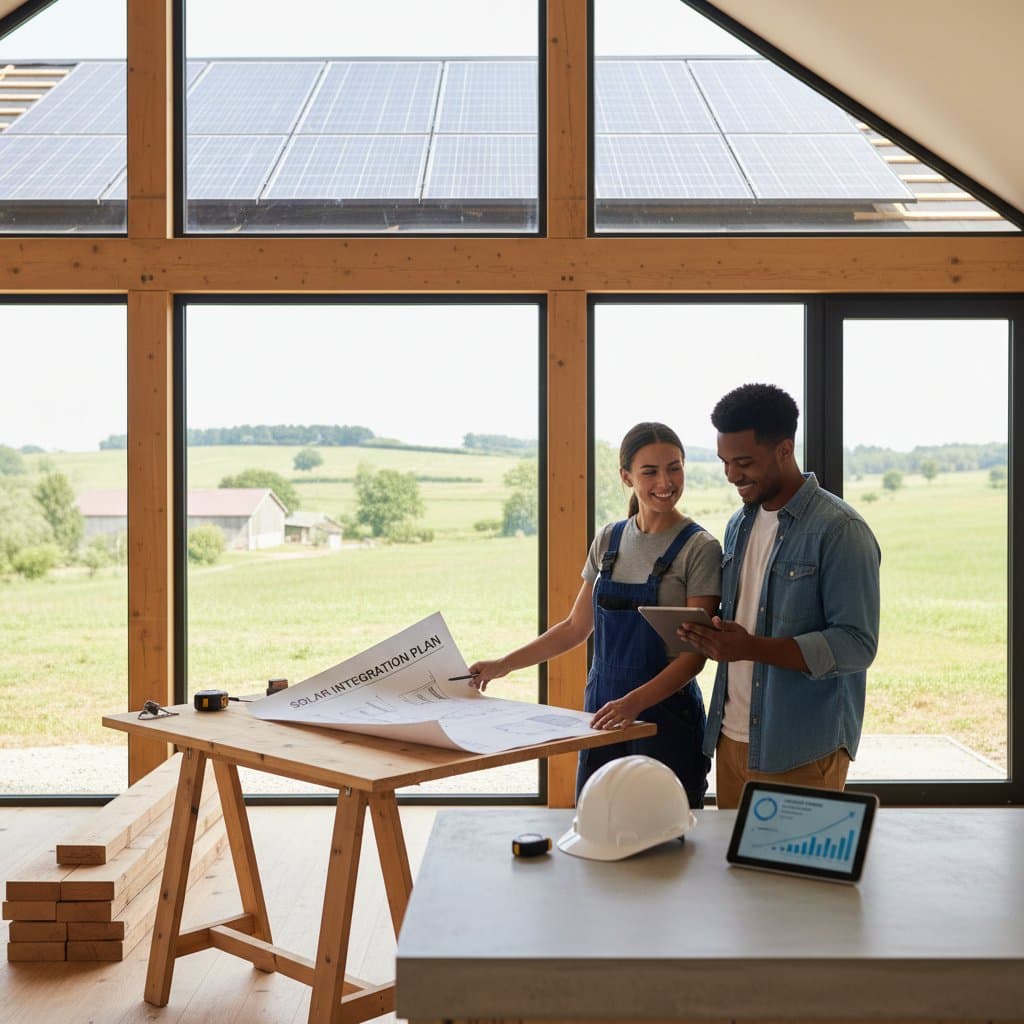
USDA Loans Enable Solar Integration for Rural Home Construction in 2025
Picture a vast rural landscape where the horizon stretches endlessly. Envision a modern home rooted in that setting, harnessing sunlight for power and designed for enduring efficiency. Construction costs, permits, and energy systems often make such visions seem distant. Recent updates to USDA loans now bridge that gap, allowing rural homeowners to incorporate solar from the outset for more affordable and sustainable builds.
For those seeking to merge new construction with renewable energy without depleting reserves, these enhancements provide a straightforward solution.
Integrating Solar into USDA Construction Financing
Updated USDA construction loans offer greater flexibility, enabling solar systems to fold seamlessly into the primary loan. This approach unifies home building and energy provision under a single approval and payment structure. For rural projects, this consolidation transforms the process.
Consider the scope: financing already encompasses roofing, exterior cladding, water wells, and septic installations. Solar now joins this framework, eliminating the need for supplementary loans or high-interest alternatives. Immediate energy savings from solar can then counterbalance mortgage obligations via diminished utility expenses.
A couple I advised constructed their home near a rural village, incorporating solar panels via USDA financing. Their contractor synchronized panel mounting with roof work, minimizing time and effort. They reported their initial summer electricity bill at less than twenty dollars, highlighting tangible financial ease.
Mechanics of USDA Construction Loans for Solar Projects
USDA construction-to-permanent loans merge building expenses with a lasting mortgage in one streamlined package. Funds function as a construction-phase credit line, transitioning to a standard mortgage upon completion. The innovation lies in encompassing solar installations within this framework.
Essential Components
-
Single Closing Process
One closing minimizes time and administrative fees. Coverage extends to both structural work and solar setup, streamlining coordination. -
Minimal or Zero Down Payment
Down payment requirements often stand at zero, preserving capital for enhancements such as solar arrays, energy storage, or advanced heating and cooling units. -
Stable Fixed Interest Rates
Fixed rates ensure consistent payments, aiding budgeting amid variable energy costs. -
Efficiency-Based Advantages
Enhanced energy performance may unlock further perks, including reduced insurance premiums.
Steps to Launch a Solar-Equipped Rural Build
Planning a solar-integrated rural home requires methodical preparation. Follow these steps for efficient progress.
-
Verify Property Eligibility
USDA loans target designated rural zones. Consult the USDA eligibility tool or a specialized rural lender to assess your site's qualification. -
Select a Solar-Savvy Builder
Choose contractors experienced in synchronizing solar with construction timelines. Request examples of prior solar-inclusive projects, including visual documentation. -
Secure Early Solar Estimates
Costs vary by array capacity, site solar exposure, and regional installer fees. Obtain multiple bids promptly and integrate them into lender projections. -
Design Electrical Infrastructure Ahead
Proactive layout avoids disruptions. Align builder and solar teams on wiring conduits, roof angles, and provisions for potential battery integration. In my project, pre-drywall conduit routing prevented costly retrofits. -
Submit Loan Application
With detailed plans and expenses outlined, lenders can approve the comprehensive construction loan, incorporating solar. A single appraisal evaluates the finished property's value, including the energy system.
Realistic Cost Breakdown
Solar expenses have declined significantly. A typical mid-range system sufficient for primary home needs in rural settings ranges from twelve thousand to twenty thousand dollars, influenced by configuration and location. Incorporating this into a USDA loan modestly elevates monthly payments, frequently balanced by utility reductions.
For instance, a system slashing electricity costs by one hundred dollars monthly, against an eighty-dollar payment uptick, yields net gains. Additional upsides include energy autonomy and elevated property appraisal.
Request lenders to furnish comparative payment scenarios with and without solar. Such breakdowns empower informed decisions.
Advantages Extending Past Financial Gains
Solar via USDA loans enhances home resilience beyond bill reductions. Rural grids face frequent outages from distant infrastructure. Pairing panels with battery reserves provides reliability absent in grid-dependent setups.
Homeowners also derive satisfaction from clean energy reliance. One resident shared her contentment as her well operated post-storm, independent of utility restoration. This autonomy aligns with rural values of self-reliance.
Collaborating with Regional Specialists
National solar firms draw notice, yet rural projects thrive with local expertise attuned to local geography and climate. Many regional installers maintain ties with USDA lenders, expediting approvals.
Inquire about panels suited to specific conditions, such as snow accumulation or wind resistance. My supplier suggested reinforced models for my area's spring winds, averting potential damage.
Local electricians excel at system sizing for rural demands, including well operations, outbuildings, or workshops. Their assessments ensure arrays align with actual usage patterns.
Broader Impacts on Environment and Locality
Solar adoption by rural residents eases grid pressure during high-demand periods. Peers observe cost benefits and pursue similar efficiencies, fostering gradual community transitions.
USDA initiatives promote this evolution, bolstering rural appeal for families desiring contemporary features alongside seclusion. Solar-equipped homes exemplify this harmony.
Addressing Frequent Hesitations
Concerns over upkeep or durability arise, but contemporary panels endure reliably. Warranties span decades, with maintenance limited to occasional clearing in low-rain areas. I manage mine with seasonal dusting for pollen removal.
Resale worries prove unfounded; owned solar boosts value through utility savings and efficiency appeal.
Strategies for Efficient Construction
- Maintain ongoing dialogue among lender, builder, and installer to synchronize schedules and finances.
- Record all solar-related expenditures for lender documentation, facilitating swift appraisals and reviews.
- Explore state or utility rebates to offset costs.
- Prepare wiring for deferred battery addition, enabling future upgrades without extensive modifications.
- Confirm solar coverage in your insurance policy to safeguard the asset.
Advancing Your Rural Solar Project
Rural lifestyles emphasize ingenuity. USDA loans incorporating solar financing realize this ethos, harmonizing homes with their surroundings.
To proceed, engage a USDA-accredited lender versed in construction and renewables. Compile estimates, outline infrastructure, and anticipate powering your new home with dawn's light.