Understanding the 2-1 Buydown
A 2-1 buydown represents a financing tool that temporarily lowers the interest rate on a mortgage for the early years of the loan. This adjustment makes monthly payments more affordable during the initial adjustment period for new homeowners. Builders or sellers often fund the buydown to make properties more attractive in competitive markets.
The structure follows a specific pattern: the interest rate drops by two percentage points below the note rate in the first year and by one percentage point in the second year. After year two, the rate returns to the original note rate for the remainder of the loan term. This approach provides targeted relief without altering the long-term loan amount.
Homebuyers benefit from this mechanism particularly in rising interest rate environments, such as those projected for 2026. It allows individuals to qualify for larger loans based on the reduced initial payments. The strategy aligns with broader market incentives where builders seek to stimulate sales.
Mechanics of a 2-1 Buydown
Lenders establish the buydown through a separate account that subsidizes the interest difference. For instance, if the note rate stands at 7 percent, the effective rate becomes 5 percent in year one and 6 percent in year two. The funding, typically two to three percent of the loan amount, covers these discounts.
Builders deposit the required funds at closing, which the lender draws from over the buydown period. This process remains transparent to the borrower, who simply enjoys lower payments. Eligibility depends on the loan type, such as conventional or FHA mortgages, and lender policies.
The buydown applies only to fixed-rate loans and requires no additional borrower qualifications beyond standard mortgage approval. It integrates seamlessly with other incentives, like closing cost credits. Understanding these details helps buyers evaluate offers from multiple builders.
Calculating Potential Savings
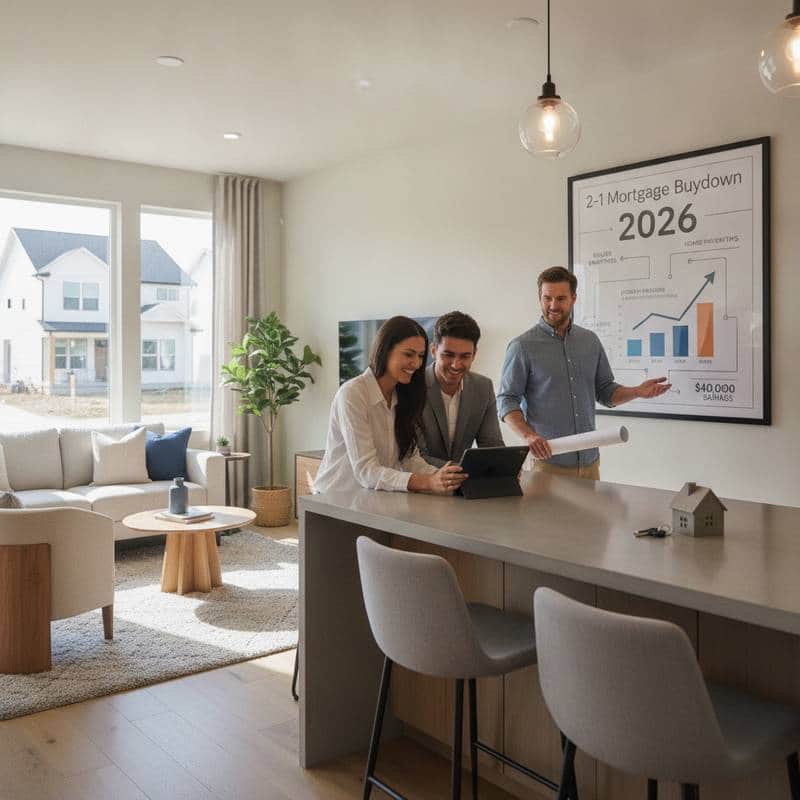
Consider a $400,000 mortgage at a 7 percent note rate over 30 years. Without a buydown, monthly principal and interest payments total approximately $2,661. With a 2-1 buydown, year-one payments drop to about $1,917, a reduction of $744 per month.
In year two, payments rise to $2,279, still $382 below the full rate. Over these two years, the cumulative savings reach around $40,000, depending on loan size and exact rates. Larger loans amplify these figures, making the buydown especially valuable for higher-priced homes.
Buyers should request a detailed amortization schedule from lenders to verify savings. Factors like property taxes and insurance remain unchanged, so the focus stays on interest relief. This calculation underscores the immediate cash flow benefits for budgeting new expenses.
Advantages for 2026 Homebuyers
In 2026, persistent inflation and economic shifts may keep mortgage rates elevated above 6 percent. A 2-1 buydown offers a buffer, enabling buyers to enter the market without waiting for rate declines. It also improves debt-to-income ratios during qualification.
Builders increasingly include buydowns in new construction incentives to move inventory. This trend benefits first-time buyers and those upsizing, as lower initial costs ease the transition. The strategy proves particularly useful in high-cost areas where affordability challenges persist.
Beyond financial relief, the buydown builds equity faster indirectly by allowing larger down payments or reserves. It encourages homeownership at a pivotal time when rental costs continue to climb. Buyers gain confidence knowing payments will normalize after the adjustment period.
Potential Drawbacks and Considerations
While attractive, the 2-1 buydown carries risks if rates fall significantly after year two. Borrowers then face higher payments relative to potentially refinanced options. Planning for this increase requires solid financial preparation, including emergency funds.
Not all lenders offer buydowns, and fees may apply if not builder-funded. Buyers must confirm the funding source to avoid unexpected costs. Additionally, the temporary nature means long-term budgeting must account for the full rate from year three onward.
Tax implications vary; interest deductions apply to the effective rate paid each year. Consulting a financial advisor ensures alignment with personal goals. Weighing these factors prevents surprises and maximizes the tool's value.
Steps to Secure a 2-1 Buydown
Start by discussing buydown options with prospective builders during home selection. Review contracts to identify included incentives and funding details. Many new developments in 2026 will highlight this feature in marketing materials.
Next, obtain pre-approval from lenders familiar with buydowns. Provide details on desired loan amounts to simulate payment scenarios. Compare offers to ensure competitive terms and minimal add-on fees.
At closing, verify the buydown account setup through loan documents. Request confirmation of funds disbursement schedules. This diligence secures the benefits without complications.
Maximize Your Homebuying Edge in 2026
The 2-1 buydown stands out as a practical solution for navigating 2026's housing landscape. It delivers substantial early savings, often $40,000 or more, while supporting smoother entry into homeownership. By understanding and pursuing this option, buyers position themselves for long-term success.
Focus on builders offering this incentive to unlock affordability without compromising on dream homes. The relief provided aligns with settling into new routines and building stability. Embrace this strategy to turn market challenges into opportunities.