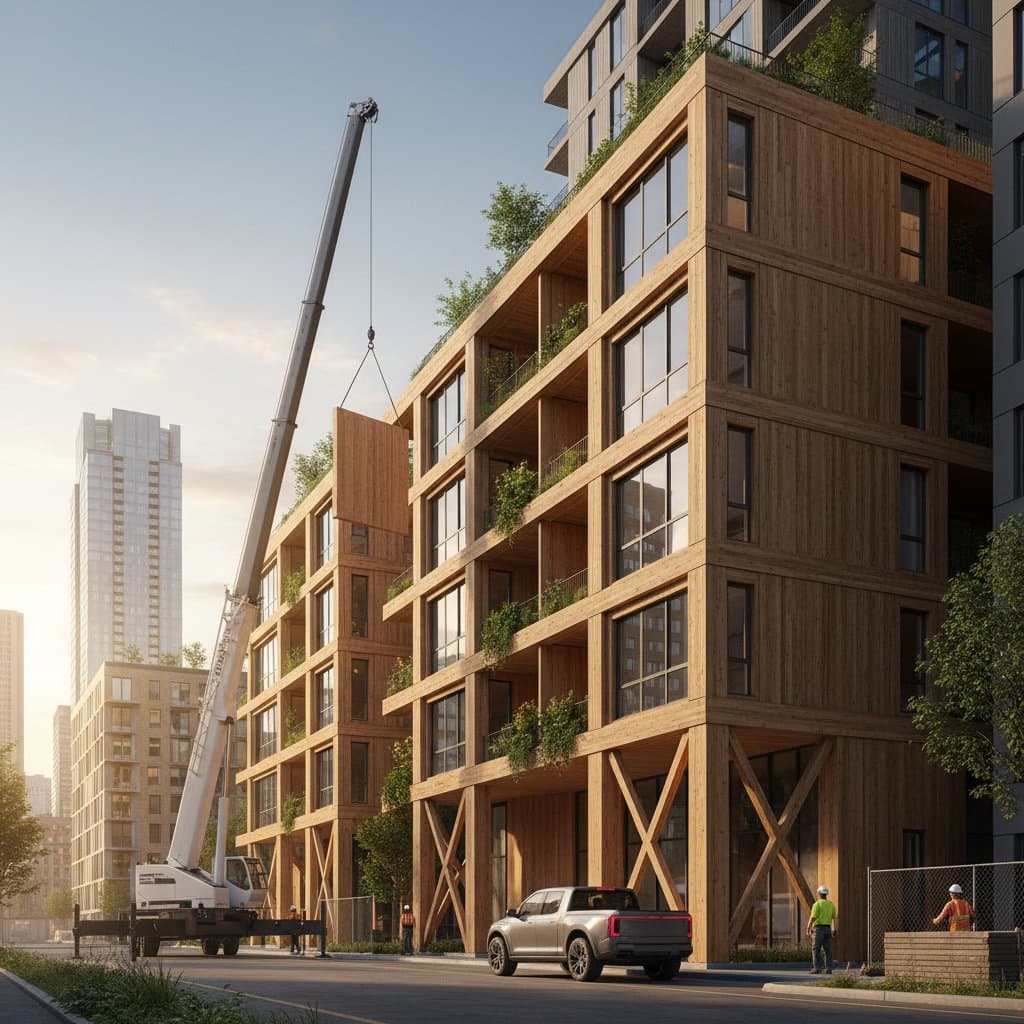
Introduction to Mass Timber in Multi-Family Housing
Mass timber represents a shift in construction practices, particularly for multi-family developments. This engineered wood material combines strength with renewability, addressing demands for speed and environmental responsibility. Developers increasingly turn to it as urban populations grow and sustainability becomes essential.
Traditional methods often involve lengthy timelines and high emissions from concrete and steel. Mass timber counters these issues by allowing buildings to rise faster with a smaller ecological footprint. Projects completed with this material not only meet modern standards but also enhance resident appeal through natural warmth.
As cities prioritize green building, mass timber positions itself as a key solution. Its adoption signals a broader movement toward resilient, eco-friendly housing that balances efficiency and livability.
Understanding Mass Timber Materials
Mass timber consists of engineered wood products designed for structural use. Cross-laminated timber, or CLT, forms panels by layering lumber at right angles, creating a strong, stable material. Glued-laminated timber, known as glulam, shapes beams and columns through bonding wood layers under pressure.
These components outperform solid wood in load-bearing capacity while remaining lighter than steel equivalents. Production occurs in factories, ensuring precision and quality control before on-site assembly. This prefabrication reduces waste and streamlines logistics for large-scale projects.
In multi-family contexts, mass timber supports mid-rise structures up to 12 stories. Its fire-resistant properties, achieved through charring that protects inner layers, meet safety codes effectively. Architects value its versatility for creating open spaces and intricate designs.
Speed Advantages in Construction
One primary benefit of mass timber lies in its rapid assembly process. Prefabricated panels arrive ready for installation, cutting on-site labor by up to 30 percent compared to conventional builds. A typical multi-family project that might take 18 months with steel can complete in 12 using CLT.
Workers stack panels like building blocks, securing them with mechanical fasteners. This method minimizes weather delays since much work happens indoors during fabrication. For developers facing tight deadlines, such efficiency translates to earlier occupancy and revenue generation.
Case in point: a Seattle apartment complex utilized mass timber to finish ahead of schedule, accommodating 200 units in under a year. The approach not only saved time but also reduced disruption to surrounding areas, a critical factor in dense urban settings.
Sustainability and Environmental Impact
Mass timber excels in lowering carbon footprints throughout its lifecycle. Wood sequesters carbon during growth, storing it in the final structure for decades. Unlike concrete production, which emits vast amounts of CO2, timber manufacturing requires less energy and relies on renewable forests.
Certified sources ensure responsible harvesting, maintaining forest health. Buildings constructed this way can achieve high ratings in green certifications, appealing to regulators and investors. Over time, mass timber structures contribute to urban forests by offsetting emissions equivalent to thousands of trees.
In multi-family housing, this sustainability attracts tenants seeking low-impact living. Reduced operational energy needs, due to timber's insulation qualities, further enhance long-term environmental benefits. Developers report up to 50 percent lower embodied carbon compared to traditional materials.
Aesthetic and Livability Enhancements
Beyond functionality, mass timber brings warmth and character to interiors. Exposed wood elements create inviting spaces that contrast with the sterility of concrete. In multi-family designs, this fosters a sense of community and connection to nature.
Natural light interacts beautifully with wood grains, improving resident well-being. Common areas, such as lobbies and hallways, benefit from these features, elevating property value. Architects integrate mass timber into facades for a modern, biophilic aesthetic that stands out in cityscapes.
Residents in timber-built apartments often note improved air quality from wood's low off-gassing. This material choice supports wellness-focused developments, aligning with trends in healthy urban living. The result is housing that feels premium yet approachable.
Navigating Challenges and Regulations
While promising, mass timber adoption requires addressing hurdles. Building codes in some regions limit wood heights, though updates are progressing. For instance, recent amendments in Europe and North America now permit taller timber structures, up to 18 stories in select areas.
Fire safety concerns prompt innovations like encapsulation treatments. Cost initially appears higher, but lifecycle savings from speed and durability offset premiums. Developers mitigate risks by partnering with experienced engineers familiar with timber systems.
Education plays a role too; trade associations offer training to build confidence. As success stories accumulate, resistance fades, paving the way for widespread use. By 2026, experts predict mass timber will dominate mid-rise multi-family projects in progressive markets.
Case Studies: Successful Implementations
Several projects illustrate mass timber's potential. In Vancouver, a 10-story rental building used CLT for floors and walls, completing in nine months. The design incorporated communal green spaces, boosting tenant retention rates.
Another example from Minneapolis features a mixed-use development with 150 affordable units. Glulam beams supported open floor plans, allowing flexible layouts. Post-occupancy surveys highlighted satisfaction with the natural ambiance and quiet environment.
These cases demonstrate scalability. From luxury condos to workforce housing, mass timber adapts to diverse needs. Lessons learned include early code compliance checks and supplier coordination for seamless execution.
Looking Ahead to 2026 and Beyond
By 2026, mass timber will likely influence over 20 percent of new multi-family starts in major U.S. cities. Advancements in hybrid systems, combining wood with minimal steel, will expand possibilities. Research into longer-span elements promises even taller buildings.
Policy support grows, with incentives for low-carbon materials. Developers who adopt early gain competitive edges in attracting investment and talent. This trajectory points to a future where sustainable construction becomes standard, not exceptional.
Innovation continues, from recycled content in panels to digital modeling for optimization. These developments ensure mass timber evolves with industry demands, solidifying its role in resilient urban growth.
Realizing Benefits for Developers and Communities
Embracing mass timber yields tangible gains for all stakeholders. Developers achieve faster returns on investment through expedited timelines and premium pricing for green features. Communities benefit from reduced construction noise and emissions, fostering healthier neighborhoods.
Tenants enjoy affordable, comfortable housing with environmental integrity. Overall, this material bridges practicality and vision, enabling cities to house populations sustainably. The shift to mass timber marks a pivotal step toward enduring, vibrant urban landscapes.