Loading...

Skip to main content
MULTI HB
HomeBudgeting & FinancingConstruction Materials & MethodsConstruction TrendsContractors & Project ManagementSearch
  1. Home
  2. /
  3. Budgeting & Financing
  4. /
  5. DSCR Loans Skip W-2s for Spec Builder Financing
Budgeting & Financing

DSCR Loans Skip W-2s for Spec Builder Financing

Your comprehensive resource for home building expertise, construction insights, and financing strategies to help you build your dream home efficiently and cost-effectively.

Categories

Budgeting & FinancingConstruction Materials & MethodsConstruction TrendsContractors & Project ManagementDesign & Floor PlansHome Building BasicsHomeowner Tips & MaintenanceInspections & Quality Checks

Links

  • Home
  • Search Articles
  • About Us
  • Privacy Policy
  • Terms of Service

© 2026 Multi HB. All rights reserved.

by
Emily Lockwood
2026-02-26 03:54:21February 26, 2026
5 min read
Featured image for DSCR Loans Skip W-2s for Spec Builder Financing
2026-02-26 03:54:21
Multi HB - Home Building, Construction Trends, Financing New Homes

I was flipping through old project photos the other day when one caught my eye. It was a half-finished spec home on a quiet street, sunlight spilling through open rafters, the smell of fresh-cut lumber still vivid in my memory. That build taught me something about timing, risk, and how financing can make or break a project. If you have ever been in that spot, you know how much a loan that actually fits your situation matters.

What makes DSCR loans different?

Traditional loans often hinge on personal income verification. For many builders, that can be tricky. You might have great projects in progress and strong cash flow from completed builds, but no steady paycheck or W-2 to show for it. That is where Debt Service Coverage Ratio (DSCR) loans come in.

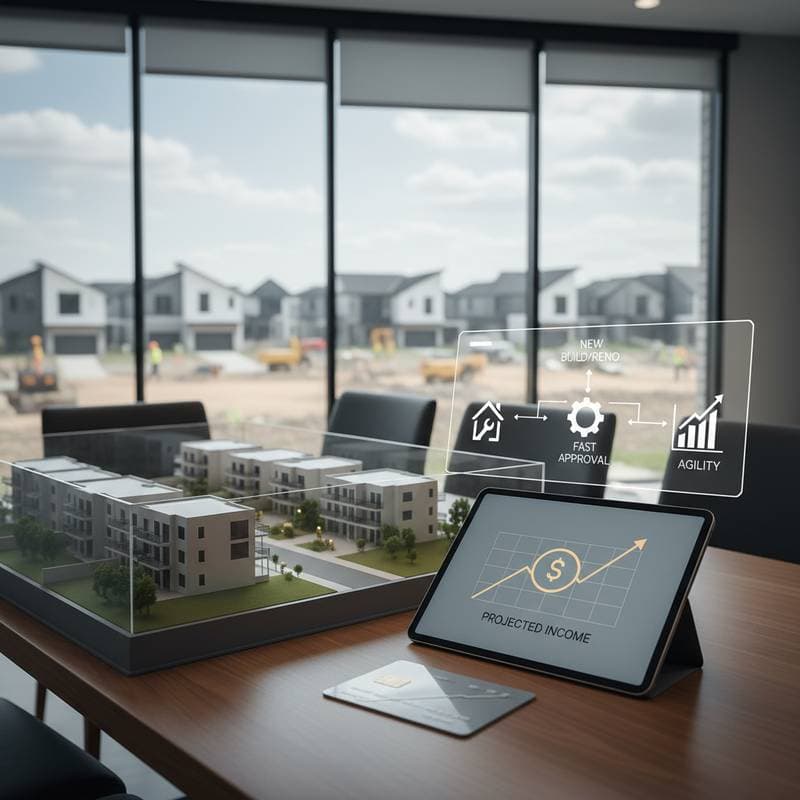
A DSCR loan looks at the property’s income potential rather than your personal tax returns. It focuses on whether the property can cover its own debt payments. For spec builders, this changes the game. It lets you qualify based on the expected rental or sale income from the home you are building, not on your personal salary history.

Why spec builders are turning to DSCR loans

Spec building has always been a mix of vision and risk. You invest in land, materials, and time before a buyer ever walks through the door. Traditional financing can slow things down with its paperwork and income documentation. DSCR loans skip those hurdles and instead evaluate your project’s numbers.

The appeal lies in flexibility.

  • You do not need to provide W-2s or personal income statements.
  • The focus stays on your project’s financial performance.
  • Approval can often move faster, which keeps your timeline on track.

It is not just about convenience, it is about staying agile in a market that rewards quick, informed moves.

How DSCR loans actually work

The lender calculates the ratio by dividing the property’s projected income by its debt payments. A ratio above one means the property should generate enough income to cover the loan. For builders, this projection can come from comparable rentals, planned sale prices, or previous projects with similar returns.

What makes this structure especially useful is how it supports both new builds and renovation projects. If you are planning to sell once construction is complete, you can still use estimated market value and income data to qualify. It is a more practical way to fund work that does not fit neatly into a standard mortgage model.

Comparing DSCR loans to traditional builder financing

Every financing path has pros and cons. Here is how DSCR loans stack up against the usual builder options:

Traditional Construction Loans

  • Require personal income documentation
  • Heavier on paperwork and approval steps
  • Often tied to strict draw schedules

DSCR Loans

  • No W-2s or tax returns required
  • Based on the project’s earning potential
  • Typically allow more freedom in how funds are used

You might pay slightly higher interest rates with DSCR loans, but for many builders, the tradeoff is worth it. The faster approval and flexible qualification can mean staying ahead of construction costs and market shifts.

Practical tips for using DSCR loans wisely

Before jumping in, keep a few things in mind.

  1. Know your numbers. Have realistic projections for rent or sale value. Lenders want to see that the property’s income can comfortably cover the loan.
  2. Keep solid records. Even without W-2s, you will still need project documentation, plans, and cost breakdowns.
  3. Work with an experienced lender. Not all lenders understand spec builds. Find one who knows construction timelines and market cycles.
  4. Plan for contingencies. Material costs and labor can shift quickly. Build a cushion into your budget so you do not stretch yourself too thin.

These steps keep your project financially sound and help ensure the loan process stays smooth.

Why this matters for the next wave of builds

Markets move fast, and builders who can finance quickly often secure the best opportunities. DSCR loans give you that edge. They open doors for developers who rely on project-based income or manage multiple builds at once. Whether you are dreaming of a small modern infill project or a full neighborhood of spec homes, this type of loan can help you move from planning to breaking ground without unnecessary delays.

Living with your design and your financing choice

Once your new build is complete, you will notice how the right financing affects everything. You had control over your timeline, fewer personal financial documents to manage, and freedom to focus on design details that matter.

That is the quiet reward of choosing smarter financing. It lets you create without being tangled in paperwork.

So, if your next project is waiting for the right financial spark, get ready to explore DSCR loans. They might be the missing piece that helps you transform your next spec home into something both profitable and deeply satisfying.

You Might Also Like

Builders Slash Mortgage Rates with Buydowns

2-1 Buydown: Lower Your Mortgage Rate 2% Year One

2-1 Buydown Could Save You $18K on Your Next Home

The 2-1 Buydown That Saves Homebuyers $18K

Assumable Mortgages: Lock In Rates From Years Ago

Tagged:

home,financing,loans,dscr,dscr-loans,spec

Recent Articles by Emily Lockwood

Image for 2-1 Buydown Could Save You $18K on Your Next Home

2-1 Buydown Could Save You $18K on Your Next Home

April 14, 2026
Image for Battery-Ready Panels Reshape How New Homes Handle Power

Battery-Ready Panels Reshape How New Homes Handle Power

March 20, 2026
Image for Transfer Low Mortgage Rates When You Buy in 2026

Transfer Low Mortgage Rates When You Buy in 2026
March 14, 2026

Related: home

Image for Builders Slash Mortgage Rates with Buydowns

Builders Slash Mortgage Rates with Buydowns

April 16, 2026
Image for 2-1 Buydown: Lower Your Mortgage Rate 2% Year One

2-1 Buydown: Lower Your Mortgage Rate 2% Year One

April 15, 2026
Image for 2-1 Buydown Could Save You $18K on Your Next Home

2-1 Buydown Could Save You $18K on Your Next Home

Budgeting & Financing

Builders Slash Mortgage Rates with Buydowns

Builders launch a buydown surge to lower effective mortgage rates, reigniting buyer enthusiasm and clearing new home inventory. These programs reduce monthly payments temporarily, addressing affordability barriers and influencing new construction decisions. Understand buydown mechanics, advantages, drawbacks, and tactics to optimize benefits before rate adjustments occur.

April 16, 2026

2-1 Buydown: Lower Your Mortgage Rate 2% Year One

The 2-1 buydown reduces your mortgage rate by 2% in the first year and 1% in the second, offering potential savings of up to $40,000 on 2026 mortgages. This approach suits buyers anticipating income growth or future refinancing, provided you evaluate costs, prepare for rate adjustments, and negotiate effectively with lenders or builders.

April 15, 2026

2-1 Buydown Could Save You $18K on Your Next Home

A 2-1 buydown temporarily lowers your mortgage interest rate for the first two years, offering savings of approximately $18,000. Often funded by sellers or builders, this approach provides financial relief during the adjustment period of homeownership in today's market.

April 14, 2026

Categories

Budgeting & Financing
Construction Materials & Methods
Construction Trends
Contractors & Project Management
Design & Floor Plans
Home Building Basics
Homeowner Tips & Maintenance
Inspections & Quality Checks
Renovation & Additions
Sustainability & Energy Efficiency
April 14, 2026
Image for The 2-1 Buydown That Saves Homebuyers $18K

The 2-1 Buydown That Saves Homebuyers $18K

April 1, 2026
Image for Assumable Mortgages: Lock In Rates From Years Ago

Assumable Mortgages: Lock In Rates From Years Ago

March 26, 2026

The 2-1 Buydown That Saves Homebuyers $18K

A 2-1 buydown reduces the mortgage interest rate by 2 percent in the first year and 1 percent in the second year, potentially saving approximately $18,000 during that period. Builders or lenders typically cover the costs, providing new homeowners with lower initial payments, flexibility for refinancing, and essential financial relief as they adjust to homeownership expenses.

April 1, 2026

Assumable Mortgages: Lock In Rates From Years Ago

Assumable mortgages empower buyers to adopt sellers' favorable loan rates, driving record transfer volumes and enhancing deal affordability. Key to success involves grasping eligibility, associated costs, and equity considerations for seamless real estate transactions.

March 26, 2026

2-1 Buydown Cuts Early Mortgage Payments by Thousands

The 2-1 buydown reduces mortgage payments in the first two years, potentially saving up to $40,000 on 2026 loans. Builders fund this incentive to improve affordability, helping buyers adjust without financial strain. Understand its mechanics, benefits, and optimization tactics.

March 18, 2026

Builder Buydowns Bring 4.5% Rates to New Homes

Builder buydowns return with mortgage rates as low as 4.5% for new constructions. Builders fund upfront costs to cut interest rates, yielding lower monthly payments and greater accessibility. This guide covers operations, advantages, limitations, and essential inquiries for potential buyers.

March 18, 2026

2-1 Buydown Saves You $18K in Two Years

A 2-1 buydown lowers mortgage payments by reducing the interest rate 2% in the first year and 1% in the second, resulting in approximately $18,000 in savings. Typically funded by builders or lenders, this approach provides financial relief for new homeowners while preserving long-term loan stability and future refinancing opportunities.

March 16, 2026

Builders Offer $25K Credits to Lower Your Rate

Homebuilders provide substantial mortgage rate buydown credits, up to $25,000, to sustain sales in a high-interest-rate environment. These incentives reduce monthly payments significantly, yet their effectiveness depends on understanding temporary versus permanent options, lender comparisons, and optimal purchase timing to maximize savings on a new home.

March 15, 2026

DSCR Loans Skip the Paperwork, Focus on Property Income

DSCR loans revolutionize financing for builders by prioritizing property-generated income over personal earnings. This approach facilitates quicker approvals, simplified qualification processes, and accelerated growth for real estate investors. Gain insights into evaluating property cash flow to access additional projects, optimize funding, and develop a robust, income-generating real estate portfolio.

March 15, 2026

Transfer Low Mortgage Rates When You Buy in 2026

With mortgage rates on the rise, assumable mortgages offer buyers a way to inherit low-interest loans from sellers, potentially saving tens of thousands over the loan term. Sellers gain a competitive edge by highlighting this feature. This guide explains the mechanics, eligibility, and strategic advantages for the 2026 real estate landscape.

March 14, 2026

USDA Loans Now Cover Solar in New Construction

Updates to 2026 USDA construction loans enable rural homeowners to incorporate solar power into new builds seamlessly. This single-close financing option integrates installation costs, streamlining the process while promoting energy-efficient, sustainable homes that deliver ongoing financial benefits.

March 13, 2026

Why Construction Defect Insurance Triples by 2026

Construction defect insurance premiums face a projected tripling by 2026, fueled by escalating material prices, ongoing labor shortages, and increasingly intricate claims processes. Builders mitigate these increases through meticulous documentation, effective subcontractor management, and routine inspections. A thorough grasp of policy coverage and strong insurer partnerships further protects financial stability and project outcomes.

March 12, 2026

USDA Loans Now Cover Solar in Your Rural Build

Beginning in 2026, USDA loans allow rural homeowners to incorporate solar panels, batteries, and related wiring into their construction financing. This integrated approach streamlines budgeting, reduces utility expenses, and promotes energy independence. Through careful planning and collaboration with contractors, rural construction projects can achieve greater sustainability, affordability, and preparedness from the outset.

March 11, 2026

DSCR Loans Let Self-Employed Builders Skip the W2

Self-employed builders can now access construction financing through DSCR loans, which evaluate a property's rental income potential rather than personal W-2 earnings. This approach eliminates traditional barriers, facilitating quicker approvals and supporting the development of rental portfolios in 2026.

March 11, 2026

USDA's Zero-Down Rural Loan Makes Building Attainable

The USDA's 2026 zero-down initiative transforms rural homeownership by removing upfront payments for eligible buyers. Expanded eligibility areas, simplified construction-to-permanent financing, and guidance for novice builders make home construction accessible, provided income, credit, and location criteria are satisfied alongside selection of a knowledgeable USDA-approved lender.

March 9, 2026

Builder Rate Buydowns: Making Dream Homes Affordable

Builder rate buydowns reshape new home affordability by providing reduced mortgage payments in the initial years. As builders intensify competition with innovative incentives, buyers gain opportunities for meaningful savings, improved budgeting, and informed choices amid the dynamic 2026 housing landscape.

March 8, 2026

Zero-Down Programs Let You Build Without Deposits

Launching in 2026, zero-down home building programs eliminate the need for large upfront deposits, enabling buyers to begin construction immediately through builder-lender partnerships. These initiatives allow costs to integrate into the final mortgage, preserve personal savings, and provide clear terms alongside builder guarantees for financial protection.

March 7, 2026

4.5% Bridge Loans Let You Rebuild Without Selling First

Bridge loans at 4.5% interest rates revolutionize tear-down rebuild projects by allowing homeowners to commence construction without first selling their property. These short-term financing solutions bridge critical timing gaps, provide essential flexibility, and deliver peace of mind. Through strategic planning and leveraging home equity, such loans facilitate faster, smoother rebuilds that preserve community ties while realizing the ideal home vision.

March 6, 2026

How a 2-1 Buydown Saves $18K in Early Mortgage Payments

The 2-1 rate buydown lowers mortgage interest rates for the initial two years, often resulting in approximately $18,000 in savings for buyers. Builders or sellers typically cover the cost, providing flexibility, improved budgeting, and essential relief for new homeowners as they establish their living space.

March 6, 2026
Get DSCR Loans No W-2 for Spec Builders | multihb.com | Multi HB - Home Building, Construction Trends, Financing New Homes