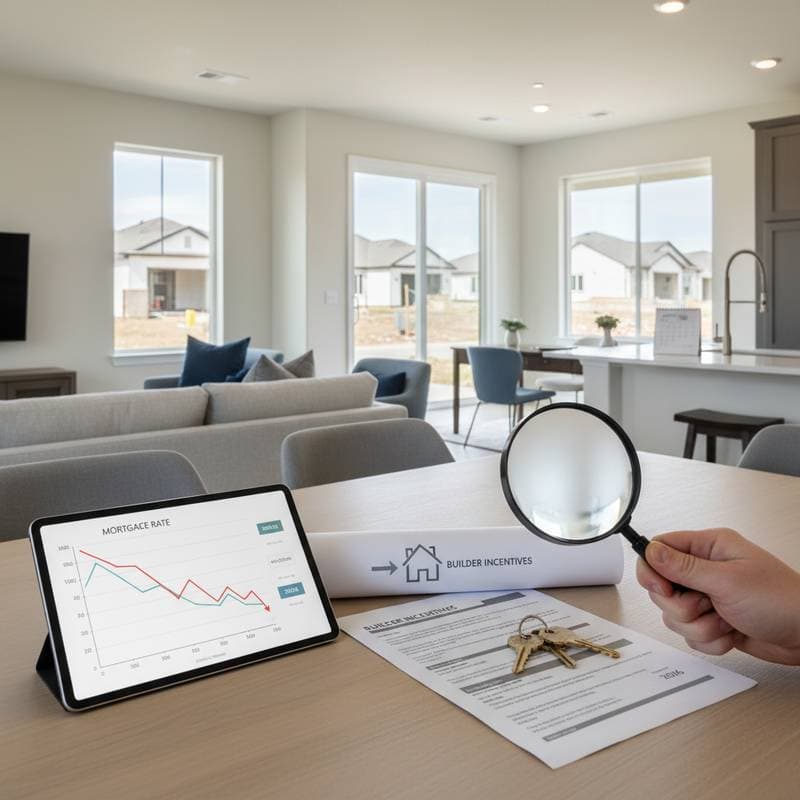
Builders' 2026 Rate Buydowns: Key Advantages for Homebuyers
A recent conversation with a colleague highlighted the growing popularity of builder incentives in new housing developments. She described touring a modern community where the builder offered to buy down the mortgage rate, a strategy that immediately lowered projected monthly payments. Such offers transform high interest rates from a barrier into an opportunity, allowing buyers to enter the market with greater financial flexibility.
Understanding Rate Buydowns and Builders' Motivations
A rate buydown occurs when the builder funds a temporary reduction in the buyer's mortgage interest rate for an initial period. This adjustment decreases monthly payments during the early years of the loan, providing immediate relief. Builders implement these programs to accelerate sales in competitive markets, particularly when elevated interest rates slow buyer activity.
The strategy addresses affordability challenges directly. Buyers benefit from reduced outlays at the outset, which supports budgeting for relocation costs or home improvements. In 2026, as economic forecasts predict sustained high rates, builders anticipate buydowns will become standard to maintain inventory turnover and attract price-sensitive purchasers.
Mechanisms for Affordability Through Buydowns
Rate buydowns operate by prepaying interest points, effectively subsidizing lower rates for a defined timeframe. For instance, a one-percentage-point reduction on a 30-year fixed mortgage at 7 percent could save approximately $150 monthly on a $400,000 loan during the buydown period. These savings compound over time, enabling buyers to allocate funds toward equity building or emergency reserves.
Common configurations include structured step-ups that gradually increase payments:
- 1-0 Buydown: Reduces the rate by 1 percent solely in the first year, then reverts to the note rate.
- 2-1 Buydown: Lowers the rate by 2 percent in year one and 1 percent in year two, aligning with the full rate thereafter.
- 3-2-1 Buydown: Decreases by 3 percent in year one, 2 percent in year two, and 1 percent in year three, ideal for larger loans or premium properties.
Builders often bundle these with additional perks, such as waived closing costs up to $5,000 or complimentary appliance upgrades valued at $2,000. Evaluate total incentives to determine the most cost-effective package.
Essential Considerations for Buyers
Prospective buyers must recognize that buydown benefits are finite, with payments escalating to the original rate post-subsidy. Conduct a full financial projection to ensure sustainability. Tools like online mortgage calculators can model scenarios, revealing potential increases of $200 to $400 monthly after year three.
Key evaluation steps include:
- Verify funding sources: Confirm whether the builder covers the full buydown cost or if it involves lender contributions.
- Review eligibility criteria: Note requirements for conventional loans, minimum credit scores of 620, or exclusive partnerships with approved lenders.
- Assess long-term implications: Consider refinancing options if rates decline, or plan for potential home value appreciation to offset higher payments.
Consult a certified mortgage advisor to compare buydown offers against alternatives like adjustable-rate mortgages. This diligence prevents surprises and maximizes value.
Strategic Timing: Why 2026 Favors Buydown Adoption
Builders increasingly adopt buydowns amid projections of interest rates hovering between 6.5 and 7.5 percent through 2026. Inventory levels remain tight, with new construction comprising 25 percent of available homes in key markets. These incentives not only boost closing rates by 15 to 20 percent but also differentiate developments in oversaturated areas.
For buyers, the timing aligns with wage growth outpacing inflation, enhancing qualification potential. Early adopters in 2026 may secure buydowns at lower upfront costs, as builders front-load incentives to clear lots for upcoming projects. Monitor Federal Reserve announcements, as policy shifts could amplify or diminish these offers.
Integrating Buydowns into Your Homebuying Plan
Upon closing, the immediate payment relief allows focus on personalization, from selecting energy-efficient lighting to landscaping for curb appeal. Track expenses during the subsidy period to build a buffer for rate normalization. Successful integration involves quarterly budget reviews and exploring home equity lines for future upgrades.
In summary, 2026 rate buydowns position buyers to navigate a dynamic housing landscape with confidence. Research local developments, negotiate incentive terms, and align choices with personal financial goals to secure lasting homeownership benefits.