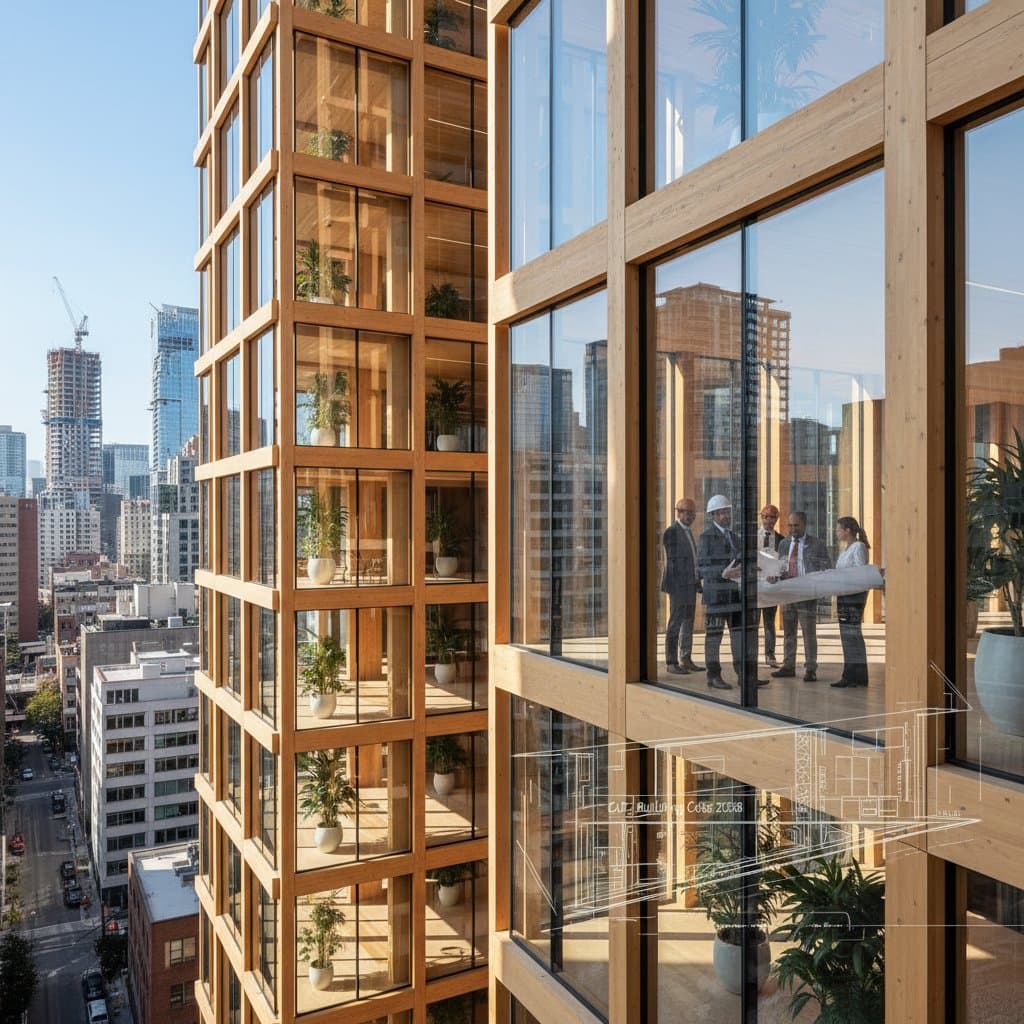
Mass Timber Ascends: 15 States Approve Codes for Tall Wood Structures
A visit to a local salvage yard revealed more than just vintage finds. Amid stacks of reclaimed wood, the rich grain and faint resin scent evoked wood's resurgence in contemporary architecture. This material now influences designs from intimate interiors to ambitious high-rises, challenging the dominance of steel and concrete.
Fifteen states have adopted building codes permitting tall wood buildings, marking a pivotal shift toward sustainable practices. This development merges traditional craftsmanship with advanced engineering, appealing to architects, builders, and homeowners who value natural elements in their surroundings.
The Distinctive Appeal of This Shift
Mass timber integrates historical warmth with modern precision. Engineered products such as cross-laminated timber (CLT), glued laminated timber (glulam), and nail-laminated timber provide the structural integrity for multi-story constructions while retaining wood's inherent charm. Envision a structure where timber elements diffuse natural light, creating spaces that feel innovative yet inviting.
Previous height restrictions confined timber to low-rise applications. Current code approvals eliminate these constraints, enabling projects that adhere to stringent safety protocols. These buildings sequester carbon, contrasting with the emissions from traditional materials, and develop a patina over time that enhances their visual appeal.
Core Advantages of Mass Timber
Cross-laminated timber consists of wood layers bonded in perpendicular orientations, yielding panels that resist deformation under stress. These panels substitute for concrete slabs and steel beams, accelerating project timelines and minimizing on-site waste.
Key benefits encompass:
- Rapid assembly: Factory-prefabricated components install quickly, often reducing schedules by several weeks.
- Environmental impact: Timber sequesters carbon dioxide, mitigating the sector's carbon footprint.
- Visual and tactile qualities: Exposed grains foster inviting atmospheres in occupied spaces.
- Resilience features: In fire scenarios, surface charring insulates inner layers, limiting flame progression.
Occupants often note the subtle aroma of coniferous woods and the way light interacts with surfaces, evoking a sense of vitality absent in conventional builds.
Evolution of Regulatory Frameworks
Historical codes capped wood building heights due to concerns over fire and seismic performance. Extensive research and industry partnerships have demonstrated mass timber's equivalence or superiority to non-combustible alternatives in these areas.
Fifteen states now incorporate provisions for mass timber high-rises, typically outlining categories with defined height thresholds and compliance measures. Approvals range up to 18 stories, varying by jurisdiction and project specifics.
This regulatory progress fosters experimentation and supports broader adoption of low-emission construction methods, benefiting urban planning and ecological goals.
Notable Projects Across Regions
Mass timber applications appear nationwide, altering community landscapes. Pacific Northwest developments feature timber towers adjacent to steel-framed offices, while Rocky Mountain institutions incorporate wood for serene educational environments.
Rural areas benefit similarly, with timber used in community facilities like schools and libraries. The material's versatility suits diverse scales, delivering consistent advantages in texture, sound absorption, and environmental harmony.
Integrating Timber in Contemporary Design
Architects must navigate the integration of mass timber to avoid overly rustic outcomes. Effective strategies involve juxtaposing wood with sleek elements, such as polished concrete or minimalist hardware, to achieve equilibrium.
In homes, exposed timber ceilings expand perceived space while adding intimacy. Replicate this through targeted additions like solid oak shelves or birch-fronted cabinets, maintaining a restrained color scheme for cohesion.
Tangible Sustainability Gains
Mass timber's carbon storage capacity provides concrete environmental value. Each cubic meter of CLT retains atmospheric carbon, and sourcing from certified forests promotes ongoing sequestration through replanting.
Practical efficiencies include lighter structures requiring modest foundations and prefabrication that curtails site disturbances. These factors enhance constructability and neighbor relations during development.
Essential Guidance for Construction Professionals
Mass timber demands attention to environmental controls and compliance. Protect components from moisture via protective coverings until full enclosure. Fire strategies often include encapsulation of joints with non-combustible layers to satisfy ratings.
Initial costs may exceed alternatives due to supply constraints, though efficiencies in labor and time provide offsets. Market growth anticipates cost parity as adoption expands.
Recommended steps for mass timber initiatives:
- Collaborate with certified structural engineers from project inception to refine designs.
- Evaluate hybrid configurations, like timber slabs over concrete cores, for optimized economics.
- Implement robust moisture management protocols throughout the supply chain.
- Strategically expose timber features to leverage aesthetic benefits.
- Consult local authorities promptly to navigate code interpretations.
Implications for Residential Applications
Commercial advancements in mass timber will influence homebuilding. Prefabricated elements could streamline extensions or accessory dwellings, democratizing access to modular construction.
Design influences extend to furnishings and finishes that emphasize wood's natural variations, promoting authenticity over uniformity in everyday spaces.
Psychological Benefits of Timber Environments
Tall timber structures contribute to occupant well-being through biophilic principles. Softer acoustics and natural visuals reduce stress, fostering restorative settings.
The material's organic imperfections, from knots to tonal shifts, embed a narrative of origin, enhancing emotional resonance.
Incorporating Timber into Personal Spaces
To emulate mass timber's essence at home, prioritize authentic materials. Select FSC-certified hardwoods for furniture or accents that reveal grain patterns.
Layer ambient lighting to accentuate wood's depth, using fixtures that diffuse warmth. Pair with neutral textiles for balanced, enduring interiors.
For renovations, focus on sustainable sourcing to align with broader ecological priorities, ensuring designs that evolve gracefully over time.
Advancing Sustainable Building Practices
The expansion of mass timber codes signals a commitment to resilient, low-impact development. Builders and designers can lead by prioritizing verified materials and innovative techniques, shaping communities that harmonize human needs with planetary health.