Understanding Carbon-Neutral Concrete
Traditional concrete production contributes significantly to global carbon emissions through cement manufacturing. Carbon-neutral concrete addresses this issue by offsetting or eliminating those emissions entirely. Builders find this material essential for meeting upcoming environmental regulations and client demands for green construction.
The core difference lies in the ingredients and processes. Standard concrete relies on Portland cement, which releases carbon dioxide during calcination. Carbon-neutral variants incorporate alternative binders, such as geopolymers or recycled materials, combined with carbon capture techniques. These methods ensure the final product has a net-zero impact on the atmosphere.
This shift does not compromise structural integrity. Testing shows that carbon-neutral concrete matches or exceeds the compressive strength of conventional mixes. Home builders appreciate its versatility for foundations, walls, and slabs in residential projects.
How Carbon-Neutral Concrete Is Produced
Production begins with sourcing low-emission materials. Fly ash from coal plants or slag from steel manufacturing serves as partial cement replacements. These industrial byproducts reduce the need for energy-intensive virgin cement while recycling waste.
Next, manufacturers integrate carbon sequestration. During mixing, additives absorb CO2 from the air or factory exhaust. Some processes cure the concrete in controlled environments that enhance carbon uptake, turning the material into a carbon sink rather than a source.
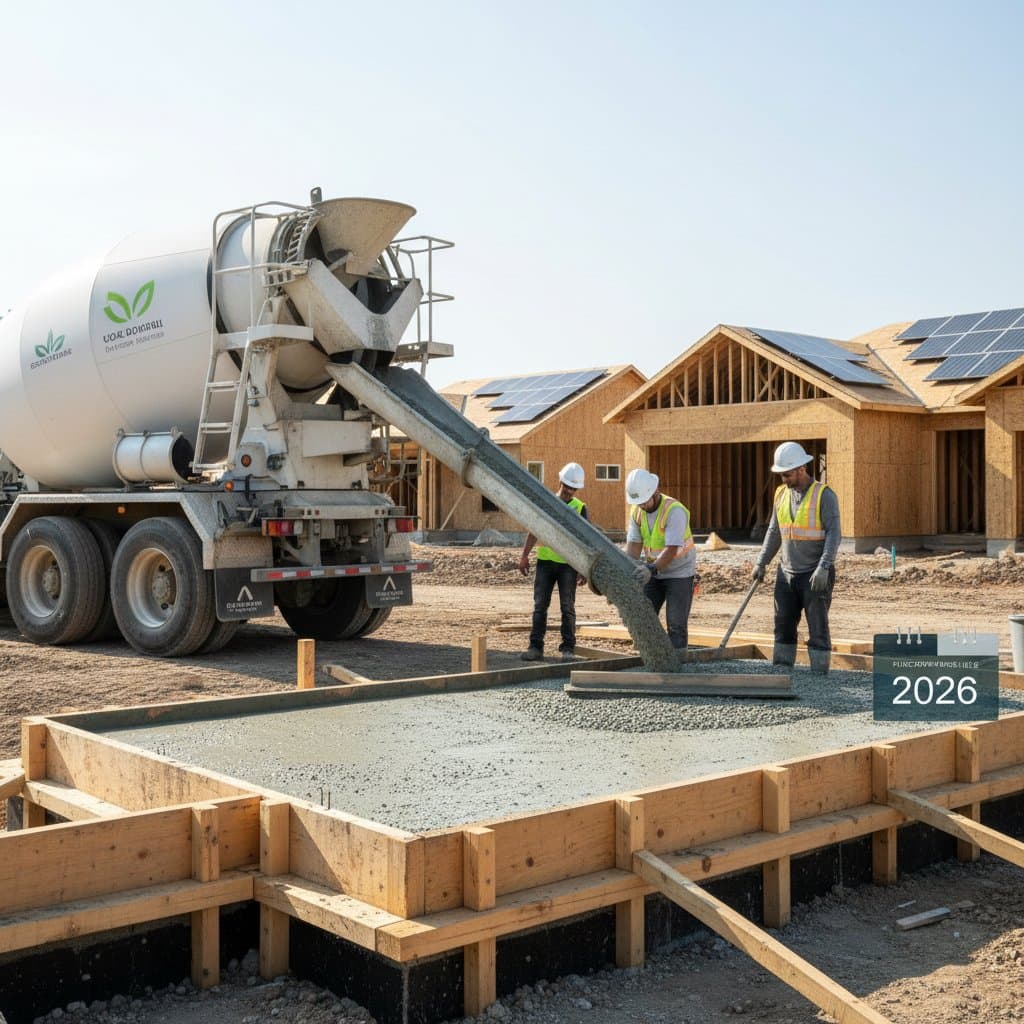
The mixing and pouring stages remain familiar to crews. Batching plants adjust ratios for local climates, ensuring workability. Curing times align with traditional methods, typically seven to 28 days for full strength. Suppliers now offer ready-mix options delivered to sites, simplifying adoption.
Quality control plays a vital role. Independent labs verify neutrality through lifecycle assessments, measuring emissions from raw materials to demolition. Certifications from bodies like the Green Building Council provide builders with assurance for projects.
Environmental and Economic Benefits
The primary advantage is emission reduction. Traditional concrete accounts for about eight percent of global CO2 output. Carbon-neutral versions cut this footprint by up to 100 percent, aiding compliance with international climate goals. For home building, this means lower overall project emissions, appealing to eco-conscious buyers.
Cost savings emerge over time. Initial material prices range from 10 to 20 percent higher than standard concrete, but incentives like tax credits offset this. Long-term, reduced energy use in production lowers supplier costs, which trickle down to builders. Maintenance expenses decrease due to the material's durability against weathering.
Property values rise with sustainable features. Studies indicate green homes sell for five to ten percent more. Carbon-neutral concrete enhances marketability, attracting millennials and families prioritizing environmental impact. Insurance premiums may also drop, as resilient structures withstand extreme weather better.
Implementation Costs and Challenges
Budgeting requires careful planning. A typical residential foundation using 50 cubic yards costs around $8,000 to $10,000 for carbon-neutral mix, compared to $7,000 for regular. Bulk purchases and regional suppliers can narrow this gap. Builders factor in transportation, as specialized mixes demand certified haulers.
Training represents another investment. Crews learn adjusted handling through short workshops, often provided by material vendors. Design software updates incorporate new strength data, ensuring compliance with building codes. Early adopters report a learning curve of one to two months.
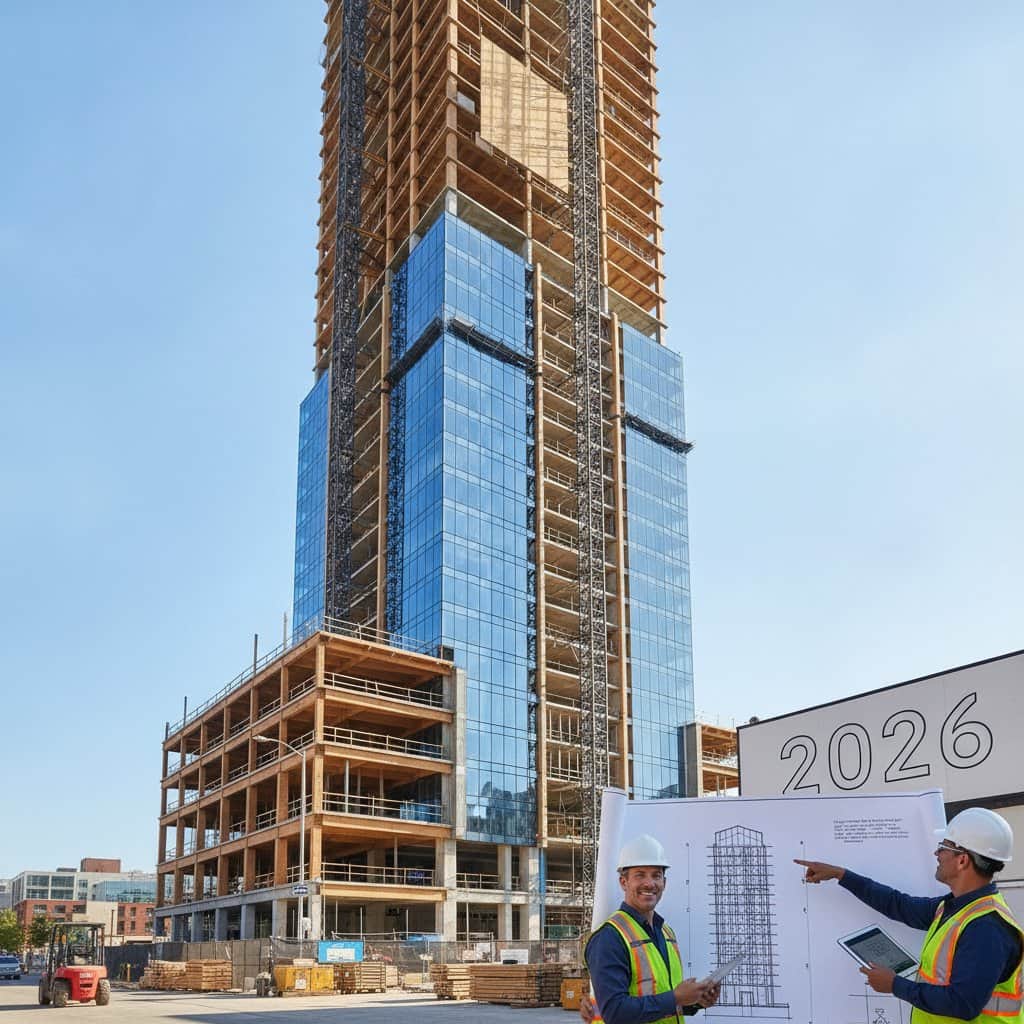
Supply chain reliability improves yearly. Major producers scale up facilities, promising availability in most urban areas by 2026. Rural sites may face delays, so builders schedule accordingly. Partnerships with local recyclers secure byproduct supplies, stabilizing costs.
Regulatory Drivers for 2026 Adoption
Governments worldwide push for net-zero construction. The European Union mandates low-carbon materials in public projects starting 2025, influencing global standards. In the United States, states like California enforce similar rules, with federal incentives via the Inflation Reduction Act.
By 2026, building codes evolve to favor carbon-neutral options. Permits for new homes prioritize low-emission materials, potentially requiring documentation. Non-compliance risks fines or delays, pressuring builders to transition. Industry associations forecast 50 percent market penetration in developed regions.
Client expectations accelerate change. Homebuyers demand transparency on environmental impact, often through apps tracking material origins. Builders who certify projects gain competitive edges in bidding and marketing.
Steps for Builders to Transition
-
Assess current projects for carbon-neutral feasibility. Review site plans and consult engineers on mix compatibility.
-
Source certified suppliers. Request samples and test small-scale pours to verify performance.
-
Train teams on best practices. Schedule sessions covering mixing, placement, and curing specifics.
-
Integrate into bids. Highlight sustainability benefits to justify any premium, emphasizing long-term savings.
-
Monitor regulations. Stay updated on local codes and incentives to maximize rebates.
-
Track outcomes. Document emission reductions and cost data to refine future approaches.
These steps build confidence, turning the switch into a seamless upgrade.
Building a Sustainable Legacy
Adopting carbon-neutral concrete positions builders as leaders in responsible development. Homes constructed this way endure while preserving the planet for future generations. The material's proven track record ensures reliability alongside innovation. As 2026 approaches, this choice delivers not only compliance but lasting value for communities and businesses alike.