Carbon-Neutral Concrete: Now Cheaper Than Traditional Options
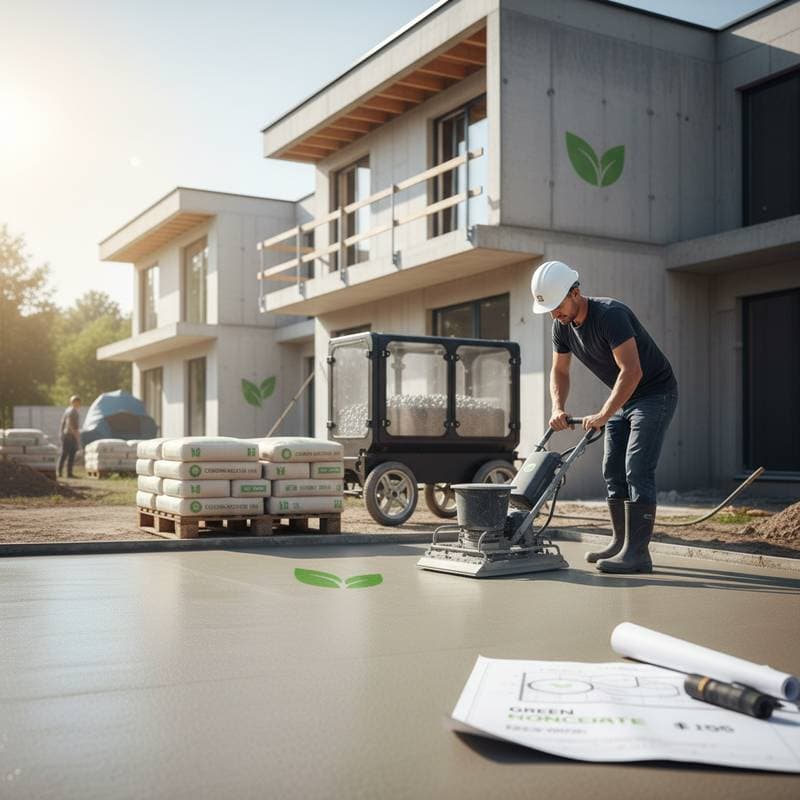
Picture a newly poured concrete driveway that combines durability with environmental responsibility at a lower price point. This scenario marks a pivotal advancement in construction materials. Traditional concrete, long a staple for its reliability, has carried a substantial carbon footprint; carbon-neutral alternatives now address this while proving more economical.
For decades, the construction industry accepted the environmental trade-offs of standard concrete. Its production, centered on energy-intensive cement manufacturing, emitted vast quantities of carbon dioxide. Carbon-neutral concrete emerged as a viable solution by neutralizing these emissions through innovative processes. Recent developments have eliminated the cost barrier, making it the preferred choice in numerous applications.
The Significance of This Shift
Concrete forms the foundation of modern infrastructure, from residential foundations to urban landscapes. Standard production involves heating limestone to produce Portland cement, a process that accounts for about 8 percent of global emissions. Carbon-neutral variants employ low-emission binders, recycled materials, and sequestration techniques to achieve balance without altering performance.
This evolution empowers project planners to prioritize sustainability without budget constraints. It aligns environmental goals with practical economics, fostering broader adoption in both small-scale renovations and large developments.
Factors Driving Affordability
Several innovations have converged to lower costs. Alternative binders, such as fly ash from coal combustion or ground granulated blast-furnace slag, replace portions of traditional cement, reducing energy demands. Emerging technologies integrate carbon capture during mixing or curing, where the material absorbs atmospheric CO2 as it hardens.
Scalability plays a crucial role. As demand grows, manufacturers optimize supply chains with regional facilities, minimizing transportation expenses. Local production utilizes standard equipment for carbon-neutral batches, often yielding prices 10 to 20 percent below conventional mixes in competitive markets.
Consider a residential walkway project: contractors increasingly quote carbon-neutral options as the baseline due to material efficiencies. These blends cure reliably in varied conditions, ensuring seamless integration into existing workflows.
Distinctions from Traditional Concrete
Visually and structurally, carbon-neutral concrete mirrors its conventional counterpart. The surface texture, color palette, and load-bearing capacity remain consistent, allowing direct substitution in most designs.
Traditional concrete features:
- Portland cement as primary binder
- High-energy kiln processes
- CO2 emissions during production and hydration
Carbon-neutral concrete attributes:
- Blends with supplementary materials like fly ash or slag
- Emission offsets via capture or renewable energy sourcing
- Incorporation of recycled aggregates to conserve resources
- Proximity-based manufacturing to cut logistics emissions
Durability often exceeds expectations. Enhanced mineral compositions promote uniform curing and superior crack resistance, potentially extending service life and reducing long-term repairs.
Implementing Carbon-Neutral Concrete in Projects
Transitioning to this material requires minimal adjustments. Follow these steps for successful integration:
- Consult suppliers early. Inquire about available low-carbon mixes; many facilities stock them alongside standard products.
- Evaluate quotes holistically. Factor in delivery logistics, as local sourcing frequently accelerates timelines and trims fees.
- Review specifications. Seek certifications for carbon neutrality, including details on binders and offset mechanisms.
- Optimize curing protocols. Maintain moisture and moderate temperatures, identical to standard practices, to achieve optimal strength.
- Verify compliance. Request third-party validations to confirm environmental claims and performance standards.
In a recent patio installation, a regional supplier provided a mix with 30 percent recycled content. The result offered a refined gray tone that harmonized with surrounding landscaping, at a cost savings of 12 percent over prior traditional pours.
Economic and Upkeep Analysis
Savings vary by location but typically range from 5 to 15 percent, driven by efficient raw material use and reduced fuel consumption in production. Stable pricing emerges from diversified supply networks less vulnerable to global commodity fluctuations.
Upkeep mirrors conventional concrete: apply sealants biennially, address spills immediately, and select mild de-icing agents. Denser formulations in carbon-neutral mixes enhance water repellency, minimizing efflorescence and freeze-thaw damage.
Sourcing Options by Region
Local producers increasingly dominate the market for eco-conscious materials. Firms specializing in recycled inputs or on-site carbon sequestration serve residential needs efficiently. In sustainability-focused areas, contractors maintain partnerships with verified suppliers, streamlining procurement.
Direct-from-plant delivery cuts intermediaries, preserving affordability and freshness. Green building incentives in certain regions further amplify value through rebates or streamlined permitting.
Broader Impacts on Environment and Aesthetics
Beyond emissions reduction, production generates less waste and pollution. Facilities employing closed-loop recycling divert aggregates from landfills, while quieter operations benefit nearby communities.
Aesthetically, diverse formulations enable tailored finishes. Aggregates from regional sources yield hues from warm earth tones to sleek neutrals, supporting versatile designs. For an outdoor kitchen, carbon-neutral countertops with exposed pebble textures provide a stone-like elegance at reduced expense, pairing well with timber and foliage elements.
Performance and Safety Essentials
Carbon-neutral concrete upholds rigorous safety benchmarks. Finishes with inherent texturing improve traction, particularly in damp environments, suiting high-traffic zones like decks or pathways.
Compressive strengths align with industry norms, accommodating reinforcements such as steel bars. Fabrication techniques remain unchanged, requiring no specialized skills or equipment from tradespeople.
Ideal Applications
This material excels in targeted scenarios:
- Driveways and pathways: Withstands vehicular loads and elemental exposure with enhanced fracture resistance.
- Patios and entertainment spaces: Offers customizable surfaces that integrate with organic landscapes.
- Garage surfaces: Resists oils and abrasion while facilitating straightforward maintenance.
- Indoor applications: Delivers polished, thermally efficient floors for contemporary interiors.
Embracing Sustainable Construction Outcomes
Installed surfaces deliver reliable footing and timeless appeal. Natural patination over seasons underscores the material's harmony with its surroundings. Rain on a sealed finish highlights impermeability, reinforcing the wisdom of this choice.
Sustainable decisions now enhance rather than hinder projects. For upcoming builds, prioritize carbon-neutral concrete to realize cost efficiencies and ecological gains. The maturity of these technologies ensures dependable, forward-thinking results.