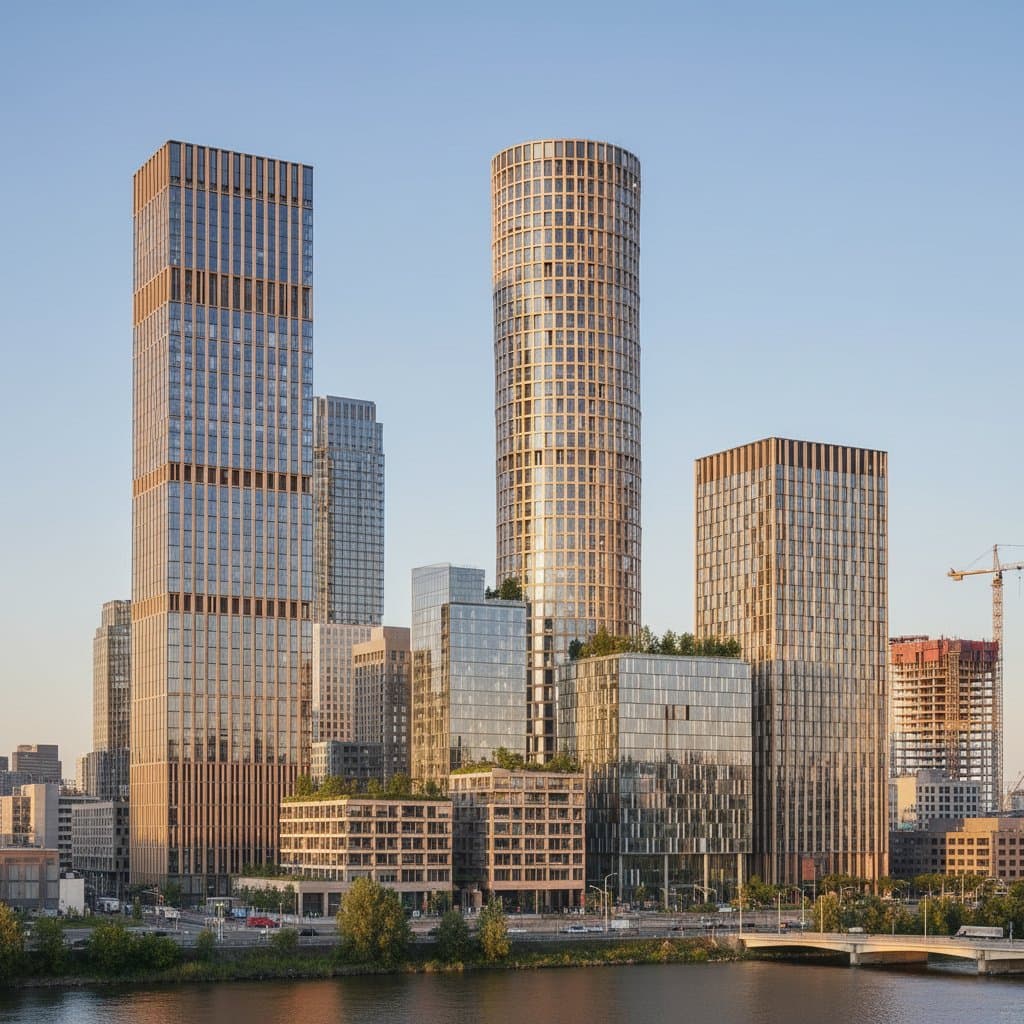
Mass Timber Skyscrapers Enabled by 2026 Building Codes
Picture a bustling city street where towering structures catch the sunlight, revealing warm wooden facades instead of cold metal and glass. The subtle aroma of cedar and fir lingers in the breeze, merging contemporary design with organic elements. This vision moves closer to reality as mass timber transitions from conceptual sketches to prominent features in urban development.
New regulations effective in 2026 expand the permissible height for wood-based constructions, positioning mass timber as a viable alternative to conventional materials. These advancements address long-standing limitations on wood in high-rise applications, driven by rigorous testing for structural integrity and fire resistance. For architects, developers, and urban planners, this evolution promises structures that harmonize with environmental goals while enhancing community spaces.
Key Characteristics of Mass Timber Construction
Mass timber relies on engineered wood products, such as cross-laminated timber (CLT) and glued-laminated timber (glulam), formed by bonding layers of lumber under pressure. These materials deliver exceptional load-bearing capacity comparable to steel or concrete, yet they originate from renewable sources. Builders stack and connect these prefabricated elements on-site, creating robust frameworks with minimal waste.
Several attributes distinguish mass timber from traditional methods:
-
Accelerated Build Times: Factory-prepared components arrive ready for installation, allowing teams to erect multiple stories in days rather than weeks. This efficiency stems from precise off-site manufacturing, which minimizes weather delays and labor disruptions.
-
Reduced Weight: At approximately one-fifth the density of concrete, mass timber lightens overall building loads, enabling shallower foundations and simpler seismic designs in earthquake-prone areas.
-
Carbon Sequestration: Harvested timber captures atmospheric carbon during growth, and this storage persists through the building's lifecycle, offsetting emissions from production and transport.
-
Aesthetic and Acoustic Benefits: The natural texture of exposed wood diffuses sound effectively, reducing echo in large interiors, while its visual appeal promotes a sense of well-being among occupants.
These qualities position mass timber as an ideal solution for projects aiming to balance innovation, economy, and ecology.
Preparation Strategies for Construction Professionals
Professionals in the building industry must adapt to incorporate mass timber effectively. Early planning ensures seamless integration into workflows and compliance with evolving standards. Focus on collaboration across disciplines to leverage this material's potential.
Consider these preparation steps:
-
Establish Supply Chain Partnerships: Identify certified suppliers of CLT and glulam within regional networks to secure consistent quality and shorten lead times. Evaluate sourcing from sustainably managed forests to align with certification programs like FSC.
-
Implement Specialized Training: Equip crews with skills in handling large panels, including techniques for alignment, fastening, and weatherproofing. Workshops on mass timber specifics, such as joint detailing and vibration control, build confidence and precision.
-
Integrate Advanced Modeling Tools: Adopt building information modeling (BIM) software optimized for wood assemblies to simulate connections and predict performance. This digital approach catches discrepancies early, avoiding costly on-site adjustments.
-
Engage Regulatory Stakeholders: Consult fire engineers and code officials during schematic design to demonstrate compliance through material specifications and test data. Proactive dialogue clarifies requirements for encapsulation and sprinkler integration.
Such preparations transform potential challenges into opportunities for efficient, high-quality outcomes.
Environmental and Societal Impacts
Traditional high-rise materials like concrete and steel contribute substantially to global emissions, with cement production alone accounting for eight percent of anthropogenic CO2. Mass timber counters this by utilizing fast-growing softwoods that regenerate within decades. Each ton of wood incorporated sequesters roughly one ton of carbon, amplifying the climate benefits as adoption scales.
Beyond emissions, mass timber enhances urban livability. Research indicates that biophilic elements, such as wooden interiors, lower stress levels and boost cognitive function among building users. These spaces feature improved air quality due to lower volatile organic compounds from wood compared to synthetic finishes.
Communities gain from quieter construction phases and reduced energy demands for heating and cooling, thanks to wood's insulating properties. As cities pursue net-zero ambitions, mass timber supports denser, greener developments that preserve biodiversity and promote public health.
Integrating Mass Timber into Everyday Projects
Mass timber extends beyond skyscrapers to residential and commercial renovations, offering versatile applications for various scales. Incorporate elements like glulam columns in lobbies or CLT flooring in multifamily units to introduce natural warmth without full structural overhauls. Designers achieve this by selecting finishes that highlight grain patterns while ensuring durability against moisture and wear.
For smaller interventions, consider accent features such as timber-clad partitions or exposed beam ceilings. These additions not only elevate aesthetics but also improve thermal comfort through inherent insulation. Maintenance involves periodic sealing to protect against humidity, ensuring longevity in diverse climates.
Advancing Sustainable Urban Futures
The 2026 code approvals mark a pivotal step toward resilient cityscapes where buildings contribute positively to ecosystems and inhabitants. Developers who embrace mass timber position themselves at the forefront of green innovation, delivering projects that endure environmentally and economically. This material invites a reevaluation of how structures can nurture rather than dominate their surroundings, fostering cities that thrive in harmony with nature.