Understanding the 2-1 Buydown Mortgage Strategy
Mortgage planning often involves complex calculations that can overwhelm even the most prepared individuals. Consider a scenario where initial payments align more closely with current financial realities, providing essential flexibility during the early years of homeownership. The 2-1 buydown strategy addresses this need by temporarily reducing interest rates, offering a structured path to affordability.
This approach involves purchasing points to lower the effective interest rate for the first two years of a fixed-rate mortgage. Lenders or builders typically fund these points, making the strategy accessible without direct cost to the buyer in many cases. As interest rates stabilize in 2026, this tool gains renewed relevance for prospective homeowners seeking immediate financial relief.
Calculating the Potential Savings
The financial benefits of a 2-1 buydown become evident through a clear breakdown of its mechanics. For a typical $400,000 loan at a 6.5% fixed rate, the standard monthly principal and interest payment approximates $2,528. With the buydown, payments adjust as follows:
- Year One: Effective rate drops by two percentage points to 4.5%, reducing the payment to approximately $2,025—a monthly savings of $503.
- Year Two: Effective rate rises to 5.5%, yielding a payment of about $2,275, or $253 less than the full rate.
- Year Three Onward: Payments revert to the original $2,528 at 6.5%.
Over the first two years, these adjustments can accumulate to nearly $13,000 in savings for this loan size, scaling to $40,000 or more for higher-value properties. Such reductions allow buyers to allocate funds toward closing costs, home improvements, or building reserves, fostering a stronger financial foundation from the outset.
Factors influencing total savings include loan amount, base interest rate, and the cost of the buydown points, which range from 2% to 4% of the loan principal. Consult a lender for personalized projections to ensure alignment with your budget.
Ideal Scenarios for Implementing a 2-1 Buydown
Not every mortgage situation benefits equally from a 2-1 buydown, yet it proves particularly advantageous in targeted contexts. First-time buyers often find it invaluable, as the lower initial payments ease the shift from renting to owning while covering additional expenses like maintenance and utilities.
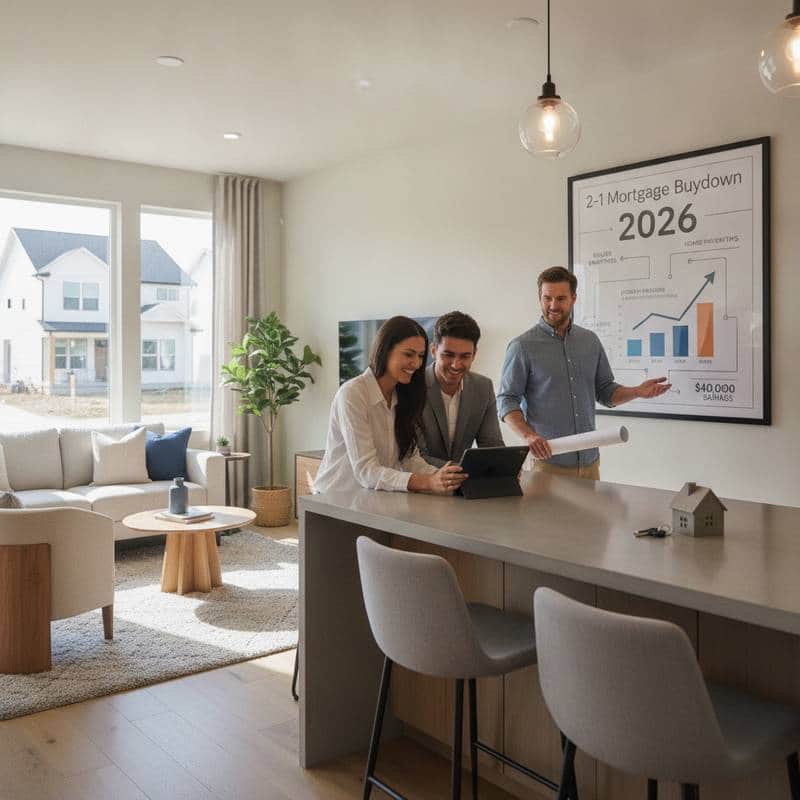
In new construction markets, builders frequently incorporate buydowns into incentive packages to accelerate sales. This can eliminate out-of-pocket costs for buyers, effectively subsidizing the rate reduction through developer funds. For professionals anticipating career advancements or salary increases within two to three years, the graduated payment structure mirrors expected income growth, minimizing budgetary strain.
Short-term homeowners, such as those planning to relocate or refinance after a few years, also benefit from the upfront cash flow advantages. However, evaluate long-term implications: if rates decline significantly, refinancing might offer better value than a temporary buydown. Always compare against alternatives like adjustable-rate mortgages or seller concessions to identify the optimal fit.
Applying the Strategy in Practice
To illustrate real-world impact, envision a $500,000 home purchase with a monthly payment of $3,165 at 7%. A 2-1 buydown adjusts this to $2,550 in year one and $2,850 in year two, freeing up $615 and $315 monthly, respectively. These amounts equate to funding a home warranty, landscaping projects, or accelerating student loan repayment.
The transition to full payments in year three occurs after budgets have adapted to homeownership demands. Many buyers report reduced stress levels, as the strategy prevents overextension during the settling-in phase. Track your cash flow using simple spreadsheets to monitor how savings contribute to broader financial goals, such as retirement contributions or family vacations.
Potential drawbacks include the non-refundable nature of buydown funds if the home sells early, though this risk diminishes with longer ownership plans. Lenders may require specific qualifications, so review eligibility criteria upfront.
Initiating Discussions with Lenders and Builders
Begin by inquiring about 2-1 buydown availability during pre-approval or home selection processes. Phrase your question as: "What 2-1 buydown options are available, and how do they integrate with current promotions?" This prompts detailed responses, including cost breakdowns and eligibility.
Builders in competitive markets often highlight buydowns in marketing materials, positioning them as affordability boosters. Request side-by-side comparisons with other incentives, such as closing cost credits or appliance packages, to quantify value. Lenders provide customized amortization schedules, revealing exact savings and payment timelines tailored to your loan scenario.
Timing matters: secure commitments in writing before closing to lock in terms. If rates hover around 6-7% in 2026, as forecasts suggest, this strategy enhances competitiveness in bidding wars without altering the permanent rate.
Maximizing Long-Term Value from Your Buydown
After closing, the immediate payment relief translates to tangible lifestyle enhancements. Direct savings toward high-impact upgrades, like energy-efficient appliances that lower utility bills, or professional organizing services to streamline your new space. This approach ensures the home feels fully realized rather than provisional.
Monitor market conditions annually; if rates fall below your locked rate, explore refinancing to capture permanent reductions. Pair the buydown with disciplined budgeting to build equity faster, positioning you for future financial milestones. Ultimately, this strategy empowers informed decisions, blending short-term ease with sustained homeownership success.