How the 2-1 Buydown Strategy Can Save You $18,000 on Your Mortgage
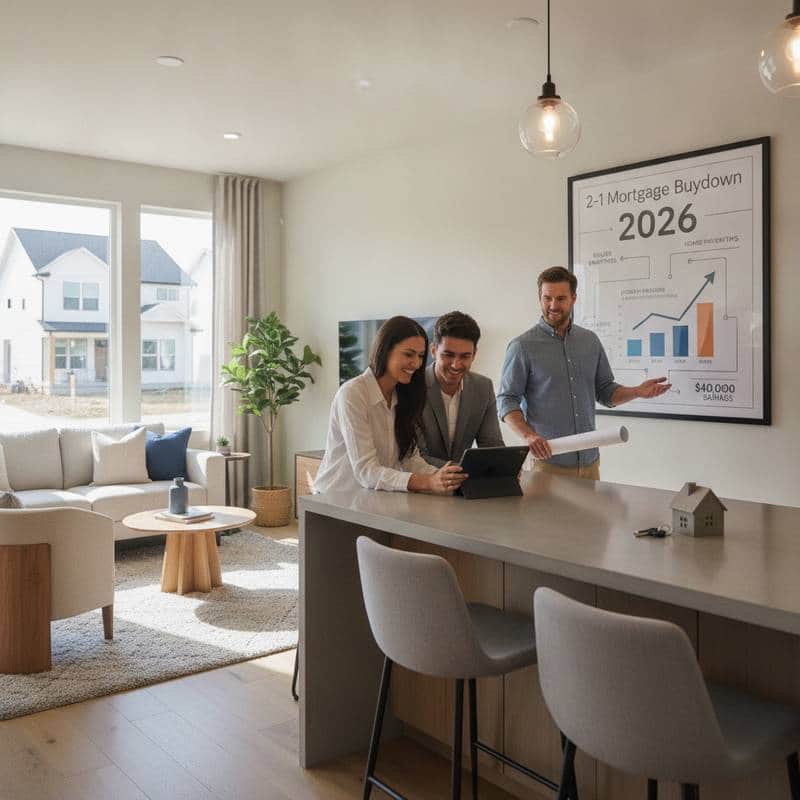
Picture entering your new home with a sense of financial ease, as monthly mortgage payments align more closely with your budget. This scenario becomes achievable through a financing option known as the 2-1 buydown. This strategy reduces early-year payments, offering substantial savings and a smoother transition into homeownership.
Navigating High Interest Rates and Budget Constraints
Recent house hunters often encounter elevated mortgage rates that significantly impact affordability. Even a modest rate increase can elevate monthly payments by hundreds of dollars, prompting many potential buyers to reconsider their options. This gap between desired homes and financial limits creates frustration for those eager to purchase.
To address buyer hesitation, builders and lenders introduce temporary rate reduction programs. The 2-1 buydown stands out as a favored choice, providing reduced payments during the initial two years of the loan. It serves as an effective link between the appeal of a new home and the demands of sustained financing.
Understanding the Mechanics of a 2-1 Buydown
The 2-1 buydown involves a temporary adjustment to the interest rate on a fixed-rate mortgage. The designation indicates the extent of the reduction: 2 percentage points in the first year and 1 percentage point in the second year. From the third year onward, the rate reverts to the original fixed level for the loan's duration.
For instance, with a base rate of 6%, payments reflect 4% in year one and 5% in year two. This adjustment typically yields savings of about $18,000 over the two years, based on common loan amounts. Homeowners frequently apply these funds to essential adjustments, such as establishing savings or addressing initial property needs.
Calculating the Savings in Detail
Consider a $400,000 loan at a 6% interest rate, where the principal and interest payment totals approximately $2,398 monthly. Under a 2-1 buydown, the first-year rate of 4% lowers this to about $1,910, creating a monthly savings of $488. In year two, at 5%, the payment rises to roughly $2,147, still saving $251 per month compared to the full rate.
These reductions accumulate to nearly $18,000 over two years. Buyers can redirect this amount toward closing expenses, property enhancements, or an emergency reserve. Such flexibility reduces the pressure during the early stages of ownership.
Funding Sources for the Buydown
Buyers do not always bear the cost of a 2-1 buydown. Often, the builder, seller, or lender finances it as an incentive at closing by prepaying the interest differential. This arrangement benefits all parties: buyers enjoy lower payments, while sellers facilitate smoother transactions.
Builders particularly value this tool in challenging markets, as it encourages commitments without requiring price concessions. Savvy buyers negotiate inclusion in the purchase agreement, achieving equivalent value to a direct discount in a more streamlined manner.
Real-World Applications and Planning
Homeowners who utilize a 2-1 buydown often prepare for the rate adjustment to avoid disruptions. One effective method involves allocating a portion of the monthly savings into a dedicated account from the outset. This builds a buffer that eases the transition when payments increase.
Such proactive steps allow gradual budget adaptation and foster long-term financial confidence. Buyers benefit by focusing on immediate priorities, like settling into the home, while maintaining preparedness for future changes.
Alignment with Today's Housing Dynamics
Despite rate variations, competition persists in the housing sector. Buyers seek assurance, and sellers aim to sustain momentum. The 2-1 buydown bridges these interests, enabling closings without aggressive price adjustments.
It suits scenarios where income growth is anticipated or refinancing aligns with lower future rates. First-time buyers find it especially useful for managing added costs such as property insurance, utilities, and upkeep during the adjustment period.
Key Factors to Evaluate Before Proceeding
Prospective buyers should assess several elements prior to selecting a 2-1 buydown:
- Review the complete payment timeline with your lender to visualize annual changes.
- Verify the funding source in the contract, ensuring clarity on builder, seller, or lender contributions.
- Budget from day one at the full rate to accommodate the eventual increase.
- Explore refinancing possibilities if market rates decline before year three.
- Align the option with personal objectives, such as short-term residency plans.
A reputable lender provides thorough explanations and comparisons. Persistent inquiries ensure alignment with individual circumstances, promoting both immediate savings and enduring stability.
Expenses and Implementation Timeline
The buydown expense varies with loan size and rate, generally equating to 2 to 3% of the principal as prepaid interest. Sellers or builders commonly offset this through credits. The integration occurs within standard mortgage processing, preserving typical closing schedules.
Payments simply reflect adjusted rates initially. Inquire with builders about available incentives, as many collaborate with lenders on tailored programs. Regional variations may include promoted savings figures for straightforward evaluation.
Accessing Local Financing Options
Community banks and credit unions frequently provide customized buydown offerings. These institutions prioritize affordability with transparent terms and comparative analyses. Seek providers who communicate clearly without overwhelming technical details.
For new constructions, consult the builder's recommended lender for exclusive rates or promotions. A direct question about buydown availability often uncovers opportunities that reshape financial planning.
Maximizing Benefits Post-Closing
After moving in, direct the monthly savings purposefully to enhance financial health:
- Establish or bolster an emergency fund.
- Accelerate repayment of existing obligations.
- Implement modest upgrades for improved livability and energy savings.
- Reserve funds for anticipated repairs.
This disciplined approach strengthens your position beyond the buydown period. By the time payments normalize, a solid foundation supports ongoing homeownership success.
Steps to Secure Your 2-1 Buydown
The 2-1 buydown transforms initial homeownership challenges into manageable phases. It affords time for acclimation, personalization, and fiscal adjustment. Discuss this option with your builder or lender to determine its fit within your financing framework.