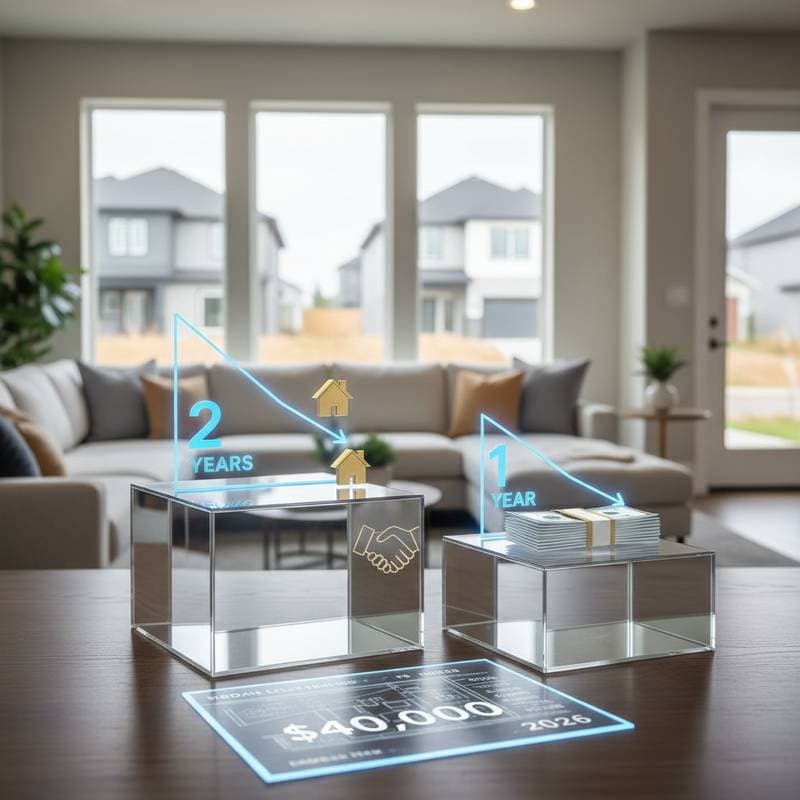
2-1 Buydown Strategy Saves $40,000 on 2026 Mortgages
Picture the excitement of moving into a new home, with unpacked boxes giving way to familiar routines and the satisfaction of ownership. Yet, the initial mortgage payments often arrive as a stark reminder of financial commitments, particularly when interest rates exceed expectations. A 2-1 buydown addresses this by reducing early payments substantially, providing relief during the adjustment period.
Understanding the Challenge
Homebuyers today face elevated home prices, constrained budgets, and mortgage rates that challenge affordability. These factors create hesitation, even among experienced purchasers, as they evaluate long-term financial implications. Builders recognize these pressures and respond with financing options like the 2-1 buydown, a straightforward tool that delivers significant savings on upcoming mortgages.
What a 2-1 Buydown Entails
A 2-1 buydown provides a temporary reduction in the mortgage interest rate, allowing payments to rise gradually to the full rate. For instance, on a loan with a permanent rate of 6 percent, the first year features a rate of 4 percent, and the second year uses 5 percent. From the third year forward, the payment reflects the original 6 percent rate.
This structure lowers monthly obligations by hundreds of dollars in the initial years, accumulating to approximately $40,000 in savings on a standard loan. Buyers can redirect these funds toward essential expenses, such as home modifications or relocation costs, enhancing overall financial stability during the early ownership phase.
Reasons Builders and Lenders Provide This Option
Builders finance the 2-1 buydown through an upfront deposit into an escrow account, which subsidizes the payment difference for the first two years. Lenders administer the funds to maintain the reduced rates, ensuring seamless implementation. This approach benefits all parties: buyers enjoy affordable entry into homeownership, while builders sustain inventory movement in competitive markets.
Step-by-Step Process of a 2-1 Buydown
- Secure the mortgage at the permanent interest rate, which applies after the initial period.
- The builder or seller deposits funds into escrow to support the rate reduction.
- Payments decrease by 2 percentage points in year one and 1 percentage point in year two.
- Starting in year three, payments align with the full rate, coinciding with potential income increases or financial adjustments.
To illustrate, consider a borrower who compares scenarios with and without the buydown. The first-year savings alone can exceed $1,700 monthly, offering substantial flexibility for new homeowners.
Calculating the Savings
Assume a $600,000 loan on a 30-year fixed mortgage at 6 percent interest.
- Year 1: Effective rate of 4 percent.
- Year 2: Effective rate of 5 percent.
- Year 3 and beyond: Full 6 percent rate.
Monthly payments in the first year drop by more than $700, and the second year saves about $350 per month. Across 24 months, these reductions total roughly $40,000, with variations based on loan amount and specific terms.
Key Advantages
- Immediate financial relief during the critical early years of ownership.
- Funding typically provided by the builder, imposing no additional cost on the buyer.
- Adaptability for those anticipating salary growth or opportunities to refinance.
- Gradual payment increase that builds confidence in long-term budgeting.
This option allows time for essential home enhancements, such as updating fixtures or improving efficiency, without immediate payment strain.
Important Considerations
While effective, the 2-1 buydown requires careful evaluation.
- Payments rise to the full rate after two years, necessitating forward planning.
- Loan approval bases qualification on the permanent rate, not the temporary discount.
- Future rate declines may enable refinancing, potentially bypassing the adjustment entirely.
Request detailed comparisons from your lender to assess impacts on cash flow. Review calculations both with and without the buydown to identify the optimal path.
Regional Implementation by Builders and Lenders
In areas with robust new construction, builders integrate 2-1 buydowns into standard incentives. Partner lenders streamline the process, often bundling it with benefits like closing cost assistance or rate protections. Explore builder-recommended financing options, as they frequently include tailored arrangements that amplify affordability.
Effective Budgeting Strategies
View the buydown savings as a targeted buffer rather than unrestricted spending.
- Allocate portions to an emergency reserve for unexpected needs.
- Direct funds toward practical improvements that enhance home value or comfort.
- Reserve amounts specifically for the eventual full-rate transition.
Maintaining a budget aligned with the permanent payment, despite lower actual outflows, accelerates debt reduction and ensures smooth adjustments.
Ideal Candidates for This Approach
First-time buyers gain the most from eased entry into ownership. Growing families manage transition costs effectively, while investors minimize initial holding expenses. Those planning refinancing after building equity find it serves as a strategic interim solution, reducing pressure during property stabilization.
Steps to Secure a 2-1 Buydown
Inquire with your builder or lender about availability, as many include it in promotional packages. Even without builder support, independent structuring remains possible. Verify funding sources and escrow details in loan paperwork to confirm transparency.
Maximizing Long-Term Benefits
The 2-1 buydown transforms early homeownership challenges into opportunities for growth. By lowering initial barriers, it fosters stability and informed financial choices. Homeowners who leverage these savings strategically position themselves for sustained success in their new space.