The 2026 Buydown Boom: Builders Reduce Mortgage Rates
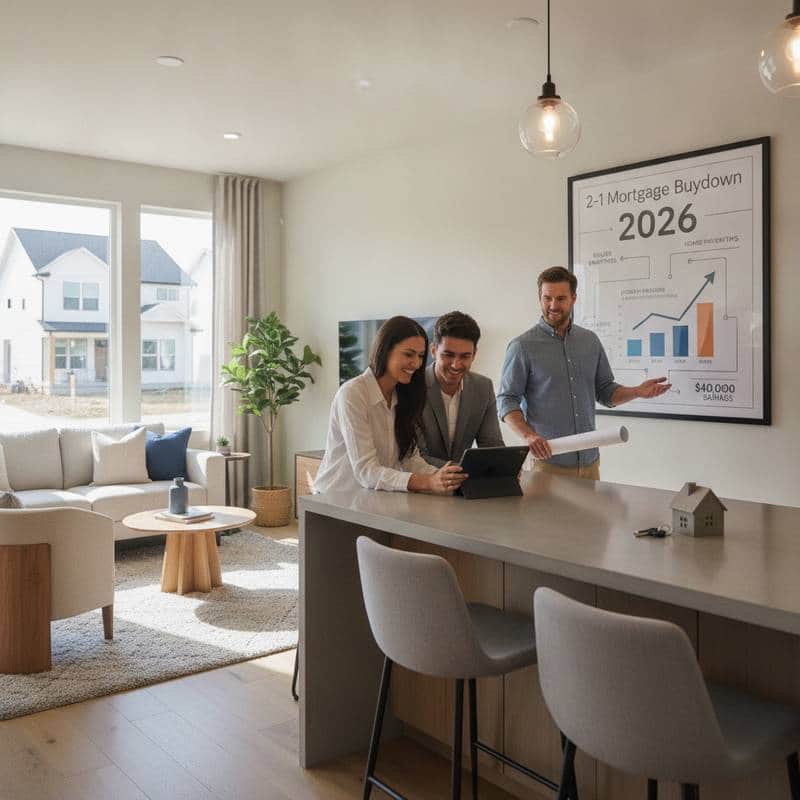
Picture touring a newly constructed model home, where fresh paint fills the air and the sales representative shares details that capture attention. This detail involves a mortgage rate that appears unusually favorable. Across new housing developments, builders implement mortgage rate buydowns to draw in prospective buyers and alter perceptions of purchasing new construction properties.
Interest rates influence monthly housing payments significantly. A difference of one percentage point determines whether payments fit comfortably within a budget or strain finances. Builders recognize this dynamic and employ buydowns to accelerate home sales.
Reasons Builders Offer Buydowns
Builders view buydowns as effective marketing strategies and financial calculations. Unsold homes generate ongoing expenses for builders. Providing a reduced rate often proves more cost-effective than substantial price reductions, and buyers experience the benefit directly through lower monthly obligations.
During a recent visit to a builder community near my location, activity levels had increased noticeably. The sales representative reported that visitor numbers doubled following the introduction of the buydown program. Prospective buyers remained prudent yet approached financial projections with renewed confidence.
Benefits and Considerations of Buydowns
Buydowns provide advantages alongside important caveats that require careful review.
Benefits:
- Reduced initial payments simplify loan qualification processes.
- Early savings allow allocation toward furnishings, outdoor enhancements, or minor modifications.
- Builders fund the credit, preserving buyer resources.
- Favorable rate changes enable refinancing prior to payment increases.
Considerations:
- Future payment adjustments may catch unprepared buyers off guard.
- Early home sales forfeit remaining buydown advantages.
- Initial affordability may obscure long-term financial commitments.
Approach buydowns as strategic instruments rather than shortcuts. They prove most effective with a clear understanding of the adjustment schedule and a prepared financial plan.
Expenses and Regional Market Patterns
Builders typically allocate three to six percent of a home's price toward buydowns and complementary incentives. This investment frequently costs less than equivalent price concessions. For buyers, the arrangement yields monthly savings of several hundred dollars during the initial phase.
Regional builders innovate by combining buydowns with credits for closing expenses or complimentary customization options. In certain areas, independent builders collaborate with local lenders offering adaptable rate structures. These partnerships promote concepts like sustained payment stability, which resonates with buyers seeking reliability.
Prospective homebuyers should examine community websites and regional builder associations for active promotions. National firms such as Highland Homes, Lennar, and Pulte maintain widespread incentive initiatives, while local operators often provide competitive terms, particularly for homes ready for immediate occupancy.
Strategies for Optimal Timing
Timing plays a crucial role in securing buydown opportunities. Builders modify incentives based on seasonal sales performance. Attractive offers frequently apply to completed or near-completion properties, where holding costs prompt generous terms.
Direct your real estate agent to identify communities with current rate reductions. Brief investigations can reveal substantial potential savings. Inquire whether the builder's affiliated lender provides permanent buydown alternatives, as modest additional investments may secure long-term rate stability.
Integrating Buydowns into Homeownership
After settling into the property, the buydown influences daily financial routines. Lower payments facilitate a smooth transition, allowing time for personalization and adaptation. Monitor the adjustment date closely and review your budget approximately six months in advance to assess refinancing viability if market rates decline.
Steps to Secure a Buydown
To pursue a buydown, start by consulting a trusted mortgage professional to evaluate eligibility and long-term impacts. Compare offers from multiple builders and lenders to identify the most advantageous terms. Document all agreement details in writing to ensure clarity on funding, duration, and adjustment mechanics. Finally, integrate the buydown into a comprehensive financial strategy that accounts for future rate changes and housing goals.