Key Takeaways
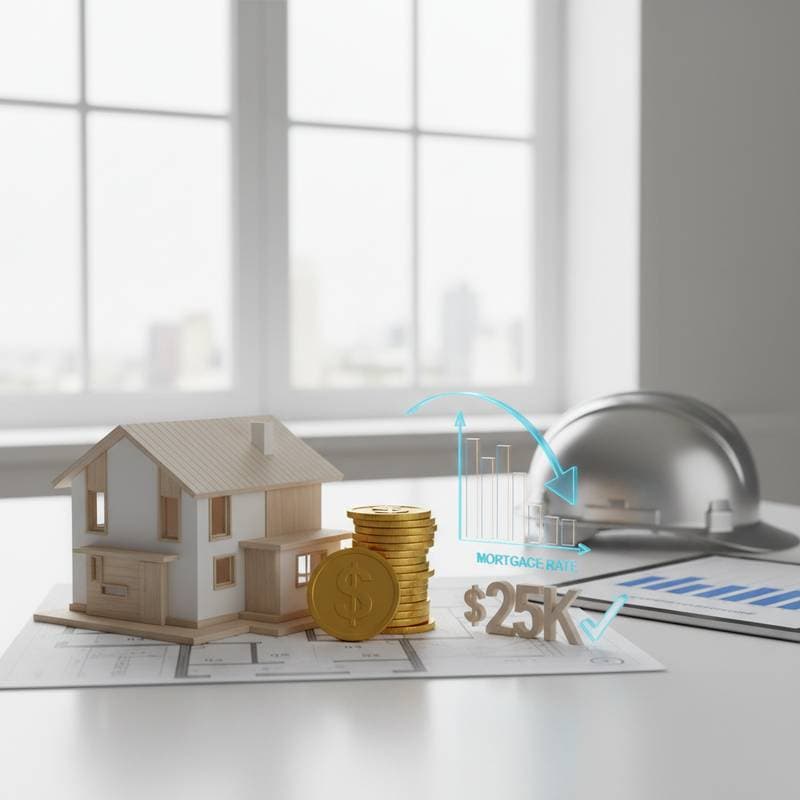
- Homebuilders offer unprecedented mortgage rate buydown credits, up to $25,000, to counteract elevated interest rates.
- These credits reduce monthly mortgage payments and improve affordability for new home purchases.
- Factors such as timing, loan structure, and builder selection influence the value of these incentives.
Understanding Rate Buydown Credits
Rate buydown credits represent a financial contribution from homebuilders toward lowering the interest rate on a buyer's mortgage. In the current market, where interest rates remain high, builders use these incentives to attract buyers and maintain sales momentum. A buydown effectively prepays a portion of the interest, resulting in lower initial payments.
These credits can apply to either temporary or permanent reductions. Temporary buydowns decrease the rate for a fixed period, typically one to three years, before reverting to the original rate. Permanent buydowns, less common, lock in the lower rate for the entire loan term. Builders structure these offers variably, so buyers must review specifics to align with their financial plans.
Common Mistakes to Avoid with Builder Buydown Credits
Buyers often overlook key details that diminish the benefits of buydown credits. Assuming uniformity across offers leads to surprises later. Always verify the allocation of funds and the implications after any initial period ends.
-
Determine if the buydown is temporary or permanent. A temporary option reduces the rate for one to three years, after which payments increase to the full amount. This suits buyers planning a refinance in the near term. For long-term residency, prioritize a permanent reduction to avoid future payment shocks.
-
Evaluate the total loan cost. Some builders incorporate the buydown expense into the home's purchase price, potentially offsetting savings. Calculate the net cost to ensure the incentive delivers genuine value without inflating the overall expense.
-
Compare options from multiple lenders. Builders may favor specific lenders, but independent shopping can uncover superior terms. In many cases, builders accommodate preferred lenders while honoring the credit, provided buyers inquire proactively.
-
Monitor expiration dates for incentives. These offers change with market conditions, so delays in decision-making could result in lost opportunities. If a particular home design appeals, act promptly to secure the credit.
Potential Savings from Rate Buydown Credits
The financial relief from a $25,000 buydown credit can substantially ease budgeting pressures. For a typical loan of $400,000 at a 7% interest rate, this credit might lower the rate to 5% initially, reducing monthly payments by $400 to $700 during the buydown period. These savings free up funds for home improvements, emergency reserves, or other essentials.
Consider a real-world example: A couple utilized a builder's buydown to qualify for a larger home than initially budgeted. The reduced payments provided breathing room during the early years, and they refinanced successfully when rates declined, ultimately saving thousands in interest over time. Such outcomes highlight how strategic use of credits expands homeownership possibilities.
To quantify benefits, request a detailed amortization schedule from your lender. This tool illustrates monthly savings, total interest paid, and long-term impacts based on your loan specifics.
Potential Drawbacks and Considerations
While buydown credits offer clear advantages, certain aspects require careful attention. Builders deploy these incentives to stimulate demand, so availability may decrease as market conditions improve. Temporary buydowns, in particular, lead to payment increases upon expiration unless a refinance occurs.
View these credits as a tactical measure rather than a permanent solution. Plan for post-buydown scenarios by maintaining strong credit and monitoring rate trends. Additionally, ensure the credit applies only to new construction loans, as it typically excludes resale properties.
Steps to Leverage Buydown Credits Effectively
Begin by researching builders in your desired area and inquiring about current mortgage incentives. Gather details on credit amounts, buydown types, and any associated conditions. Engage a trusted lender early to model scenarios, comparing temporary and permanent options against your budget.
Negotiation plays a vital role. Builders aim to finalize sales, so propose adjustments to credit values or combinations with other perks, such as appliance upgrades. Document all agreements in writing to prevent misunderstandings.
Achieving Financial Confidence in Your New Home
Navigating new home purchases involves multiple decisions, yet buydown credits simplify affordability challenges. By selecting the right incentive structure and timing your move wisely, buyers secure not only lower payments but also greater stability. This approach transforms potential obstacles into opportunities, fostering lasting satisfaction in your home investment.