Revolutionary Carbon-Negative Concrete Hits 12 States
Picture a new community center with smooth, pale concrete walls that catch the morning light. This material not only supports the structure but also absorbs carbon dioxide from the air each day. Builders highlight how such surfaces maintain strength while contributing to cleaner environments, signaling a shift in sustainable construction practices.
This innovation extends beyond technical advances. It reshapes responsible building for homeowners, contractors, and designers. Now available in twelve states, carbon-negative concrete influences projects from urban sidewalks to residential patios.
The Problem with Traditional Concrete
Concrete ranks among the most common building materials worldwide. Its reliability, affordability, and strength make it essential. However, production releases substantial carbon dioxide. Cement, the primary component, involves heating limestone and other materials at high temperatures. This process emits carbon from both fuel combustion and chemical reactions.
Large-scale use amplifies the impact. A single residential project, such as a driveway or basement renovation, requires significant volumes. Across millions of applications, the construction sector faces pressure to find alternatives that preserve performance without environmental harm.
The Opportunity for Change
Carbon-negative concrete stands out by going beyond emission reductions. It actively sequesters carbon from the atmosphere during curing. This appeals to builders pursuing green certifications and homeowners prioritizing ecological effects.
Communities increasingly adopt ambitious sustainability targets. Local contractors seek materials that align with these priorities. Availability in twelve states accelerates adoption and broadens access.
How Carbon-Negative Concrete Works
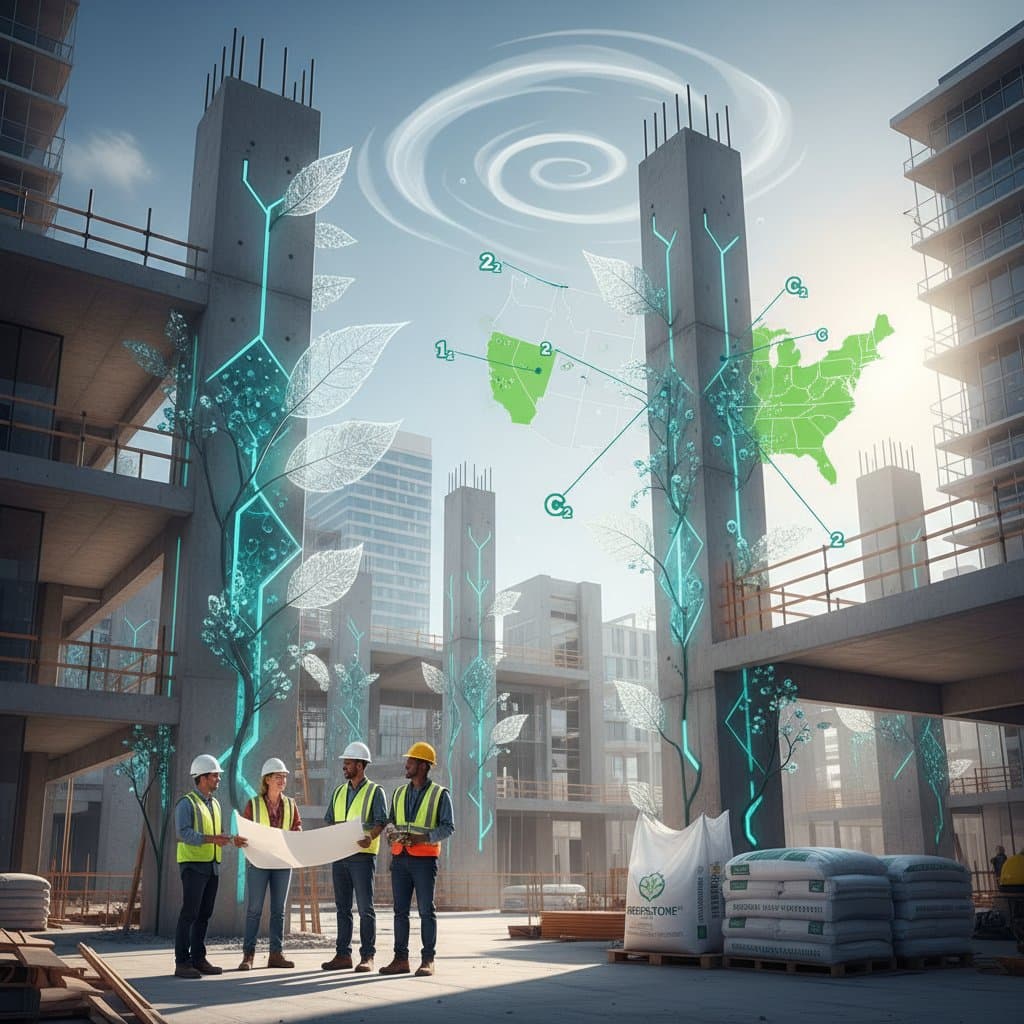
The underlying science proves both intriguing and accessible. Manufacturers blend cement with minerals that bind carbon dioxide from the air. As the mixture cures, it incorporates and stores this carbon permanently within the material. Additional strategies, such as recycled aggregates or industrial byproducts, minimize traditional cement use and lower production emissions.
Key steps include:
- Revised Cement Formula: Incorporate reactive minerals like magnesium silicate to attract carbon dioxide.
- Carbon Capture During Curing: The setting process pulls carbon from the air and integrates it into the structure.
- Reduced Energy Production: Lower-temperature manufacturing cuts fuel consumption and emissions.
- Stronger Final Product: Carbon-trapping reactions form a denser matrix, enhancing strength and longevity.
Samples often exhibit a refined finish, comparable to naturally aged stone, while matching standard curing times.
Where It Is Being Used
Projects span twelve states, adapting to diverse climates and needs. Applications include coastal sidewalks, suburban foundations, and urban decorative walls. Public pilot programs evaluate performance in high-traffic areas, while private initiatives incorporate it into driveways, patios, and retaining walls.
Local suppliers provide pre-mixed options for smaller jobs. These blends integrate seamlessly with surrounding landscapes, offering both functionality and visual appeal.
Why Builders and Homeowners Are Paying Attention
Builders value the environmental gains alongside practical compatibility. The material pours, cures, and finishes using familiar equipment and techniques. Initial skepticism fades as teams experience the straightforward integration.
Homeowners benefit from enhanced resilience. The dense composition resists stains and withstands freeze-thaw cycles, reducing cracks and upkeep. Costs align closely with conventional options, making the upgrade accessible without compromising quality.
Cost and Availability
Current pricing exceeds traditional mixes by 10 to 20 percent, varying by location and provider. Economies of scale will narrow this gap as production expands. For residential features like patios or driveways, the premium typically adds just a few hundred dollars.
Suppliers stock it alongside standard products. In emerging markets, specify it explicitly when ordering. Notable brands include CarbonCure, Blue Planet, and Solidia, each employing unique carbon sequestration methods.
Practical Tips for Using Carbon-Negative Concrete
Consider these steps for successful implementation:
- Plan for Delivery: Consult suppliers on brand-specific variations, timelines, and curing needs.
- Use Proper Sealing: Apply sealants to preserve color and resist wear, despite inherent durability.
- Match the Mix to the Project: Select formulations suited for structural versus aesthetic roles.
- Ask About Local Credits: Inquire about incentives for sustainable materials in your state.
- Combine with Other Sustainable Choices: Integrate with recycled reinforcements or permeable surfaces for comprehensive eco-benefits.
Opt for low-VOC sealants to maintain environmental advantages. Results yield clean, modern appearances that offset project footprints.
Design and Aesthetic Benefits
The material enhances visual possibilities. Natural curing produces subtle color variations, from light grays to earthy tones. These surfaces reflect light softly, warming outdoor spaces.
Interior uses, like countertops or accent walls, suit minimalist or industrial aesthetics. Polished versions offer a subtle sheen, blending form and sustainability effectively.
Long-Term Durability
Testing confirms performance equals or surpasses traditional concrete. The compact structure repels water, minimizing cracks. It also endures salt exposure in cold regions.
Maintenance remains simple. Clean with mild soap and water routinely. Reseal outdoor areas periodically to sustain appearance.
The Broader Impact on Sustainable Construction
Expansion into twelve states transforms industry practices. It eliminates trade-offs between durability and responsibility. Architects leverage carbon sequestration for innovative designs in public facilities, schools, and venues.
This progress fosters achievable visions of carbon-mitigating infrastructure.
Challenges and Realities
Adoption faces logistical hurdles. Developing supply chains and distant production sites can offset carbon savings through transport. Training ensures proper mixing and curing.
Brand variations affect consistency, so review specifications for major undertakings. These issues prove surmountable as standardization advances with wider use.
Integrating Carbon-Negative Concrete into Projects
Homeowners planning updates should discuss options with contractors. Simple elements like walkways contribute to broader sustainability. Professionals can gain advantages by exploring demos and test batches now.