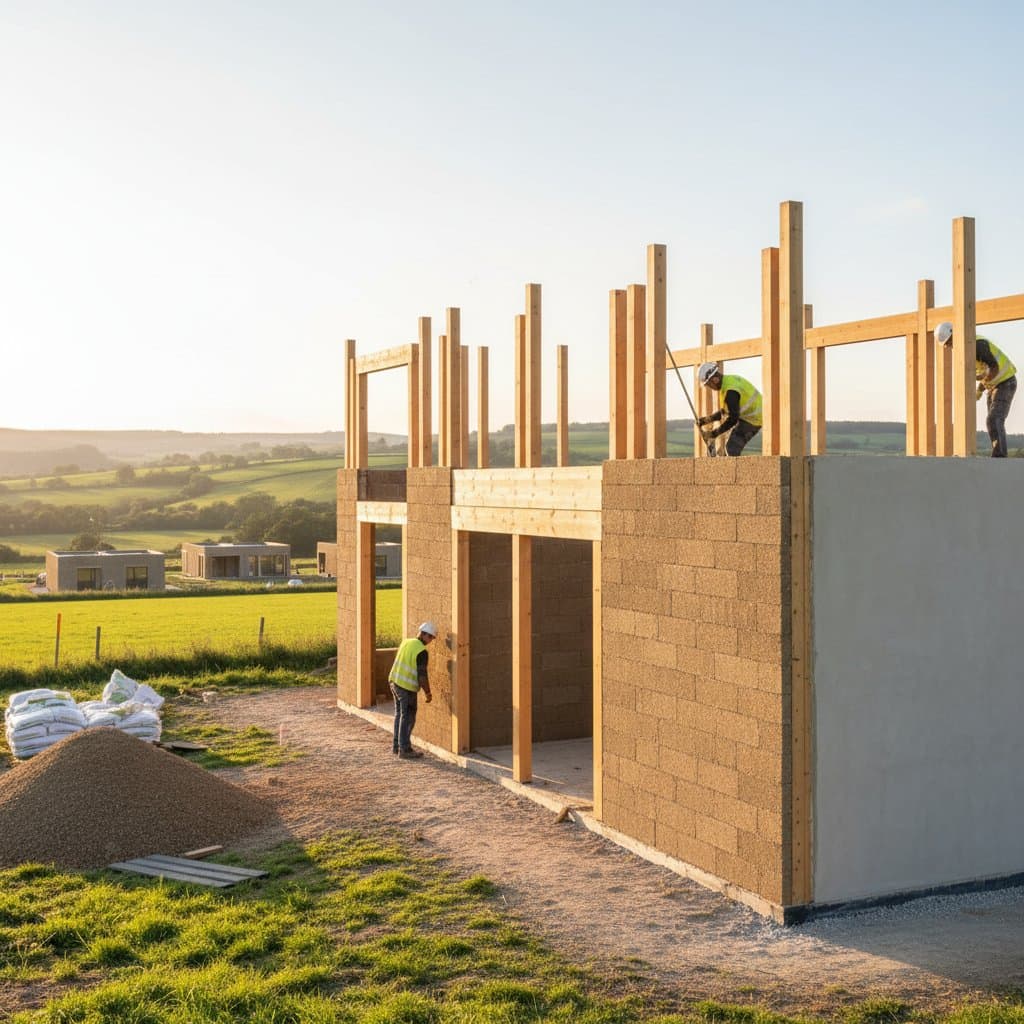
Hempcrete Legalization in 15 Additional States Advances Sustainable Construction
Recent legalization of hempcrete in 15 additional states marks a significant step for eco-friendly building practices. This material, composed of hemp hurds, lime binder, and water, offers superior insulation and carbon sequestration. Homeowners and builders now access more affordable, locally sourced options that enhance energy efficiency and indoor air quality.
The shift from regulatory restrictions to broader acceptance streamlines permitting processes and encourages innovation in residential and commercial projects. Builders report easier integration with existing codes, fostering wider adoption. This expansion positions hempcrete as a viable alternative to traditional materials like concrete and fiberglass insulation.
Understanding Hempcrete Composition and Properties
Hempcrete forms through mixing the inner woody core of the hemp plant, known as hurds, with a lime-based binder and water. Workers cast this mixture into molds around a structural frame, where it hardens into a lightweight, porous block. The resulting material weighs about one-fifth as much as concrete, simplifying handling during installation.
Its breathable structure allows vapor to pass through, regulating indoor humidity levels between 40 and 60 percent. This property prevents condensation buildup, reducing mold growth risks. Fire resistance reaches Class A standards, enduring temperatures up to 1,200 degrees Celsius without igniting.
Impact of Legalization on Availability and Costs
Prior to this expansion, hempcrete faced sourcing challenges due to federal hemp restrictions and varying state laws. Builders often imported materials, inflating costs by 20 to 30 percent. Legalization now permits domestic hemp cultivation, cutting transportation expenses and supporting regional economies.
State approvals integrate hempcrete into standard building codes, such as those from the International Code Council. Inspectors trained on its properties approve installations more readily, shortening project timelines by weeks. For a typical 2,000-square-foot home, initial material costs drop from $15,000 to $10,000, with long-term energy savings offsetting the investment within five years.
Integrating Hempcrete into Residential Designs
Hempcrete serves as non-load-bearing infill, complementing timber or steel frames for structural support. Architects use it in wall thicknesses from 8 to 12 inches, achieving R-values of 2.4 per inch for thermal insulation. This setup suits diverse styles, from contemporary urban dwellings to rural retreats.
In humid climates, pair hempcrete with vapor-permeable membranes to ensure moisture escape. For seismic zones, its flexibility absorbs vibrations better than rigid concrete, minimizing crack formation. Designers curve walls around openings or create textured accents, enhancing aesthetic appeal without compromising performance.
Aesthetic and Sensory Qualities of Hempcrete Finishes
Hempcrete surfaces present a subtle, organic texture resembling light gray stone flecked with plant fibers. Apply limewash for a breathable, matte coating in earth tones that diffuses light evenly. This finish maintains wall integrity while allowing minor repairs with simple reapplication.
Interior spaces gain a serene ambiance, with walls absorbing sound for quieter environments. Combine with wooden accents or natural flooring to amplify biophilic design elements. Over time, the material develops a soft patina, evolving with the home's character.
Advantages for Builders and Contractors
Hempcrete mixes on-site using basic tools like concrete mixers and shovels, requiring no specialized equipment. A crew of three completes a standard wall section in one day, compared to two days for poured concrete. Its low thermal mass responds quickly to temperature changes, aiding passive heating and cooling strategies.
Maintenance involves periodic inspections for cracks, repaired with a lime-hemp paste. Unlike synthetic insulations, it avoids degradation from UV exposure or pests. Builders note 15 to 20 percent reductions in overall project waste, aligning with green certification standards like LEED.
Environmental and Health Benefits
Hemp grows rapidly, sequestering 10 to 15 tons of CO2 per hectare during its four-month cycle. Incorporated into walls, this carbon remains locked for the building's lifespan, often exceeding 100 years. The lime component recarbonates over time, absorbing an additional 0.3 kilograms of CO2 per kilogram of material.
Indoors, hempcrete emits no volatile organic compounds, improving air quality for occupants. It regulates radon diffusion and filters particulates, benefiting those with respiratory conditions. Compared to cement production, which generates 1 ton of CO2 per ton, hempcrete achieves a net-negative footprint.
Evolving Standards in Sustainable Architecture
Sustainable design increasingly prioritizes materials that balance performance and ecology. Hempcrete enables sleek profiles with insulated cores, supporting net-zero energy goals. Projects incorporate it alongside solar panels and rainwater systems for holistic efficiency.
Visualize a modern residence where hempcrete walls underpin minimalist facades, painted in neutral hues. Natural light highlights the material's subtle grain, creating inviting spaces. This integration proves sustainability enhances rather than limits architectural expression.
Steps to Incorporate Hempcrete in Your Project
Begin by reviewing your local building department's guidelines on alternative materials. Submit a detailed plan outlining hempcrete's role, including test data on compressive strength, which averages 1 MPa. Engage a structural engineer to verify compatibility with your frame system.
Source hurds from certified hemp farms, ensuring THC levels below 0.3 percent. Mix ratios typically follow 1:2:1 parts lime, hurds, and water by volume; test small batches for consistency. Hire contractors experienced in bio-based materials to oversee casting and curing, which takes 28 days for full strength.
Budget for 10 to 15 percent above conventional insulation initially, factoring in rebates from programs like the Inflation Reduction Act. Track energy use post-construction to quantify savings, often 30 percent on utility bills.
Key Design and Performance Factors
Hempcrete excels in moderate climates but requires adaptations elsewhere. In high-rainfall areas, install rainscreen gaps of 10 millimeters to promote drying. For cold regions, layer with additional insulation to meet R-20 requirements in walls.
Avoid using it in submerged applications; reserve for above-grade elements. Initial supply chains may vary, so order materials three months in advance. As production scales, expect 20 percent cost reductions by 2025.
Experiencing Long-Term Benefits
Hempcrete homes demonstrate resilience across seasons, maintaining stable temperatures with minimal HVAC reliance. Summer cooling demands decrease by 25 percent due to evaporative cooling effects. Winter heat retention improves comfort without cold spots.
Occupants report enhanced well-being from balanced humidity and fresh air circulation. The material's thermal inertia stabilizes daily fluctuations, fostering restful environments. Over decades, these qualities compound into lower operational costs and enduring value.