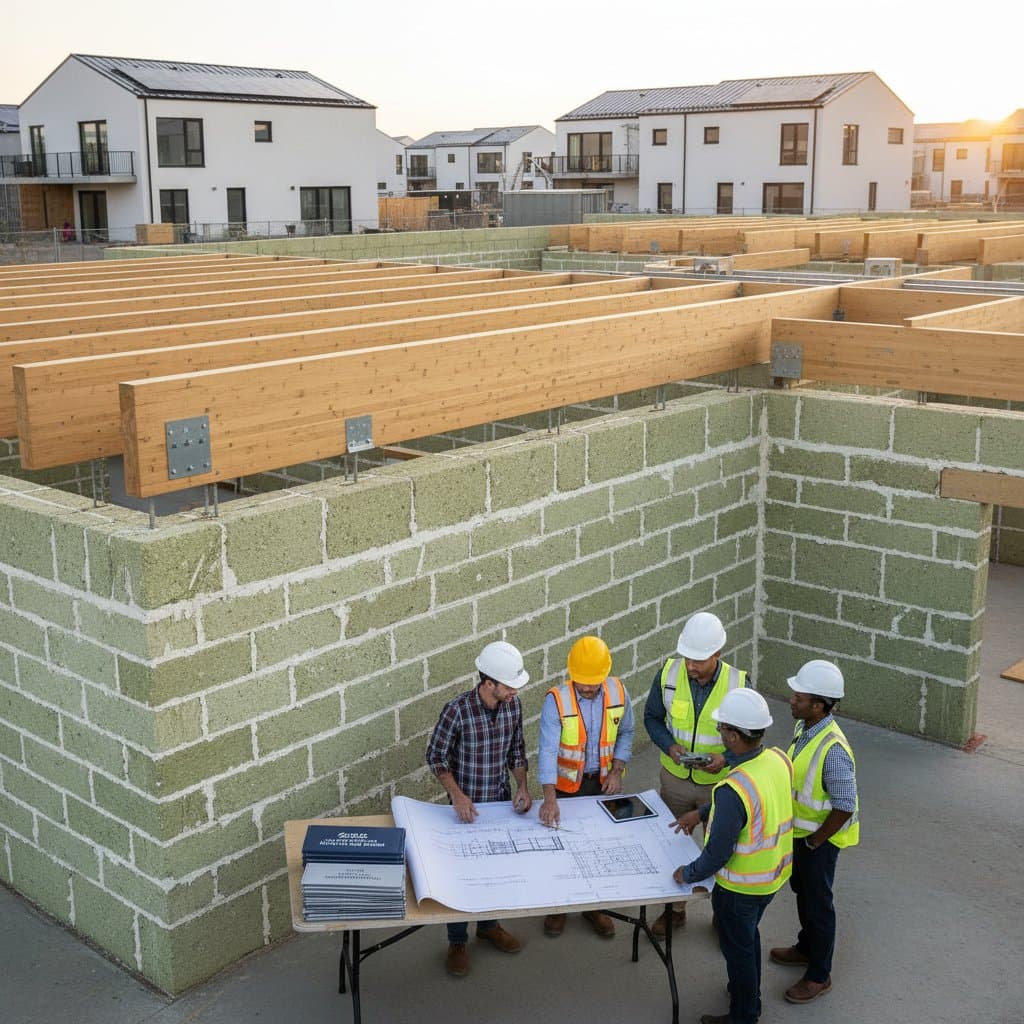
Understanding Hempcrete
Hempcrete emerges as a versatile building material derived from the hemp plant. It consists of the inner hurds of the hemp stalk mixed with a lime-based binder and water. This combination creates a lightweight, non-structural material ideal for walls, insulation, and plaster finishes.
Unlike traditional concrete, hempcrete requires no high-heat processing, which reduces energy consumption during production. The hemp component grows rapidly and sequesters carbon dioxide, contributing to a lower environmental footprint. Builders appreciate its mold resistance and thermal performance, which enhance indoor air quality.
The Significance of Building Code Approval
Building codes serve as essential regulations to ensure safety and structural integrity in construction. Recent approvals for hempcrete mark a turning point, allowing its use in compliant projects across various jurisdictions. This legal recognition addresses previous barriers related to standardization and testing.
Authorities have evaluated hempcrete for fire resistance, durability, and load-bearing capabilities in non-structural applications. The approval process involved rigorous testing to confirm compliance with established standards. As a result, architects and contractors can now specify hempcrete without risking code violations.
This development stems from growing demand for sustainable materials amid climate concerns. Hempcrete's integration into codes reflects broader shifts toward eco-conscious building practices. It opens doors for innovation in residential and commercial designs.
Key Benefits of Hempcrete in Construction
Hempcrete offers natural insulation that regulates temperature effectively. Its porous structure allows moisture to evaporate, preventing condensation and mold growth. This breathability maintains comfortable living environments year-round.
The material exhibits carbon-negative attributes, meaning it absorbs more carbon dioxide than emitted during its lifecycle. Hemp plants mature in just four months, enabling quick replenishment of resources. Compared to cement-based alternatives, hempcrete reduces overall emissions significantly.
Fire safety represents another advantage, as hempcrete chars rather than burns, providing passive protection. Its pest-resistant properties eliminate the need for chemical treatments. These features combine to create durable, low-maintenance structures.
Practical Applications and Implementation
Builders apply hempcrete in cast-in-place walls by mixing components on-site and pouring into forms. This method suits new constructions or retrofits, particularly in timber-frame buildings. The material sets through a natural curing process, achieving strength over time.
For insulation purposes, hempcrete fills cavities between structural elements, enhancing energy efficiency. Plastering with hempcrete provides a smooth, aesthetic finish that integrates seamlessly. Professionals recommend consulting local guidelines to adapt techniques to specific climates.
Installation requires basic tools like mixers and molds, making it accessible for various project scales. Training programs now cover hempcrete handling, ensuring safe and effective use. Early adopters report cost savings through reduced heating needs and minimal upkeep.
Overcoming Challenges in Adoption
While promising, hempcrete adoption faces hurdles such as limited supplier networks. Sourcing quality hemp hurds demands reliable agricultural partners. Education plays a key role in addressing misconceptions about its structural role.
Regulatory variations across regions require builders to verify local approvals. Research continues to refine mix ratios for optimal performance. Collaborative efforts between industry groups and policymakers accelerate standardization.
Despite these challenges, success stories from approved projects demonstrate viability. Feedback from users highlights ease of use and long-term value. As awareness grows, supply chains strengthen, facilitating broader implementation.
Embracing Hempcrete for a Greener Future
Incorporating hempcrete into building practices supports environmental goals without compromising quality. It fosters energy-efficient homes that lower utility bills and carbon footprints. Communities benefit from healthier, resilient structures.
This approval encourages innovation in sustainable design, inspiring architects to explore bio-based materials. The shift toward hempcrete aligns with global efforts to combat climate change. Builders who adopt it contribute to a legacy of responsible construction.
Looking ahead, expanded use of hempcrete promises transformative impacts on the industry. It redefines standards for eco-friendly building, making sustainability achievable and practical. Projects leveraging this material set examples for future developments.