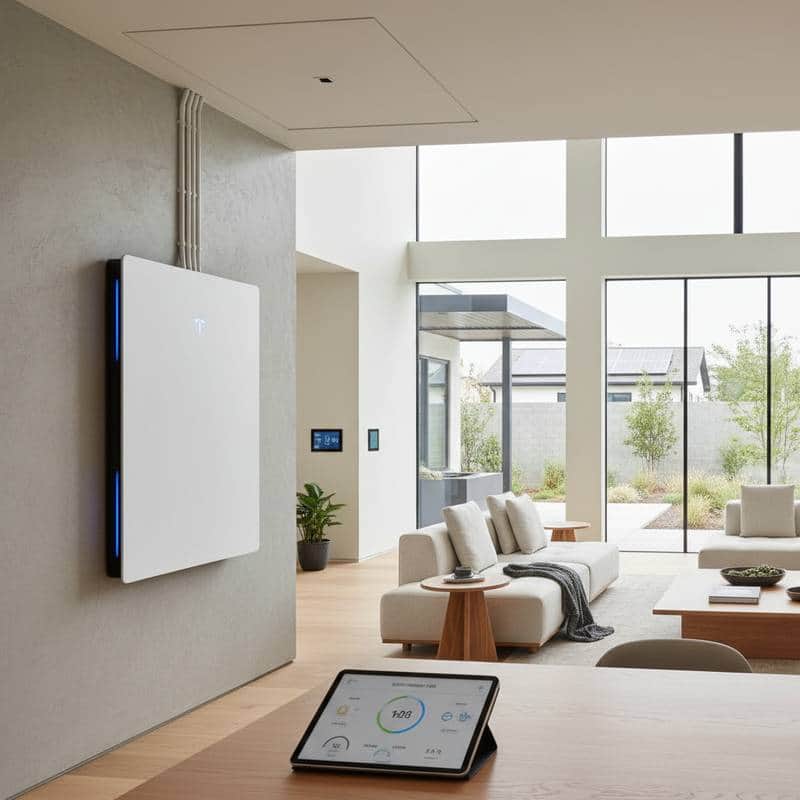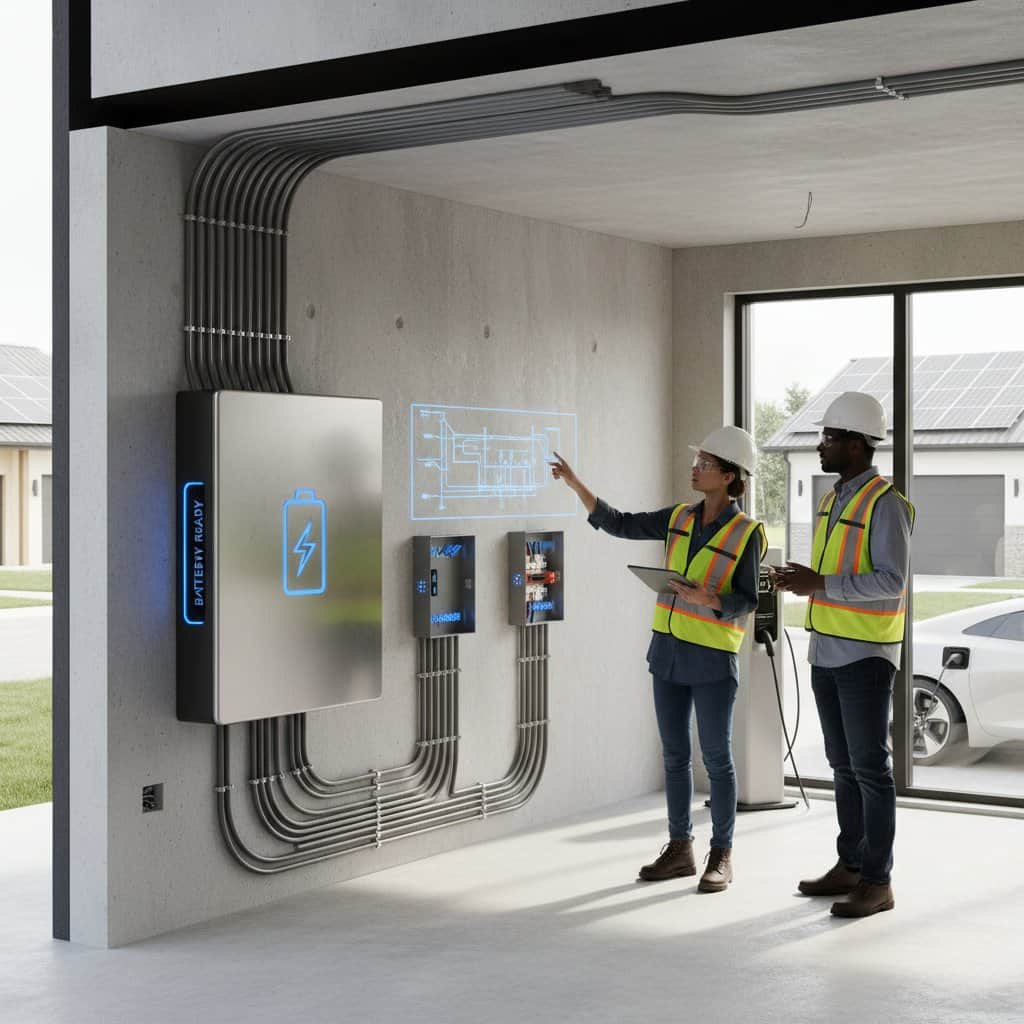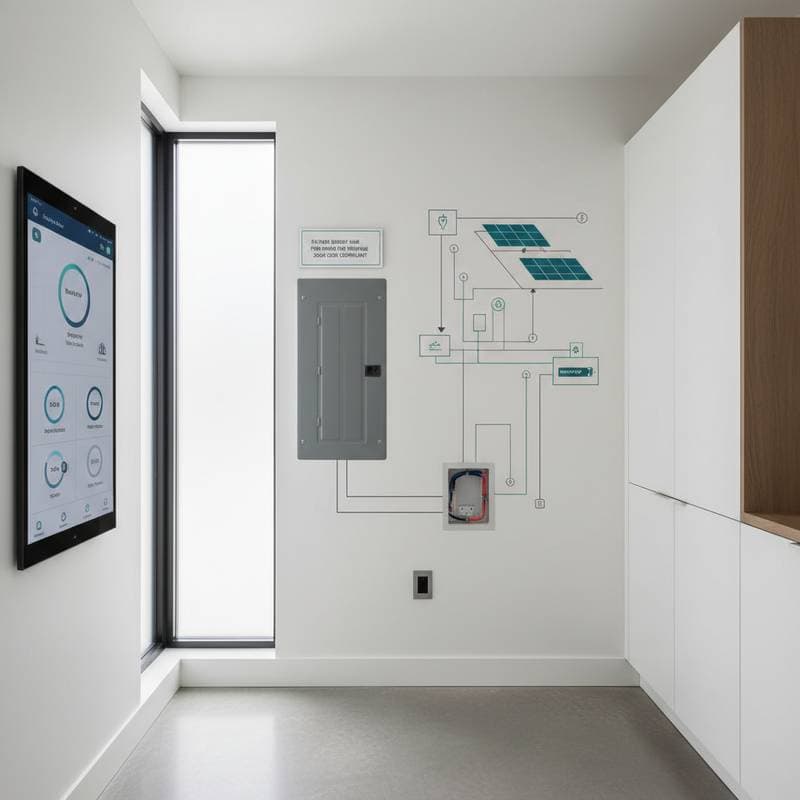
I recently visited a friend’s garage and noticed a compact wall-mounted unit that blended seamlessly with the surroundings, resembling a modern appliance more than industrial equipment. This device stored solar energy generated during the day, powering the home efficiently after sunset. The experience prompted reflection on the evolving role of residential spaces, particularly in terms of internal infrastructure that supports sustainable energy.
The forthcoming regulation requires all new homes to incorporate wiring for battery readiness. This provision does not mandate immediate battery installation. Instead, it ensures that future additions occur with minimal disruption, enhanced safety, and reduced expense.
Reasons for Mandating Battery-Ready Wiring in Homes
The core rationale centers on the growing adoption of solar panels and the need for energy storage solutions. A battery-ready home features pre-installed wiring and designated spaces that accommodate storage systems. Consequently, homeowners gain the ability to integrate batteries effortlessly when desired.
This approach extends beyond environmental benefits to emphasize adaptability. During peak grid demand or rising electricity rates, stored energy provides an alternative source. Moreover, it maintains power continuity during local outages, fostering greater reliability and self-sufficiency.
Essential Features of a Battery-Ready Home
Battery readiness involves specific elements within the home’s electrical framework.
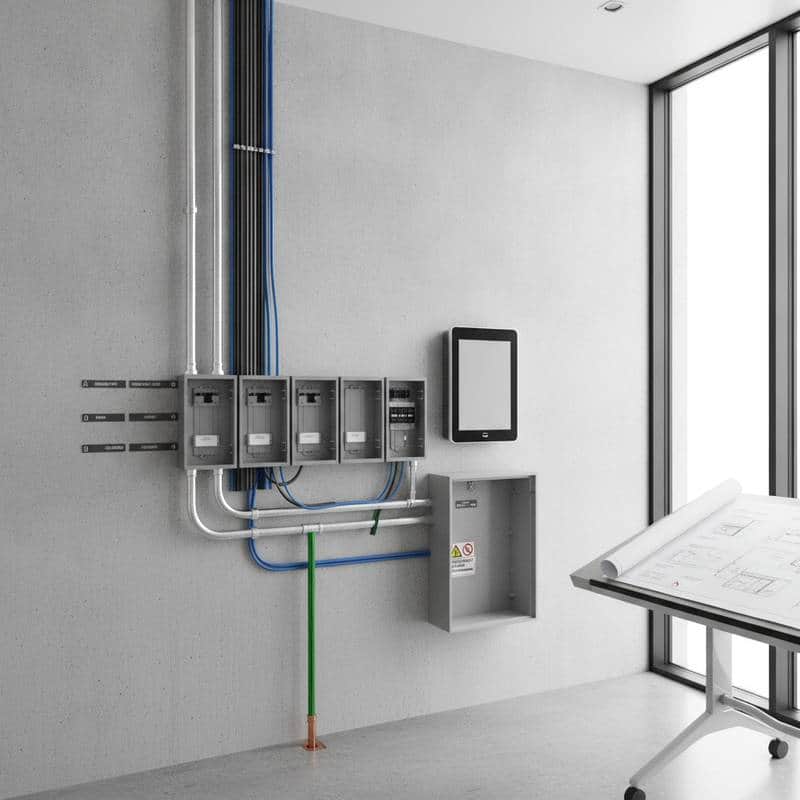
- A designated conduit pathway from the main electrical panel to the intended battery location.
- Reserved capacity in the electrical panel for circuit breakers and isolation switches required by battery systems.
- An allocated indoor space, compliant with safety standards, proximate to the electrical panel for battery placement.
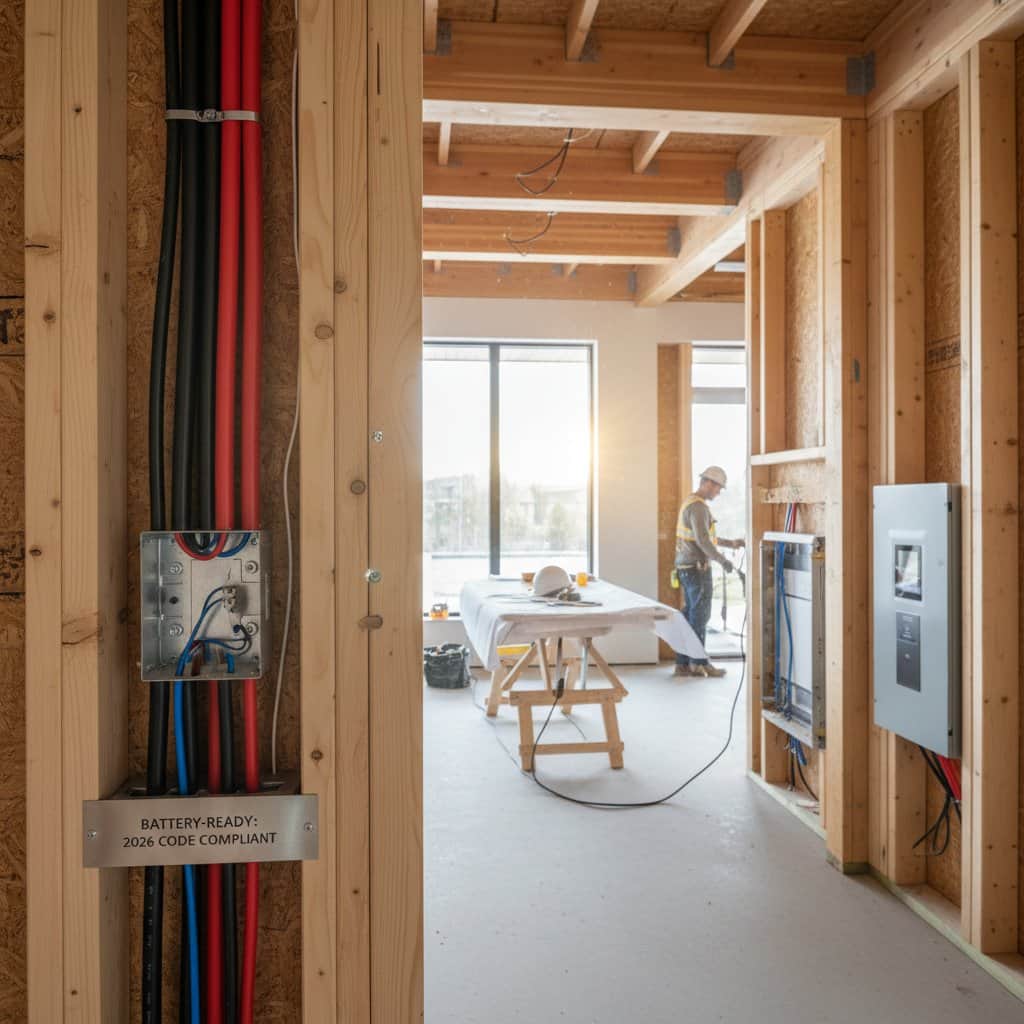
- Pre-installed conduits and junction boxes that streamline subsequent installations without structural alterations.
These components represent proactive design choices. Consider the analogy of preparing plumbing lines for an eventual addition; the foundational work occurs upfront, simplifying later execution.
Implications for New Construction and Renovations
For new builds, electricians must integrate battery pre-wiring into the overall electrical blueprint. This addition constitutes a minor fraction of total construction expenses yet averts significant future complications. In renovation projects, inclusion depends on the extent of electrical modifications; during panel upgrades or rewiring, incorporating readiness proves advantageous.
Progressive builders increasingly incorporate energy-efficient elements as standard offerings. Features such as solar-compatible roofing, advanced metering, and battery pre-wiring enhance market appeal. Prospective buyers value properties equipped to embrace technological advancements without prohibitive retrofits.
Costs Associated with Battery Pre-Wiring
Expenses for pre-wiring fluctuate based on home dimensions and configuration. Professionals estimate that integrating conduits and panel space during initial construction incurs only marginal additional costs. In contrast, post-construction retrofits demand invasive measures like wall incisions, cable routing through confined areas, and potential panel expansions, escalating expenditures substantially.
Homeowners in the design phase benefit from prioritizing this preparation, regardless of immediate battery plans. The investment secures long-term savings and adaptability as energy landscapes evolve.
Compatibility of Battery Systems with Pre-Wired Homes
Pre-wiring maintains versatility across battery options, avoiding brand-specific commitments. It establishes the necessary electrical infrastructure, allowing installers to link systems directly to existing pathways upon selection.
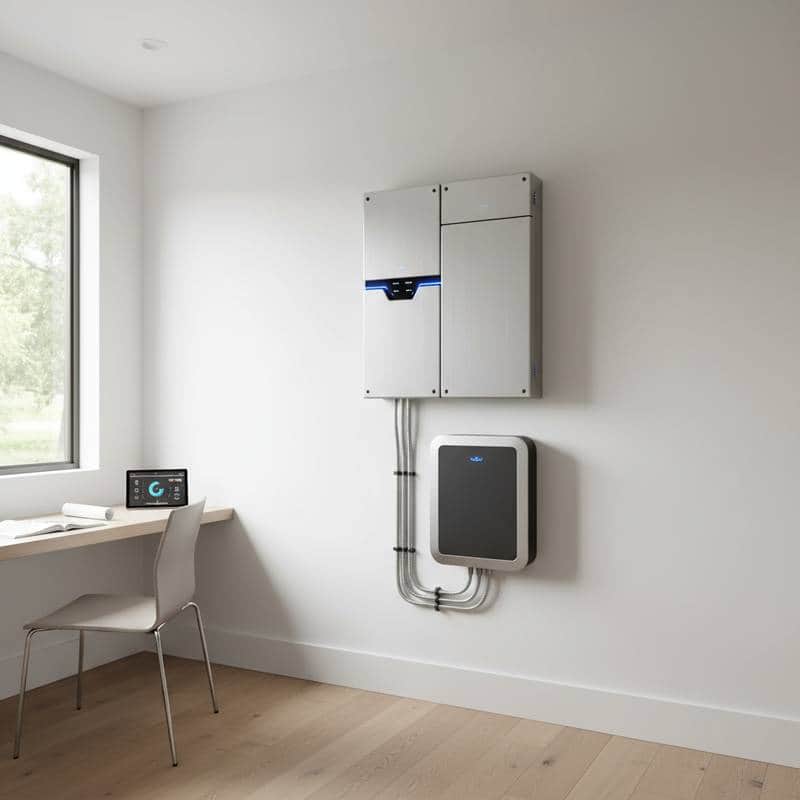
Contemporary batteries vary in form factors, including wall-mounted units and freestanding cabinets, with capacities scaled to household consumption. This flexibility ensures that the home supports diverse choices aligned with specific energy requirements.
Benefits of Energy-Ready Home Design
Envision returning home on a warm summer evening, where natural light fades into dusk. The residence draws silently from daytime solar reserves, maintaining comfort without grid reliance. This integration subtly redefines energy consumption, aligning living spaces with natural cycles.
Such designs also boost property value. Prospective owners prioritize homes prepped for efficient, sustainable upgrades, viewing them as pragmatic investments in future resilience.
Actionable Steps for Implementing Battery Readiness
- Consult your builder during initial planning to confirm inclusion of battery pre-wiring in electrical specifications.
- Inquire with your electrician about optimal battery placement, favoring shaded, ventilated zones near the main panel.
- Extend preparations to solar compatibility, even without current installation, for comprehensive future options.
- Document all installations meticulously, including labeled conduits and wiring diagrams, to expedite later additions.
- Anticipate technological progress by designing with scalability in mind, minimizing the need for future overhauls.
Realizing Long-Term Energy Autonomy
With battery readiness in place, daily life proceeds unchanged initially. The true advantages emerge over time, whether through seamless battery integration or responsive adaptation to energy market shifts.
This preparation transcends regulatory adherence. It equips residences to evolve alongside personal needs and broader energy innovations, ensuring sustained independence and efficiency.