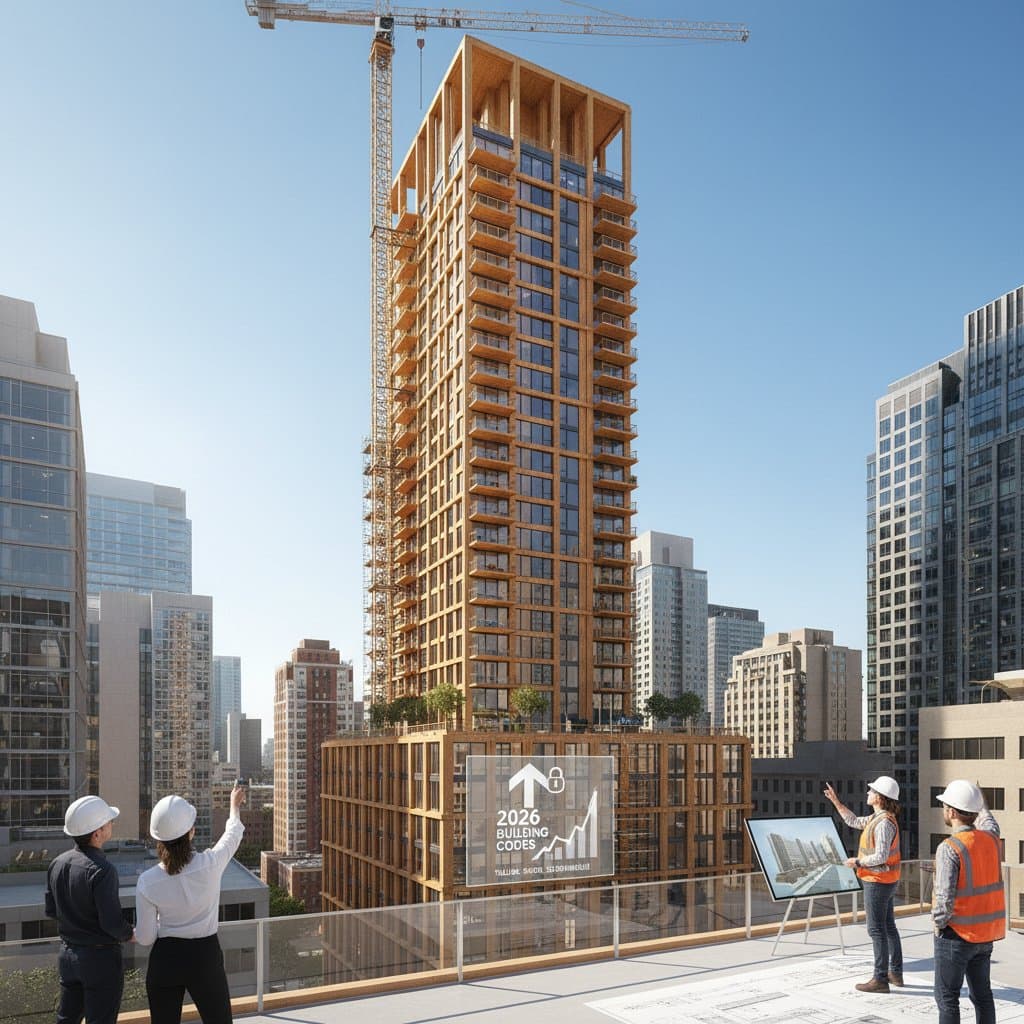
Loading...

Mass Timber Towers Elevate with 2026 Building Codes | multihb.com | Multi HB - Home Building, Construction Trends, Financing New Homes
Skip to main content
MULTI HB
HomeBudgeting & FinancingConstruction Materials & MethodsConstruction TrendsContractors & Project ManagementSearch
  1. Home
  2. /
  3. Construction Trends
  4. /
  5. Mass Timber Towers Reach New Heights in 2026 Codes
Construction Trends

Mass Timber Towers Reach New Heights in 2026 Codes

Your comprehensive resource for home building expertise, construction insights, and financing strategies to help you build your dream home efficiently and cost-effectively.

Categories

Budgeting & FinancingConstruction Materials & MethodsConstruction TrendsContractors & Project ManagementDesign & Floor PlansHome Building BasicsHomeowner Tips & MaintenanceInspections & Quality Checks

Links

  • Home
  • Search Articles
  • About Us
  • Privacy Policy
  • Terms of Service

© 2026 Multi HB. All rights reserved.

by
Kara Harris
2026-04-25 04:52:00April 25, 2026
4 min read
Featured image for Mass Timber Towers Reach New Heights in 2026 Codes
2026-04-25 04:52:00
Multi HB - Home Building, Construction Trends, Financing New Homes

Key Takeaways

  • The 2026 building codes permit mass timber towers to achieve unprecedented heights while maintaining rigorous safety standards.
  • Cross-laminated timber (CLT) redefines high-rise construction by providing strength comparable to traditional materials.
  • Project planners benefit from expanded design options, including innovative aesthetics and efficient building processes.
  • Sustainability improves through lower carbon emissions and renewable resource utilization in large-scale developments.
  • Early adoption requires experienced teams to navigate material sourcing and regulatory compliance effectively.

Understanding Mass Timber

Mass timber consists of engineered wood products formed by gluing together layers of lumber under high pressure. These panels offer superior strength and stability for modern construction. The primary variant, cross-laminated timber (CLT), features boards layered perpendicularly, which enhances rigidity and resistance to forces such as wind and earthquakes.

Unlike traditional wood framing used in residential settings, mass timber suits commercial and high-rise applications. It delivers the aesthetic warmth of wood alongside the performance of steel or concrete. Architects appreciate its versatility for creating expansive, open interiors without excessive support columns.

Relevance for Builders and Homeowners

These code updates expand material choices for projects of all scales, from single-family homes to multi-unit complexes. As demand grows, suppliers increase availability, which stabilizes costs and shortens lead times for framing components. Builders gain access to specialized training, and inspectors become more adept at evaluating timber installations, streamlining permitting processes.

For residential projects, mass timber enables contemporary designs with natural textures and improved indoor environments. It reduces construction waste through prefabrication and allows for quicker occupancy. Homeowners planning renovations or new builds should evaluate timber options to align with emerging standards.

Action Step: Consult on Mass Timber Integration
Incorporate mass timber elements, such as panels or beams, into standard framing for smaller structures. This approach facilitates larger spans, minimizes on-site debris, and accelerates project completion by up to 30 percent compared to conventional methods.

Challenges in Constructing Taller Timber Buildings

Elevating structures introduces complexities in fire protection, load-bearing capacity, and budget management. Fire safety remains paramount; extensive testing demonstrates that mass timber chars predictably, containing flames within affected areas. The 2026 codes mandate performance-based evaluations for buildings exceeding certain heights, ensuring compliance through certified designs.

Structural integrity demands precise engineering to handle lateral loads and vertical stresses. Limited regional supply chains can elevate material expenses, particularly for imported timber. Inexperienced crews may encounter delays in assembly, underscoring the need for proactive project management.

Action Step: Assemble an Experienced Team Early
Select architects, engineers, and contractors with proven mass timber expertise. They manage logistics, including panel prefabrication, transportation, and on-site erection, preventing costly rework and ensuring adherence to timelines.

Advancing Sustainability Through Code Changes

The 2026 codes support environmental objectives by promoting timber in dense urban environments traditionally dominated by carbon-intensive materials. Developers achieve green certifications more readily, as mass timber sequesters carbon during growth and reduces emissions during production. For high-rises, substituting CLT for steel framing can lower embodied carbon by 45 percent or more.

Lighter weight profiles allow for shallower foundations, decreasing concrete usage and excavation needs. Cities benefit from preserved forests through sustainable harvesting practices, fostering resilient infrastructure. These shifts encourage innovative mixed-use developments that balance growth with ecological responsibility.

Common Pitfalls in Mass Timber Projects and How to Avoid Them

Rushed decision-making and poor interdisciplinary coordination often lead to inefficiencies. Prefabricated components require finalized specifications upfront; alterations post-manufacture incur significant fees and delays. Supply disruptions from weather or logistics further complicate timelines if not anticipated.

Inadequate moisture control during storage or installation risks dimensional changes, affecting fit and finish. Regulatory oversights, such as overlooking local amendments to national codes, can halt progress.

Action Step: Secure Design Specifications Prior to Production
Collaborate with the design team to verify measurements, joint details, and integration points before fabrication begins. This precision minimizes errors and optimizes resource use throughout the build phase.

Embracing Timber's Role in Future Urban Landscapes

The 2026 codes position mass timber as a cornerstone of sustainable architecture, enabling visionary projects that harmonize with natural ecosystems. Builders and developers who adapt early will lead in creating efficient, resilient cities. By prioritizing timber expertise and strategic planning, stakeholders unlock enduring value in design, performance, and environmental stewardship.
You Might Also Like

Bridge Loans Let You Build Before You Sell

Concrete That Absorbs Carbon Instead of Releasing It

Hempcrete Walls Breathe, Resist Fire and Mold Naturally

Save $40K in 2026 with Smart 2-1 Rate Buydown

ICFs Cut Energy Bills 60% With Concrete and Foam

Tagged:

construction,codes,building,mass,laminated,cross,timber,cross-laminated-timber,mass-timber-construction,2026

Recent Articles by Kara Harris

Image for ICFs Cut Energy Bills 60% With Concrete and Foam

ICFs Cut Energy Bills 60% With Concrete and Foam

April 23, 2026
Image for USDA Loans Now Bundle Solar Into Rural Construction Financing

USDA Loans Now Bundle Solar Into Rural Construction Financing

April 20, 2026

Related: construction

Image for Bridge Loans Let You Build Before You Sell

Bridge Loans Let You Build Before You Sell

April 24, 2026
Image for Concrete That Absorbs Carbon Instead of Releasing It

Concrete That Absorbs Carbon Instead of Releasing It

April 24, 2026
Image for Hempcrete Walls Breathe, Resist Fire and Mold Naturally

Hempcrete Walls Breathe, Resist Fire and Mold Naturally

April 24, 2026
Image for ICFs Cut Energy Bills 60% With Concrete and Foam

ICFs Cut Energy Bills 60% With Concrete and Foam

April 23, 2026
Image for Builder Buydowns Cut New Home Payments Two Years

Builder Buydowns Cut New Home Payments Two Years

April 22, 2026

Construction Trends

Mass Timber Towers Reach New Heights in 2026 Codes

Mass timber construction ascends to new levels with the 2026 building codes, permitting taller structures built from cross-laminated timber. These advancements promote safer designs, accelerated construction timelines, and reduced environmental impact, marking a transformative phase in sustainable urban development for architects, builders, and developers.

April 25, 2026

Mass Timber Towers: 2026 Codes Unlock Costs & Gains

The 2026 building codes propel mass timber towers toward mainstream adoption, enabling taller structures, accelerated construction, and superior sustainability. Cost efficiencies, greater design versatility, and carbon sequestration advantages position engineered wood as a viable alternative to steel and concrete. These changes redefine urban skylines, project budgets, and architectural innovation.

April 19, 2026

Mass Timber Brings Warmth and Carbon Storage to High-Rises

Mass timber revolutionizes multi-family high-rises by integrating sustainability, durability, and natural warmth into urban architecture. Engineered solutions such as cross-laminated timber enable quicker builds, reduced emissions, and appealing aesthetics that draw residents. With evolving regulations and stabilizing costs, mass timber paves the way for more intuitive, resident-centered vertical living by 2026.

April 17, 2026

Categories

Budgeting & Financing
Construction Materials & Methods
Construction Trends
Contractors & Project Management
Design & Floor Plans
Home Building Basics
Homeowner Tips & Maintenance
Inspections & Quality Checks
Renovation & Additions
Sustainability & Energy Efficiency

Battery-Ready Panels Reshape How New Homes Handle Power

Effective 2026, new homes require battery-ready electrical panels, a pivotal advancement in construction. These systems facilitate seamless energy storage, improve blackout resistance, and promote efficient, intelligent energy practices. This innovation benefits builders, designers, and residents through proactive energy infrastructure.

March 20, 2026

Battery-Ready Homes Prepare for Energy Independence

Starting in 2026, new homes require wiring for future battery storage, simplifying the path to energy independence. This preparation facilitates seamless solar connections, cost-effective upgrades, and reliable power during outages. Understand how basic pre-wiring now positions your home for emerging energy technologies.

March 7, 2026

Insurance Now Rewards Storm-Ready Home Design

Starting in 2026, insurance providers will mandate features that enable homes to endure severe weather events, offering reduced premiums and superior coverage in return. Upgrades such as fortified roofs, enhanced drainage systems, and durable materials deliver substantial long-term savings and security. Identify essential modifications and strategies to fortify your property affordably.

March 5, 2026

Battery-Ready Wiring Saves Retrofit Costs Later

Pre-wiring a home for battery storage during initial construction in 2026 avoids costly retrofits and enables seamless addition of solar panels, EV chargers, and advanced energy systems. Strategic design decisions now promote long-term flexibility and efficiency. Explore practical steps to make your home resilient and energy-smart for the future.

March 3, 2026

Building Codes 2026: Protect Your Home Without Breaking Budget

The 2026 building codes raise the bar for fire, wind, and flood resilience—without requiring a sky-high budget. Smart planning, durable materials, and early design choices can protect your home, lower insurance costs, and boost long-term value. Build for safety, efficiency, and peace of mind from the foundation up.

March 2, 2026

2026 Building Codes Protect Against Climate Threats

The 2026 building codes prioritize resilience, incorporating fortified roofs, fire-resistant materials, and advanced drainage systems to safeguard homes from hurricanes, wildfires, and intensifying climate events. These standards empower homeowners and builders to create structures that endure disasters, minimize repairs, and provide enduring security in an era of escalating environmental challenges.

February 25, 2026

Mass Timber Towers Gain Code Approval for 2026 Builds

Mass timber towers achieve mainstream status through 2026 code approvals, facilitating taller, more sustainable structures. Engineered wood products such as cross-laminated timber and glulam deliver strength, rapid assembly, and environmental benefits. Developers, architects, and residents can anticipate warmer, efficient buildings that reduce carbon emissions in urban landscapes.

February 25, 2026

Mass Timber Rises: 15 States Greenlight Tall Wood Buildings

Fifteen states have approved building codes for tall mass timber structures, revolutionizing construction with sustainable, efficient alternatives to steel and concrete. These engineered woods offer strength, carbon sequestration, and a natural aesthetic that enhances urban environments and residential spaces alike.

February 24, 2026

Luxury Prefab Homes Now Match Custom Quality at $200K

Luxury prefab homes reshape contemporary housing by providing upscale aesthetics, integrated smart technologies, and superior energy performance at approximately $200,000. These residences assemble swiftly and adhere to budgets, merging ease, environmental responsibility, and personalization minus the challenges of conventional building. Learn why the 2026 prefab advancements render premium homes remarkably accessible.

February 15, 2026

2026 Building Codes: Homes That Resist Fire and Flood

The 2026 building codes advance home resilience against wildfires, floods, and extreme weather through innovative materials and designs. Fire-rated exteriors, elevated structures, and efficient drainage systems deliver durable, cost-effective protection and serenity amid climate uncertainties.

February 13, 2026

Mass Timber Apartments Finally Clear Fire Code Hurdle

The 2026 fire code revision unlocks opportunities for taller mass timber apartment buildings, emphasizing safety through advanced engineering. This change supports quicker construction timelines, reduced environmental impact, and appealing natural interiors. Learn how these updates are reshaping multifamily housing with wood-based innovation.

February 12, 2026

Homes Built to Survive Hurricanes Stand Firm in 2026

The 2026 hurricane-resistant building codes enhance home durability through reinforced connections, advanced materials, and improved water management. Initial investments yield reduced insurance costs, sustained property value, and enhanced security. Discover strategies in modern construction and upkeep to fortify your home against intense weather events.

February 6, 2026

CLT Towers Cut Carbon and Build Time in Half

Cross-laminated timber (CLT) towers redefine urban construction by integrating sustainability, efficiency, and aesthetic appeal. Prefabricated panels minimize carbon emissions, construction noise, and expenses while delivering structural integrity and natural warmth. From initial design through ongoing maintenance, CLT supports eco-friendly, people-oriented city expansion. Learn how mass timber influences architectural evolution by 2026.

February 4, 2026

New Building Codes Let Mass Timber Rise Higher

The 2026 building codes mark a pivotal shift for mass timber in high-rise construction. These regulations permit taller buildings using cross-laminated timber, which matches the strength of steel and concrete while significantly reducing carbon emissions. Architects, builders, and residents gain from quicker projects, innovative designs, and warmer living spaces that transform city landscapes.

January 31, 2026

Why 2026 Building Codes Mandate Battery-Ready Wiring

Effective 2026, building codes mandate wiring for battery storage in new homes and renovations. This forward-thinking requirement eases solar and backup system additions, minimizes retrofit expenses, increases resale appeal, and strengthens energy independence for sustainable living.

January 28, 2026

Mass Timber Towers Face 2026 Fire Code Overhaul

Mass timber redefines urban high-rises with eco-friendly design and rapid construction. The 2026 fire code updates introduce stringent standards for testing, containment, and suppression, offering builders a roadmap to safer, innovative projects.

January 16, 2026

Plan Early: Fire and Flood-Proof Your Home Right

Constructing a home that withstands climate challenges requires foresight. Select fire-resistant materials, implement intelligent landscaping, and install robust drainage systems to defend against wildfires and floods. Options such as metal roofing, raised foundations, and emergency power solutions safeguard your property, reduce expenses, and provide reassurance amid 2026's environmental uncertainties.

January 14, 2026