Summary
- Insulated Concrete Forms (ICFs) form walls that maintain warmth during winter and coolness in summer.
- These systems reduce energy consumption by up to 60 percent relative to conventional construction.
- The higher initial expense leads to monthly savings on heating and cooling costs.
Key Benefits of ICF Construction
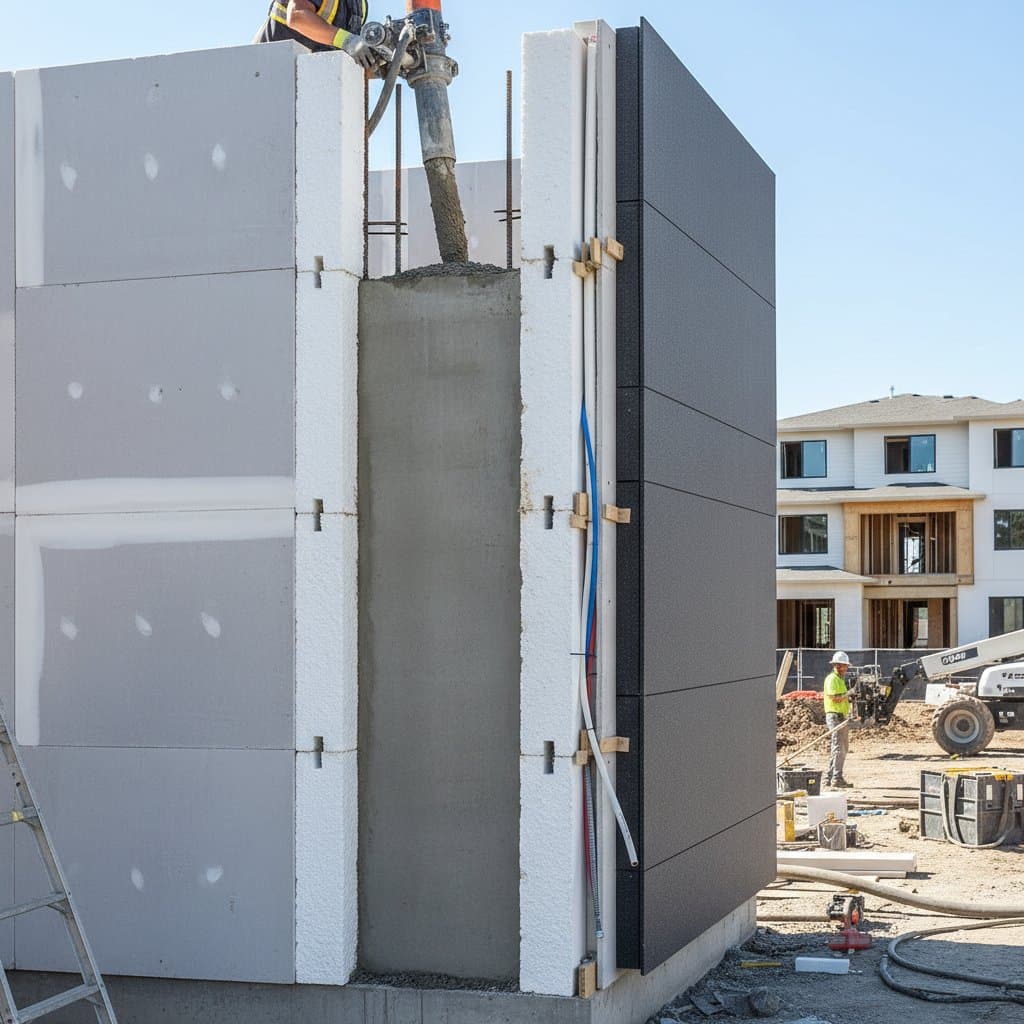
Insulated Concrete Forms represent an innovative building method that combines a reinforced concrete core with high-performance foam insulation. This dual-layer approach creates walls with exceptional thermal resistance, minimizing heat loss in cold weather and heat gain in warm conditions. Builders stack the foam forms on-site, insert steel reinforcement, and pour concrete to form a solid, insulated structure.
The thermal mass of the concrete plays a crucial role in energy efficiency. It absorbs and releases heat slowly, stabilizing indoor temperatures throughout the day and night. This property reduces the need for frequent adjustments to heating or cooling systems, leading to lower utility bills over time. Studies indicate that homes built with ICFs use 20 to 60 percent less energy for climate control compared to wood-framed structures.
Beyond energy savings, ICF walls offer airtight construction that prevents drafts and air infiltration. This seal not only conserves energy but also improves indoor air quality by reducing pollutants and allergens from outside. Additionally, the thick walls provide superior soundproofing, creating a quieter living environment by blocking external noise from traffic or neighbors.
Essential Features
- Dual-layer insulation: Expanded polystyrene foam panels sandwich the concrete, providing continuous insulation without thermal bridging.
- Thermal mass effect: The concrete core moderates temperature fluctuations, enhancing overall efficiency.
- Airtight barriers: Interlocking forms and plastic webbing create seamless seals that limit air leakage.
- Sound attenuation: The combination of dense concrete and foam absorbs vibrations and reduces noise transmission by up to 50 percent.
Strategies to Avoid Common Pitfalls in ICF Building
Effective planning forms the foundation of a successful ICF project. These forms accommodate adjustments during assembly, yet careful preparation ensures smooth execution. Address finishes, openings, and systems integration prior to concrete pouring to prevent costly modifications.
Consider the following practical strategies:
-
Select Finishes in Advance
Planning finishes requires foresight with ICFs. Determine locations for electrical outlets, lighting fixtures, and wall-mounted items before the concrete pour. Embed conduits, boxes, and anchor points within the forms to simplify installation and avoid post-pour drilling, which can compromise insulation integrity. -
Confirm Window and Door Dimensions Early
Openings in ICF walls require bucking frames to support the concrete during pouring. Altering window or door sizes after initial setup often necessitates rework, including form adjustments and potential recasting. Collaborate with suppliers and builders to finalize measurements and ensure compatibility with standard ICF block sizes. -
Integrate HVAC Systems Thoughtfully
ICF homes achieve high airtightness, which demands mechanical ventilation to maintain fresh air circulation. Install an energy recovery ventilator (ERV) or heat recovery ventilator (HRV) to exchange stale indoor air with filtered outdoor air while recovering energy from exhaust streams. Coordinate with HVAC professionals during design to size ducts and vents appropriately for the home's volume and layout. -
Account for Structural Weight
The concrete core adds significant mass to ICF walls, requiring robust foundation support. Verify that footings and slabs meet engineering specifications for load-bearing capacity, typically 10 to 15 percent higher than for lighter framing. Consult structural engineers early to confirm designs comply with local building codes and soil conditions. -
Prepare for Utility Penetrations
Routing plumbing, electrical, and gas lines through ICF walls involves cutting foam and drilling concrete. Map out all penetrations during the planning phase to minimize disruptions. Use foam-compatible sealants around pipes and wires to preserve the airtight envelope and prevent moisture ingress.
Experiencing Life in an ICF Home
Residents of ICF homes often report consistent indoor comfort without extreme variations. Temperatures remain even across rooms, eliminating drafty areas or overly warm zones near windows. This stability arises from the continuous insulation and thermal mass, which buffer against external weather changes.
Many homeowners adjust their thermostats infrequently, relying on the passive efficiency of the structure. Utility bills reflect these advantages, with reductions in heating and cooling expenses that accumulate over years. The quiet ambiance further enhances daily living, as external sounds fade into the background.
For those planning new construction, ICFs offer a compelling option for durability and sustainability. The upfront costs, which may range 3 to 5 percent higher than traditional builds, yield returns through energy savings, lower maintenance, and increased property value. Investing in ICF technology supports long-term goals of efficiency and environmental responsibility.
Frequently Asked Questions
Can pictures or shelves be mounted on ICF walls?
Yes, mounting is feasible with appropriate hardware. Employ concrete anchors, toggle bolts, or embed furring strips during construction to provide secure attachment points without damaging the insulation.
Are ICF homes resistant to fire?
Yes, they exhibit high fire resistance. The non-combustible concrete core and foam with fire-retardant additives outperform wood-framed walls, often achieving ratings of two to four hours under standard tests.
Do ICFs perform well in hot climates?
Yes, they excel in warm regions by blocking solar heat gain and retaining conditioned cool air. The insulation and thermal mass work equally effectively to maintain comfort year-round.
How do ICFs compare to other insulated systems?
ICFs surpass spray foam or fiberglass in whole-wall performance due to their monolithic structure, which eliminates gaps and provides structural strength alongside insulation.