2026 Builder Rate Buydowns: Your Homebuying Edge
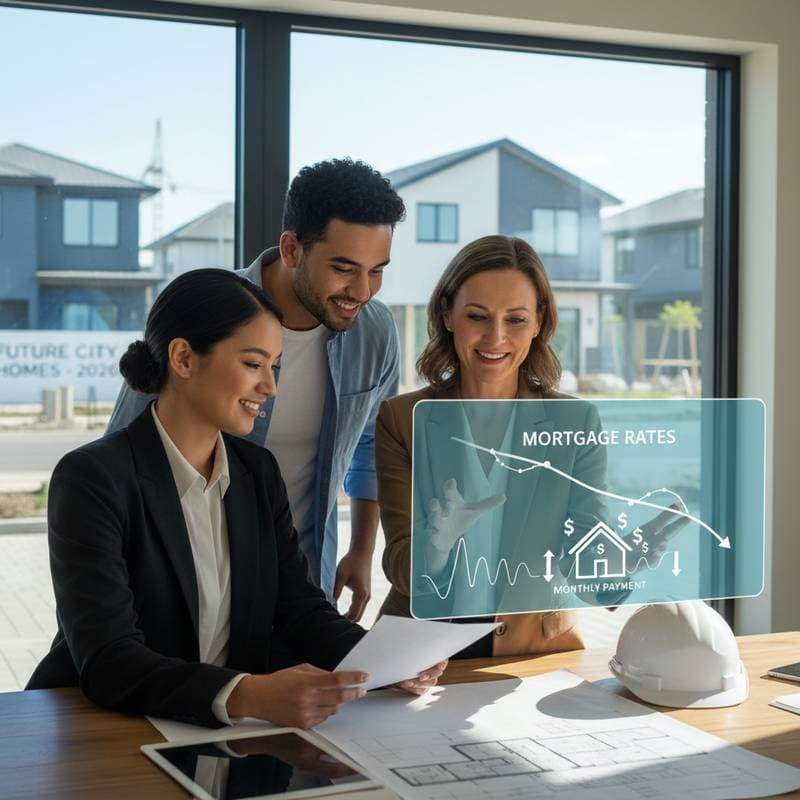
Picture yourself touring a new model home, surrounded by fresh paint and envisioning your furnishings in the spacious living room. The builder representative mentions a rate buydown that reduces your monthly mortgage payment from day one. You listen attentively, yet you wonder about the details and whether this option truly benefits your financial situation.
Builder rate buydowns provide a strategic advantage for homebuyers. These incentives make new homes more accessible by lowering interest rates temporarily or permanently. Understanding this tool equips you to negotiate effectively and secure a mortgage that aligns with your budget.
Builder Incentives in the Current Market
Builders introduce mortgage incentives to address elevated interest rates. A rate buydown stands out as an effective strategy. The builder contributes funds to decrease your mortgage interest rate for a specified period or the loan's duration.
This arrangement results in reduced monthly payments for you. Builders maintain steady sales volumes despite market challenges. Both parties gain: you achieve greater affordability, and the builder sustains community development.
Mechanics of a Rate Buydown
A rate buydown involves the builder or lender funding a lower interest rate on your mortgage. The reduction applies for a set timeframe or the entire loan term, based on the terms. Two primary types exist.
-
Temporary buydown: The interest rate begins below market level and rises incrementally to the full rate. In a 2-1 buydown, for instance, the rate decreases by two percentage points in year one and one point in year two, then reverts to the standard rate in year three. This structure allows gradual adjustment to higher payments as your financial stability increases.
-
Permanent buydown: The builder pays an upfront fee to secure a reduced rate for the loan's full term. Although the cost to the builder is substantial, your savings remain consistent over decades, particularly beneficial for long-term homeowners.
Selecting the appropriate type depends on your financial timeline and homeownership plans.
Reasons Builders Provide These Offers
Builders deploy rate buydowns to stimulate sales amid high borrowing costs. These incentives sustain buyer confidence and accelerate home closings. Partnerships with preferred lenders streamline the process for all involved.
Promotional materials in model homes often highlight phrases like "special financing available" or "reduced monthly payments." These promotions typically conceal a rate buydown. The builder covers interest expenses upfront, amounting to thousands of dollars, to expedite sales while enhancing your qualification for affordable payments.
Key Benefits for Homebuyers
Rate buydowns deliver immediate financial relief through lower payments. This extra cash supports initial homeownership expenses such as furnishings or minor upgrades. Buyers also qualify for larger loans than possible at full rates.
Consider these advantages:
- Budget flexibility: Payments start low, providing adjustment time before any increases or maintaining savings indefinitely.
- Expanded purchasing capacity: Lower obligations enable selection of homes with desired features, like additional bedrooms or premium finishes.
- Minimized early stress: New homeowners face various costs; a buydown smooths this phase.
Inquire about available incentives when exploring builder communities. Offers adapt to market conditions, positioning rate buydowns as a premier option.
Assessing Buydown Proposals
Evaluate offers carefully, as variations exist. Request loan estimates from the builder's lender and independent sources for comparison. This practice clarifies true costs and prevents oversights.
Focus on these elements:
- Duration: Determine the length of the reduced rate period.
- Funding mechanism: Confirm whether the builder fully funds it or if loan terms absorb costs.
- Type distinction: Verify if the rate reverts or remains lowered.
- Estimate review: Compare comprehensive breakdowns of monthly and lifetime expenses.
- Future intentions: Opt for temporary if planning resale or refinance soon; choose permanent for extended stays.
Pose this question: "What are the savings over the initial two years, and what follows?" Reputable professionals provide detailed projections.
Implementation and Regional Factors
Buydown expenses differ by location, builder, and loan specifics. Contributions typically range from several thousand dollars to a home price percentage. Builders in markets like Dallas, Phoenix, and Charlotte emphasize these in promotions to align with buyer priorities.
Preferred lenders in active developments manage documentation efficiently. They compute precise savings and apply credits at closing. Independent lenders may present alternative buydowns; comparisons yield optimal results.
Maintain strong credit, accumulate closing funds, and select lenders judiciously. A buydown supplements, rather than substitutes, thorough preparation. Reserve a modest buffer for initial months to facilitate adaptation.
Illustrative Financial Scenarios
Consider a $350,000 new home purchase with a 30-year fixed mortgage. At a standard rate, principal and interest payments approximate $2,000 monthly. A 2-1 temporary buydown reduces this to about $1,600 in year one and $1,800 in year two.
Such adjustments release thousands for relocation or customizations. A permanent buydown sustains payments near $1,800 throughout, yielding substantial long-term economies. Builders allocate $6,000 to $10,000 from marketing budgets, avoiding direct buyer charges.
Essential Inquiries for Commitment
Direct targeted questions to builders and lenders:
- What constitutes the builder's total contribution, and its application method?
- Does the rate adjust over time, and to what extent?
- Can an independent lender access the same incentive?
- How does the buydown influence qualification or closing expenses?
- What occurs to remaining funds upon later refinance?
Responses reveal the offer's authenticity. Transparent providers explain mechanics without hesitation.
Layering Incentives for Maximum Impact
Combine buydowns with other perks like closing cost assistance or upgrade allowances. Allocate portions of builder funds to rate reductions and enhancements such as appliances or surfaces.
Negotiate flexibility in fund usage. Ensure lenders record agreements precisely in contracts to safeguard benefits.
Strategic Timing for Offers
Builders extend robust incentives during inventory buildup or community wind-downs. Availability of quick-move-in homes strengthens your position for enhanced terms. Rate volatility underscores the value of securing reductions promptly.
Review proposals methodically over a day or two. Consult lenders or agents to confirm alignment with objectives.
Steps to Secure Your Buydown
Begin by touring local builder sites and documenting incentives. Organize comparisons of costs, payments, and conditions. Engage a mortgage broker versed in builder programs to identify nuances.
Homebuying blends enthusiasm with diligence. Enthusiasm fuels the vision of your new space; diligence ensures sustainable finances. This approach yields a home that matches your aspirations and means.
Sustaining Benefits Post-Purchase
In your new home, buydown advantages manifest daily. Manage budgets effortlessly, pursue improvements, and relish stability. As rates stabilize, established habits reinforce security.
This informed decision fosters lasting assurance. Rate buydowns transform complex financing into accessible support, enhancing homeownership for first-timers and upgraders alike. Your chosen home delivers joy, backed by prudent strategy.