TL;DR:
- USDA loans simplify solar integration for rural home construction.
- Bundle solar systems directly into construction financing for streamlined costs.
- Strategic planning reduces long-term energy expenses while maintaining affordable payments.
Key Benefits of Pairing USDA Loans with Solar Integration
- Zero down payment option for eligible applicants
- Low fixed interest rates applied across the entire mortgage term
- Single closing process encompassing land acquisition, construction, and solar setup
- Incentives for energy efficiency that decrease ongoing monthly expenses
- Accessible credit requirements tailored to rural communities with limited banking options
Advantages of Solar Power in Rural Construction Projects
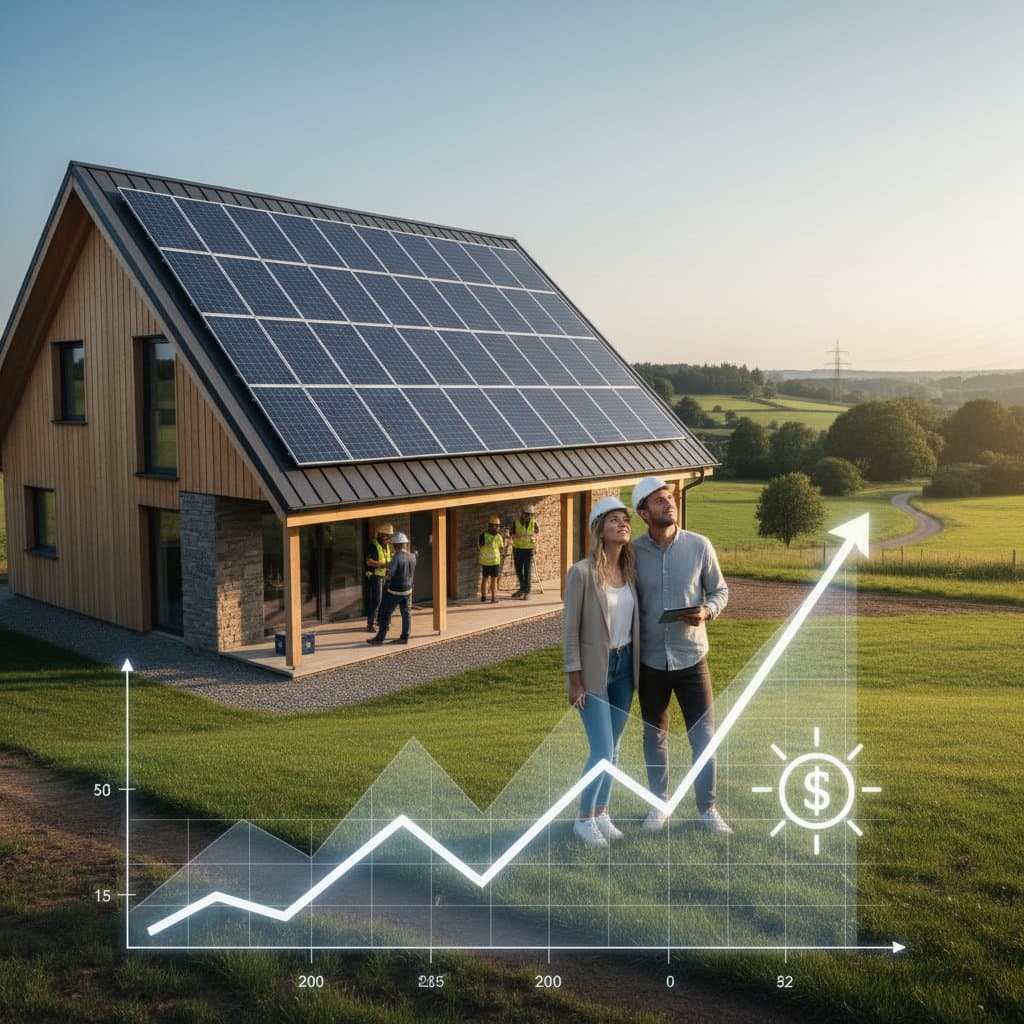
Rural properties often feature expansive lots and unobstructed skylines, ideal conditions for solar panel efficiency. Without the constraints of urban shading or restrictive homeowners associations, installations can generate sufficient power to cover a significant portion of household electricity demands.
Solar adoption eliminates exposure to fluctuating utility rates, providing predictable energy expenses over decades. These savings frequently recoup a substantial share of upfront installation expenses within 7 to 10 years, depending on local sunlight exposure and system size.
Incorporating solar during initial construction minimizes logistical challenges compared to post-build additions. Builders integrate wiring and optimize roof structures from the foundation, reducing labor costs by up to 20 percent and avoiding disruptions to completed homes.
Eligibility and Application Process for USDA Construction Loans Including Solar
Applicants must satisfy standard USDA loan criteria, including household income within designated limits, a reliable credit history, and location in a qualifying rural zone. These programs target areas with populations under 35,000, verified through official eligibility maps.
Solar components integrate seamlessly as elements of the overall construction blueprint. Submit a comprehensive package to the lender, comprising the builder's detailed bid, solar provider specifications, and projected energy performance metrics. The lender evaluates the entire project scope before approving a unified loan amount.
The process involves multiple stages, yet it streamlines once initiated. Funds disburse progressively as construction milestones occur, with inspections ensuring compliance for both the home and solar array. Upon completion, the financing converts to a standard permanent mortgage, locking in favorable terms.
To prepare effectively, consult a USDA-approved lender early. They guide documentation needs, such as proof of income via tax returns and property appraisals confirming rural eligibility. Partnering with certified solar installers familiar with USDA guidelines accelerates approvals and ensures system warranties align with loan durations.
Addressing Misconceptions in USDA-Funded Solar Projects
Misconception 1: USDA loans exclude solar system financing.
This is inaccurate. Federal guidelines classify permanently affixed solar installations as integral home improvements, fully eligible under construction loan parameters. Lenders routinely approve such inclusions when they enhance property value and efficiency.
Misconception 2: Solar additions extend construction timelines significantly.
Early integration prevents delays. Solar setup parallels standard electrical and roofing phases, often completing within the same 6 to 12-month build schedule. Coordinated planning between builders and installers maintains momentum.
Misconception 3: The process overwhelms inexperienced builders.
Lenders and contractors collaborate closely, handling fund draws, compliance checks, and technical integrations. Approved applicants benefit from structured oversight, making the journey accessible even for first-time rural developers.
Frequently Asked Questions on USDA Loans for Solar-Equipped Rural Homes
Question: Is it possible to install solar panels after the USDA loan closes?
Yes, separate financing options exist, but initial bundling proves more cost-effective. Construction-phase inclusion secures the mortgage's lower interest rate, avoiding higher rates on standalone solar loans that may require additional collateral.
Question: How should I proceed if my builder lacks solar expertise?
Engage a specialized solar contractor to collaborate with the builder from the outset. This team manages engineering details, code adherence, and seamless incorporation, ensuring the system performs optimally without complicating the primary construction.
Question: Do solar panels enhance property resale value?
Absolutely. Studies indicate homes with integrated solar command 3 to 4 percent higher market prices, driven by immediate utility savings and appeal to eco-conscious buyers. Transferable warranties further bolster long-term asset value.
Question: What energy savings can I expect from a bundled solar system?
Typical rural setups offset 70 to 100 percent of electricity needs, yielding annual savings of $1,000 to $2,000 based on system capacity and regional rates. Net metering policies in many states allow credits for excess production, amplifying returns.
Steps to Integrate Solar into Your USDA Rural Build
Begin by verifying your property's eligibility using USDA online tools, confirming rural designation and income alignment. Next, select a vetted builder and solar provider experienced in federal financing; request itemized proposals that detail costs, timelines, and efficiency projections.
Assemble your application with financial documents, including recent pay stubs and credit reports. Submit to a participating lender for pre-approval, allowing adjustments to the project plan as needed. During construction, monitor progress through regular lender updates to stay on track.
This approach not only secures immediate financing advantages but also positions your home for decades of reduced energy dependence. Rural families embracing solar through USDA loans invest in resilient, cost-effective living that supports broader sustainability goals.