Builder Competition Heats Up: How Mortgage Rate Buydowns Reshape Homebuying
Imagine touring a new construction home, where the sales representative immediately highlights a mortgage rate buydown offer. This incentive promises reduced monthly payments, allowing buyers to afford upgrades or simply breathe easier financially. In the current high-rate environment, such strategies are transforming builder incentives and buyer decisions.
Builders increasingly rely on rate buydowns to differentiate their offerings. These programs temporarily lower interest rates, making new homes more accessible. Buyers benefit from immediate savings, while builders accelerate sales in a challenging market.
Understanding Rate Buydowns: The Basics
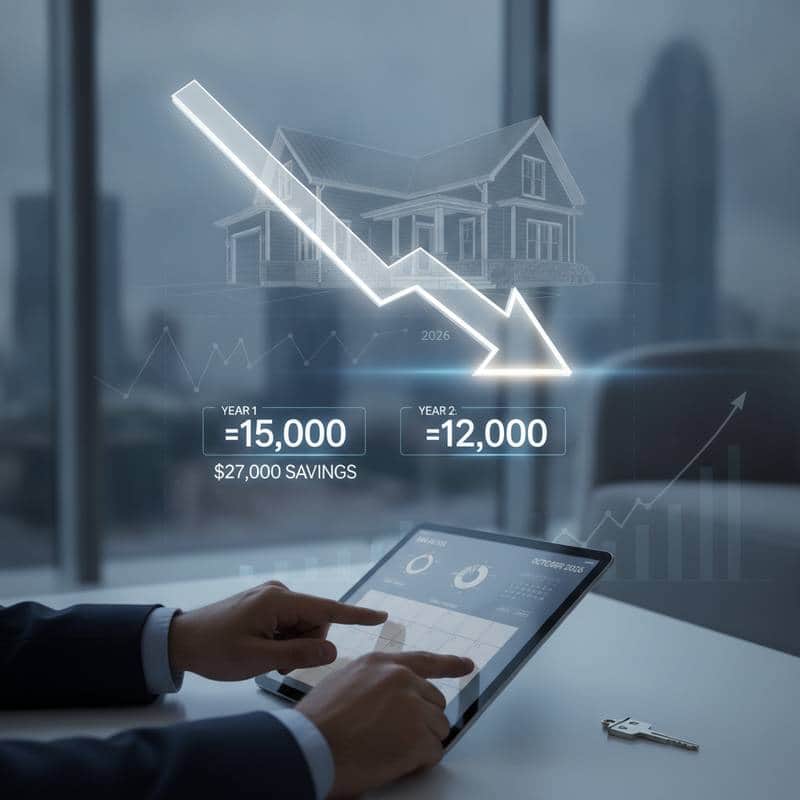
A mortgage rate buydown involves an upfront payment to reduce the interest rate for a specified period. For example, a 2-1 buydown decreases the rate by two percentage points in the first year and one percentage point in the second year, then reverts to the original rate. This structure provides short-term relief, enabling buyers to build equity or prepare for potential refinancing.
Lenders administer the buydown by adjusting the interest subsidy into the loan terms. The result is lower initial payments without altering the home's purchase price. Buyers should verify how the buydown integrates with their loan type, such as conventional or FHA mortgages.
Why Builders Offer Rate Buydowns
Unsold inventory incurs significant holding costs for builders, including interest on construction loans and property taxes. A buydown, typically costing one to three percent of the loan amount, proves more cost-effective than deep price reductions. For a $400,000 mortgage, this equates to $4,000 to $12,000 in builder expense, which accelerates closings and maintains community pricing stability.
Buyers prioritize monthly affordability over total loan cost in initial evaluations. A buydown aligns with this mindset, presenting homes as within reach during the critical decision phase. Data from recent market analyses shows these incentives boost conversion rates by up to 20 percent in competitive areas.
Key Considerations Before Accepting a Buydown
Rate buydowns vary in structure and implications. Distinguish between temporary and permanent options to align with long-term financial goals.
-
Temporary Buydowns: These reduce rates for one to five years. Post-period, payments increase to the full rate. Calculate the break-even point to assess if early savings justify potential future adjustments.
-
Permanent Buydowns: Achieved by purchasing discount points, these lower the rate for the loan's duration. Builders rarely fund full permanent buydowns due to higher costs, but partial versions may appear in premium offers.
-
Funding Source: Builders cover the cost via closing credits, drawn from their incentive budget. Confirm whether this impacts eligibility for additional perks, such as appliance upgrades or reduced earnest money deposits.
-
Refinancing Implications: Early refinancing may forfeit remaining buydown benefits. Review lender policies and model scenarios where rates decline within two years, a common planning horizon.
Evaluating Builder Offers Effectively
Multiple buydown proposals can overwhelm buyers. Focus on comprehensive comparisons to identify the best value.
-
Project Full Payment Trajectory: Request amortization schedules showing year-by-year payments. A first-year drop from $2,500 to $1,800 monthly warrants scrutiny of the third-year jump to $2,400.
-
Examine Lender Requirements: Builders may mandate their affiliated lender for the incentive. Obtain at least two independent quotes to ensure competitive rates and fees, potentially saving thousands over the loan term.
-
Factor in Closing Timeline: Incentives often strengthen for quick closings to clear inventory phases. If flexibility exists, leverage this to bundle buydowns with other concessions like free title insurance.
-
Research Regional Variations: In high-demand markets like Austin or Phoenix, buydowns pair with lot premiums or energy-efficient features. Consult a local real estate professional for benchmark data on standard packages.
Financial Planning Around Buydowns
Quantify buydown value by totaling upfront costs against monthly savings. For instance, a 2-1 buydown on a 7 percent base rate might save $300 monthly in year one, accumulating to $4,800 over two years. Subtract the builder's implicit cost to gauge net benefit.
Incorporate post-buydown payments into your debt-to-income ratio calculations. Stress-test budgets at full rates to confirm sustainability, especially if income growth projections falter. Use online mortgage calculators to simulate scenarios, adjusting for property taxes and insurance.
Buydowns also support broader financial strategies. Redirect early savings toward high-yield savings accounts or debt reduction, enhancing overall stability. Homeowners report using these funds for essential setup costs, such as security systems or initial maintenance reserves.
Long-Term Ownership with Buydown Support
After closing, the buydown eases the transition into homeownership. Lower initial payments allow investments in personalization, from energy-efficient appliances to outdoor enhancements, increasing property value over time.
Monitor market rates annually for refinancing windows. A buydown buys time, positioning buyers to lock in permanent lower rates if conditions improve. This approach mitigates rate volatility risks inherent in new construction timelines.
Steps to Negotiate and Secure a Buydown
Approach buydown discussions with prepared questions and documentation. Present pre-approval letters from multiple lenders to strengthen bargaining position.
Start by requesting detailed term sheets outlining rate reductions, durations, and costs. Counter with requests for extended buydown periods or combined incentives if the initial offer falls short.
Finalize by reviewing the purchase agreement for buydown clauses. Engage a real estate attorney for complex deals to ensure enforceability. With thorough preparation, buyers turn builder competition into personalized financial advantages, securing homes that align with enduring goals.