Why 2026 Homes Must Be Pre-Wired for Batteries Now
Picture this scenario. You finish a major renovation with crisp walls and new solar panels in place. Then the lights flicker during peak demand. Your home lacks the infrastructure to store excess clean energy. Battery pre-wiring addresses this gap and has become a standard consideration in contemporary home design.
I once stood in my garage facing a freshly painted wall. Retrofitting for energy storage required cutting into finished surfaces and added significant labor costs. That experience highlighted the value of planning ahead.
The Challenge Homeowners Face
Homeowners often pursue solar installations without realizing that batteries require dedicated infrastructure. Adding storage later without prior preparation leads to higher expenses and construction disruption.
Energy codes in multiple regions now encourage or require battery-ready features in new builds and renovations. These requirements include space allocation and wiring pathways for future systems. Preparation during initial construction avoids repeated site work.
Why Pre-Wiring Matters
Pre-wiring functions as targeted future-proofing. It resembles installing plumbing lines for an additional bathroom during framing. The infrastructure remains unused until needed, yet its presence prevents extensive modifications.
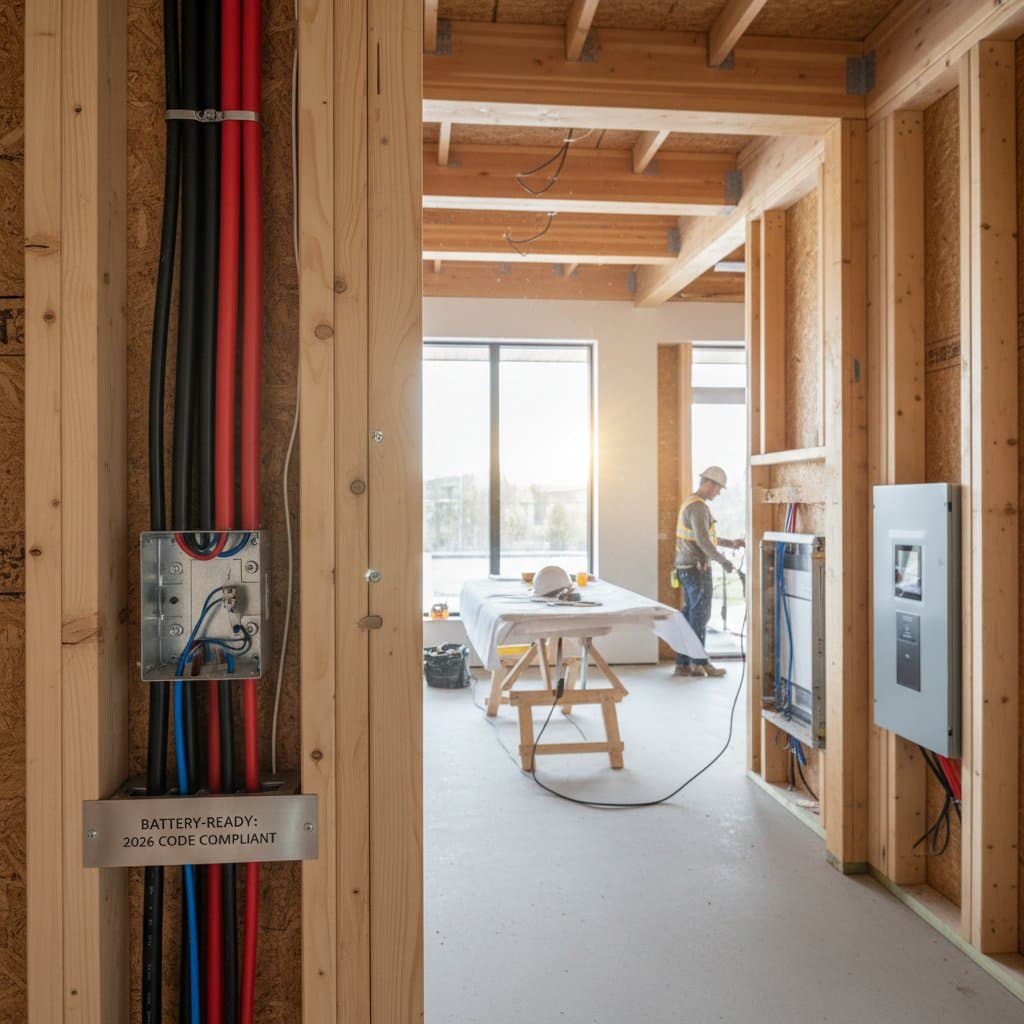
Proper battery-ready wiring includes conduit runs, appropriately sized conductors, and allocated breaker positions. Electricians complete the final connection without opening walls or reconfiguring panels. This approach reduces both time and cost when storage is added.
The Smart Solution: Building Battery-Ready Homes
Consider these elements during planning:
-
Dedicated Battery Zone
Select a ventilated area near the main switchboard, preferably with concrete flooring and easy access. Avoid enclosed spaces that restrict airflow. -
Conduit and Wiring
Run conduit from the switchboard to the battery location. Install wiring of sufficient gauge during construction even if the battery arrives later. -
Switchboard Preparation
Reserve physical space and breaker positions for battery integration. This detail eliminates the need for panel replacement. -
Safety and Compliance
Engage a licensed electrician experienced with storage systems to verify adherence to local codes. -
Smart Monitoring Systems
Install consumption monitors early. These devices provide usage data that informs correct battery sizing.
Cost and Practical Considerations
Pre-wiring typically adds several hundred dollars during active construction. Retrofit work after walls close often exceeds several thousand dollars in labor and materials.
Electrical suppliers stock conduit kits and battery-ready panels suitable for residential use. Discuss timing with your builder so conduit installation occurs before drywall work begins.
How It Changes Home Value and Efficiency
Buyers increasingly inquire about solar readiness and storage capability. Pre-wired homes demonstrate forward planning and command attention from environmentally aware purchasers.
Once storage is connected, excess solar production shifts to evening use or outage protection. The transition occurs without additional renovation.
Local Trends and Resources
Building regulations continue to incorporate energy storage provisions. Early adoption simplifies compliance for builders and renovators.
Some local authorities provide incentives for homes prepared for storage. Contact your council or energy provider to identify available programs.
Living with a Battery-Ready Design
The wiring remains out of sight during daily operation. When storage installation occurs, work proceeds faster and with minimal disturbance because pathways already exist.
Approach pre-wiring as a practical infrastructure decision that supports future flexibility.