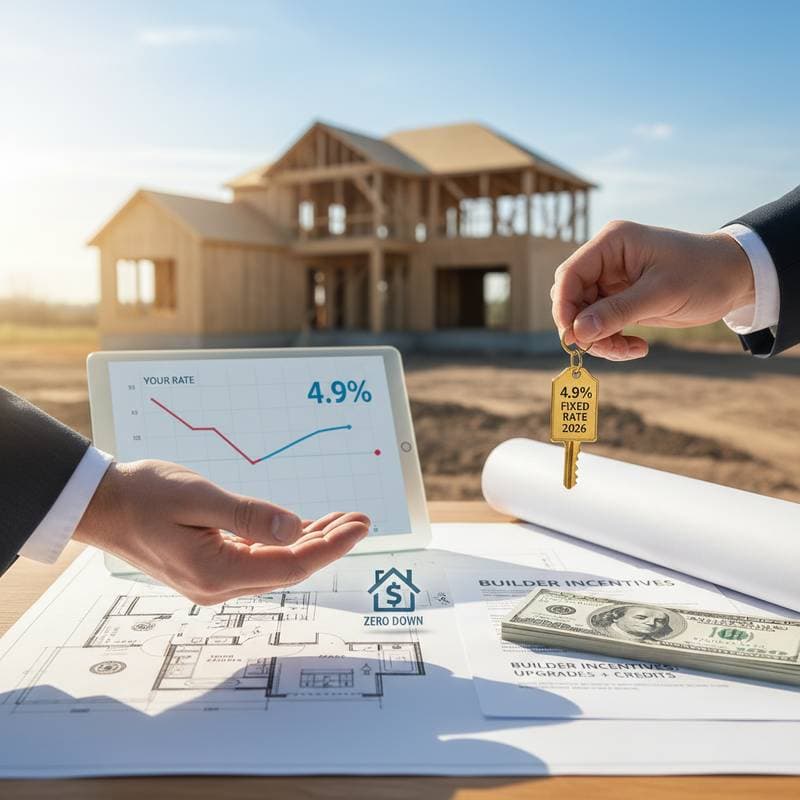
TL;DR
- Zero-down builder loans permit the initiation of new home construction without an upfront payment.
- Buyers can secure a 4.9% interest rate in advance to safeguard their budget from potential rate increases.
- Builders frequently enhance these programs with incentives like material upgrades or contributions toward closing costs.
Understanding Builder Incentives for Zero-Down Loans
Builders introduce zero-down financing options to maintain steady construction progress and facilitate quicker home sales. These programs typically arise from collaborations between builders and specialized lenders, creating tailored financing that encourages purchases within specific developments. This arrangement benefits builders by ensuring consistent project momentum, while buyers gain substantial upfront savings that can redirect funds toward personalization.
Consider a scenario where prospective buyers, after years of saving for a traditional down payment, discover a builder's zero-down program. They redirect those savings to enhance their kitchen appliances and install a covered outdoor living space, transforming the home into a more customized retreat without additional borrowing.
Key Distinctions Between Zero-Down Builder Loans and Conventional Mortgages
The primary divergence lies in the handling of the down payment requirement. Conventional mortgages generally demand 3% to 20% of the purchase price from the borrower at closing. In contrast, zero-down builder loans offset this through builder-provided credits or integrated financing arrangements, allowing buyers to enter construction without personal funds upfront.
This table highlights essential differences:
| Feature | Zero-Down Builder Loan | Standard Mortgage |
|---|---|---|
| Down Payment | None required | Typically 3-20% |
| Interest Rate | Locked early at 4.9% | Fluctuates with market rates |
| Approval Process | Streamlined via builder network | Conventional lender review |
| Incentives | Includes upgrades or credits | Limited or none |
| Construction Focus | Tailored for new builds | Varies by lender policies |
Although the process appears straightforward, lenders conduct thorough evaluations of credit history, income stability, and debt-to-income ratios. The efficiency stems from pre-established protocols between the builder and lender, which expedite approvals without compromising due diligence.
Essential Precautions for Zero-Down Home Construction Financing
Buyers must recognize that zero-down terms do not eliminate all financial responsibilities. Effective budgeting remains crucial to navigate the complexities of new construction successfully.
One common oversight involves underestimating costs for optional features. For instance, selections like premium lighting or custom flooring often fall outside base loan coverage, requiring mid-project adjustments that can strain resources if not anticipated.
To mitigate risks, follow these targeted strategies:
-
Select Finishes Promptly. Builders mandate early design choices to align with production schedules. Delays can lead to escalated prices or reduced availability, so proactive planning keeps expenditures aligned with initial estimates.
-
Establish a Contingency Reserve. Allocate 5% to 10% of the project budget for unforeseen modifications, such as expanded outdoor areas or superior material grades. This buffer ensures decisions enhance the home without introducing financial pressure.
-
Inquire About Appraisal Protocols. New constructions occasionally appraise below the agreed contract value due to market shifts. Prepare to discuss adjustments or incentive reallocations with the builder to resolve discrepancies prior to closing.
-
Document All Commitments in Writing. Secure written confirmation for any promised inclusions, such as window treatments, additional wiring, or access to premium hardware. This practice prevents discrepancies during final walkthroughs.
-
Maintain Ongoing Communication with the Lender. Construction schedules can evolve due to supply chain variables. Regular updates preserve the validity of rate locks and documentation, avoiding penalties from expired terms.
Evaluating the Value of a 4.9% Locked Rate
A 4.9% fixed rate qualifies as competitive in the current landscape, particularly for long-term mortgages where rates below 5% offer historical advantages. This rate delivers consistent monthly payments, providing reliability amid the uncertainties of homebuilding.
Buyers who delay to pursue lower rates risk encountering rising construction expenses, which could offset any potential savings. Historical data indicates that early locks at favorable terms often yield greater overall economies than speculative waiting. Assess personal financial readiness alongside current offerings to determine the optimal timing.
Steps to Initiate Your Zero-Down Builder Loan
Begin by researching builders in your desired area who partner with lenders offering zero-down programs at 4.9% rates. Contact the builder's financing team to review eligibility criteria and available incentives, ensuring alignment with your long-term goals.
Next, compile necessary documentation, including proof of income and credit details, to facilitate a swift pre-approval. Engage a real estate professional familiar with new construction to guide negotiations and verify contract terms.
Finally, schedule a consultation to lock the rate and outline construction milestones. This proactive approach positions you to break ground confidently, realizing a custom home with minimized financial hurdles and maximized value.