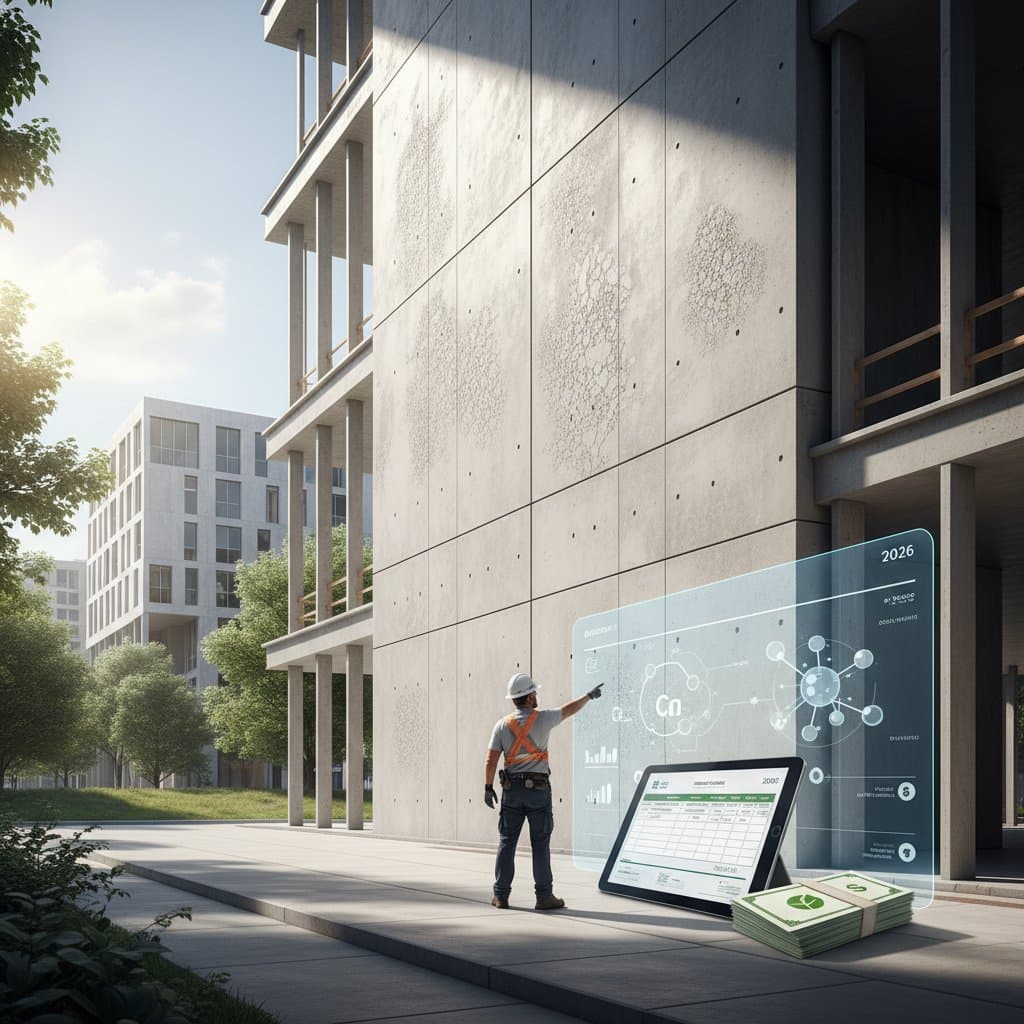
Earn Tax Credits with Carbon-Negative Concrete
A recent walk past a construction site revealed the familiar scent of mixing concrete in the morning air. Workers discussed an innovative material: concrete that absorbs carbon rather than emitting it. This development challenges the perception of concrete as an environmental burden, positioning carbon-negative concrete as a viable solution for sustainable building practices.
For those considering renovations, new constructions, or simply exploring eco-friendly options, this material represents a significant advancement. It integrates environmental benefits with practical performance, potentially reshaping project planning and execution.
What Makes Carbon-Negative Concrete Different?
Traditional concrete contributes substantially to global carbon emissions, primarily through the production of cement, which releases carbon dioxide during calcination. This process accounts for approximately 8 percent of worldwide emissions. Carbon-negative concrete reverses this impact by incorporating mechanisms that sequester carbon dioxide during manufacturing and curing.
The production process involves blending recycled aggregates, such as crushed glass or demolition waste, with mineral additives like magnesium oxide or fly ash. Special binders, often derived from industrial byproducts, react with captured carbon dioxide to form stable carbonates within the concrete matrix. In some formulations, direct injection of flue gas from power plants or factories supplies the carbon for absorption, creating a closed-loop system.
The end product matches the compressive strength of standard concrete, typically exceeding 4,000 psi, while offering enhanced durability against cracking and weathering. This allows it to serve as a direct substitute in most applications, from load-bearing structures to aesthetic finishes, without compromising structural integrity.
Why Tax Credits Are Changing the Game
Government incentives now provide tax credits for incorporating verified carbon-negative materials into construction projects. In the United States, for instance, the Inflation Reduction Act of 2022 includes provisions for credits under Section 45Q, which can offset up to 45 dollars per metric ton of carbon sequestered. Similar programs exist in the European Union through the Emissions Trading System and national green building subsidies.
These credits apply to both residential and commercial projects, provided the material undergoes third-party certification for carbon sequestration. Developers can claim reductions on federal income taxes or receive direct payments, effectively lowering material costs by 20 to 30 percent in eligible cases. This financial mechanism accelerates adoption by aligning economic incentives with environmental objectives.
Contractors benefit from streamlined compliance with building codes that increasingly mandate low-carbon materials. For larger projects, stacking credits with energy efficiency rebates amplifies savings, making sustainable choices a competitive advantage in bidding processes.
How Builders and Homeowners Can Benefit
Carbon-negative concrete integrates seamlessly into diverse projects, offering environmental and practical advantages. Consider these applications:
- Driveways and Patios: The material withstands freeze-thaw cycles and heavy vehicle loads, with a carbon absorption rate that offsets emissions equivalent to planting 10 trees per cubic yard.
- Foundations and Walls: It provides superior resistance to sulfate attack, extending service life by up to 50 years in corrosive soils, while qualifying for enhanced structural warranties.
- Interiors: Polished surfaces achieve a sleek, industrial aesthetic with low VOC emissions, ideal for open-plan homes or offices seeking modern minimalism.
- Public or Community Projects: In urban developments, it supports LEED certification points for materials and resources, unlocking additional funding from municipal green bonds.
Beyond tax benefits, the material reduces overall project emissions by 100 to 150 percent compared to traditional mixes, contributing to net-zero goals. Homeowners gain long-term value through lower maintenance and increased property appeal in eco-conscious markets.
The Design Perspective
Carbon-negative concrete supports expansive creative possibilities without altering its core properties. Designers can apply integral colorants for hues ranging from warm beiges to cool blues, or use exposed aggregate techniques for textured surfaces that mimic natural stone.
In residential settings, it forms countertops or accent walls that harmonize with biophilic elements like reclaimed wood paneling or living green walls. For commercial spaces, seamless flooring installations enhance acoustics and thermal mass, regulating indoor temperatures naturally.
This versatility aligns with current trends toward regenerative design, where materials actively improve environmental health. Projects incorporating it often achieve higher scores in wellness certifications, such as WELL Building Standards, by minimizing indoor air pollutants.
Practical Considerations Before You Start
Adopting carbon-negative concrete requires attention to logistical details to ensure smooth implementation.
- Availability: Production has expanded to major markets in North America, Europe, and Asia, with suppliers like CarbonCure or Solidia Technologies offering nationwide distribution. Contact regional concrete plants for stock levels and delivery timelines.
- Cost: Initial expenses range from 10 to 20 percent above conventional concrete, averaging 150 to 200 dollars per cubic yard, but tax credits typically recover this differential within the first year.
- Verification: Require suppliers to provide ISO 14064-compliant reports detailing sequestration metrics. Engage a certified engineer to validate compliance during the planning phase.
- Maintenance: Apply penetrating sealers every three to five years to protect against stains and moisture; routine sweeping suffices for daily care, similar to standard concrete.
Installation follows conventional methods: standard mixers and vibrators work effectively, with curing times of 24 to 48 hours under ambient conditions. Training resources from manufacturers minimize disruptions for crews familiar with Portland cement mixes.
Living with Your Design
As carbon-negative concrete matures, it develops a patina that enhances its visual depth, particularly in high-traffic areas. Sunlight exposure reveals subtle grain patterns from embedded aggregates, creating dynamic shadows throughout the day.
This evolution fosters a connection to the built environment, where each element contributes to broader ecological balance. Occupants experience not only functional spaces but also a tangible sense of stewardship, as the material continues to sequester carbon for decades post-installation.
Integrating Carbon-Negative Concrete into Your Project
To incorporate this material, consult your architect or contractor early in the design process. Request specifications for certified low-carbon mixes and review incentive eligibility through tools like the EPA's green building calculator.
Secure quotes from multiple suppliers to compare sequestration guarantees and delivery options. With proper planning, your project can achieve carbon neutrality while delivering enduring performance and aesthetic appeal.
This approach redefines construction as a restorative practice, where every pour advances sustainability without compromise.