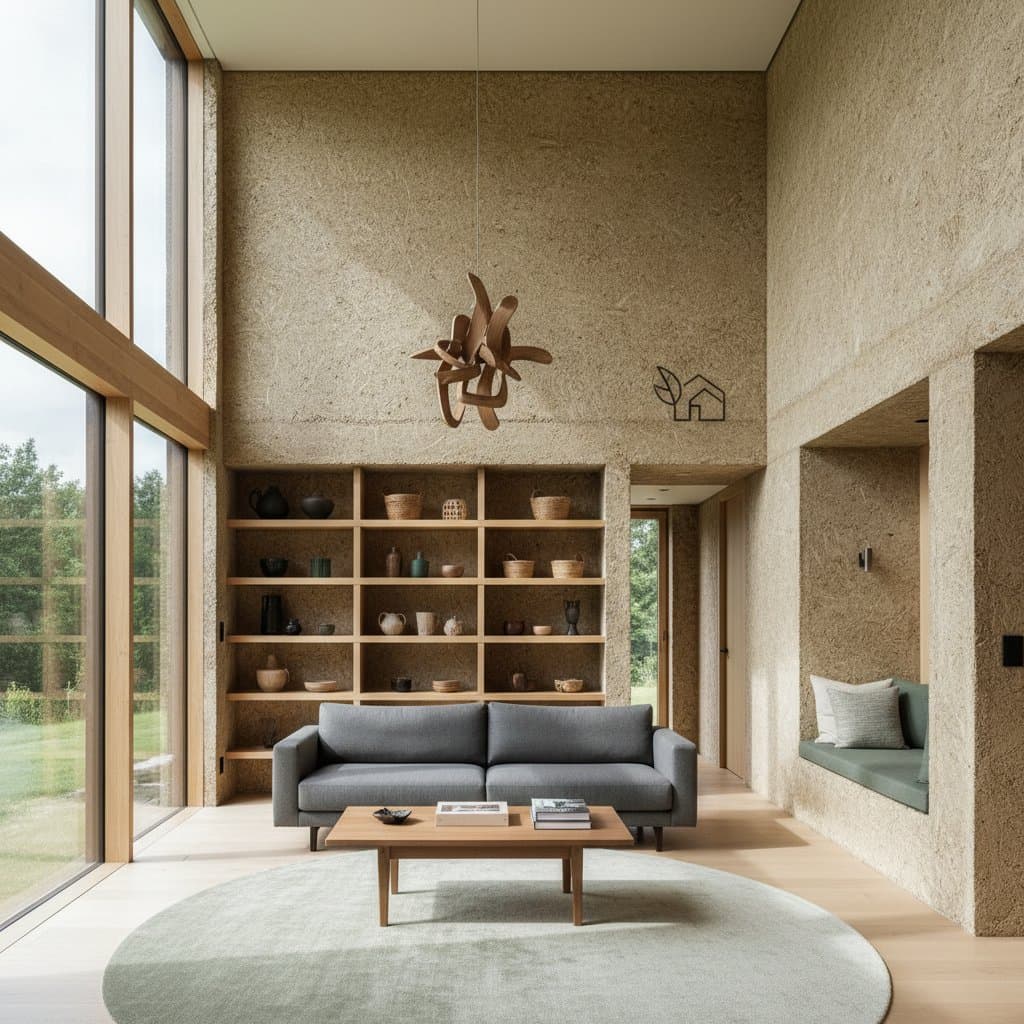
Hempcrete Walls Breathe Life Into Modern Homes
Hempcrete represents a breakthrough in sustainable building materials. This innovative composite combines hemp hurds, lime binder, and water to create walls that offer superior insulation and environmental benefits. As construction practices evolve toward greener solutions, hempcrete emerges as a viable alternative to traditional materials like concrete and brick.
Homeowners and architects appreciate how hempcrete integrates seamlessly into modern designs. Its lightweight nature simplifies installation, while its natural composition ensures long-term durability. This material not only enhances living spaces but also contributes to a healthier planet.
Understanding Hempcrete Composition
Hempcrete derives from industrial hemp, a fast-growing plant that requires minimal water and pesticides. The hurds, or woody inner cores of the hemp stalk, serve as the aggregate. A lime-based binder, often hydraulic lime, binds these hurds together, and water activates the mixture.
The production process avoids high-energy inputs typical of cement manufacturing. Workers mix the components in situ or prefabricate blocks off-site for efficiency. Once applied, hempcrete cures through carbonation, absorbing carbon dioxide from the atmosphere and further reducing its environmental footprint.
This carbon-negative property sets hempcrete apart from conventional building materials. Over its lifecycle, it sequesters more CO2 than emitted during production. Builders select hempcrete for projects aiming to achieve net-zero emissions.
Key Benefits for Energy Efficiency
Hempcrete walls excel in thermal regulation due to their porous structure. This breathability allows moisture to pass through, preventing condensation and mold growth. In temperate climates, homes with hempcrete maintain comfortable indoor temperatures year-round.
Energy savings become evident in reduced heating and cooling demands. Studies indicate that hempcrete buildings use up to 30 percent less energy for climate control compared to standard constructions. Integrated with passive solar design, these walls optimize natural light and warmth.
Fire resistance adds another layer of safety. The lime component renders hempcrete non-combustible, earning high ratings in fire tests. This quality reassures families in wildfire-prone areas or urban settings with strict building codes.
Durability and Low Maintenance
Hempcrete withstands the test of time, with examples from historical lime-hemp plasters enduring centuries. Its flexibility absorbs minor structural shifts without cracking, unlike rigid concrete. Pests find little appeal in the alkaline environment .
Maintenance involves simple repainting or re-liming every few decades. The material resists rot and corrosion, eliminating the need for chemical treatments. Over time, this translates to lower costs and fewer repairs for property owners.
In seismic zones, hempcrete's elasticity provides resilience. Combined with reinforcing frames, it meets modern engineering standards while preserving aesthetic appeal. Longevity ensures that initial investments yield sustained value.
Design Flexibility in Modern Architecture
Architects value hempcrete for its moldability. During construction, teams shape it around curves, arches, or intricate forms that rigid materials cannot accommodate. This versatility suits contemporary styles, from minimalist lofts to eco-villages.
Aesthetic finishes range from smooth renders to exposed textures that highlight the natural fibers. Color options expand through pigments added to the lime mix, allowing customization to match any palette. Interior applications extend to partitions and acoustic panels for enhanced soundproofing.
Integration with other sustainable elements, such as reclaimed wood or solar panels, creates cohesive designs. Homeowners report a sense of well-being from the material's natural humidity control, which stabilizes indoor air quality. This holistic approach elevates living experiences.
Implementation Steps for Builders
Assess site conditions before starting a hempcrete project. Soil type, climate, and local regulations influence feasibility. Consult certified suppliers to source quality hemp and lime, ensuring compliance with building standards.
Prepare the framework with timber studs or metal reinforcements. Mix hempcrete in ratios of approximately 1:2:0.5 for lime, hurds, and water, adjusting for humidity. Apply in layers of 50 millimeters, tamping firmly to avoid voids.
- Erect the structural skeleton to support the wet mix.
- Cast or spray hempcrete into forms, allowing each layer to set partially.
- Cure for 28 days under protective covering to facilitate carbonation.
- Finish with lime plaster or breathable paint for protection.
Professional training ensures optimal results. Workshops teach techniques for large-scale applications, reducing errors and waste.
Environmental Impact and Sustainability
Hemp cultivation regenerates soil, preventing erosion and supporting biodiversity. Unlike tree-based materials, hemp matures in months, minimizing land use. Its production emits 50 percent less CO2 than cement.
Life-cycle assessments confirm hempcrete's role in circular economies. At end-of-life, it crushes easily for reuse as aggregate or returns to soil as a nutrient. This closed-loop system aligns with global sustainability goals.
Communities adopting hempcrete reduce reliance on fossil fuel-derived materials. Incentives like green building certifications encourage widespread use. The material's scalability promises broader adoption in residential and commercial sectors.
Embracing Hempcrete for Resilient Futures
Hempcrete transforms ordinary homes into efficient, enduring sanctuaries. Its blend of performance and eco-consciousness appeals to forward-thinking builders. As awareness grows, more projects showcase its potential to shape sustainable communities.
Consider incorporating hempcrete in renovations or new builds to experience these advantages firsthand. The result is not just a house, but a responsive environment that nurtures well-being. This material paves the way for architecture that harmonizes with nature.