Foundation Alternatives Reduce Costs by 40 Percent in 2025
Building foundations form the essential base of any structure, yet they often represent a significant portion of construction expenses. Traditional concrete methods demand extensive excavation, heavy machinery, and prolonged curing times, which drive up costs and timelines. In 2025, emerging alternatives such as hempcrete, recycled plastic panels, and screw piles offer viable paths to substantial savings while maintaining structural integrity and environmental benefits.
These materials address key challenges in modern construction: rising material prices, labor shortages, and sustainability demands. Homeowners and builders increasingly seek options that balance affordability with performance. By adopting these innovations, projects can achieve up to 40 percent cost reductions without compromising safety or longevity.
Key Foundation Alternatives for 2025
Several materials stand out for their practicality and efficiency in residential and small-scale commercial applications. Each provides unique advantages tailored to different site conditions and project scales.
1. Hempcrete Foundations
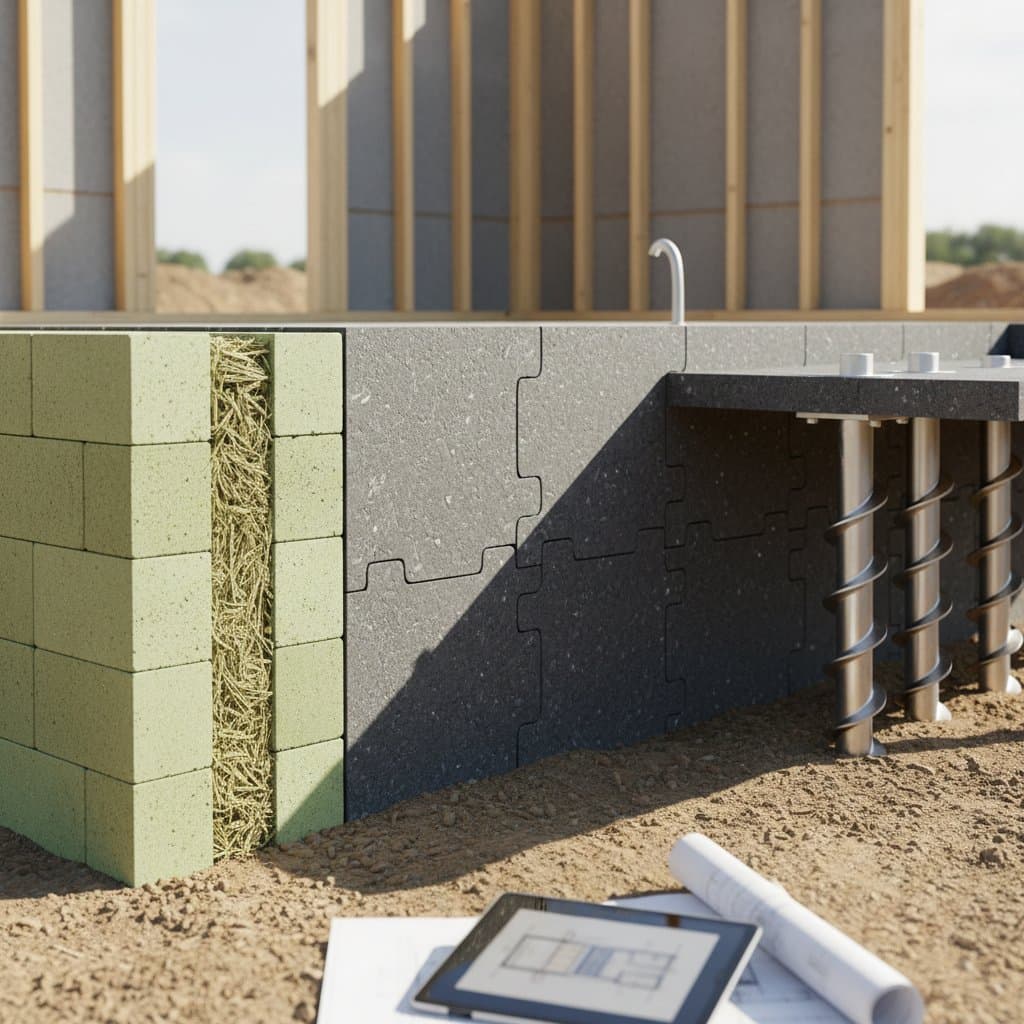
Hempcrete consists of hemp hurds, lime binder, and water, creating a lightweight, bio-based composite. Builders typically form it into blocks or pour it into molds around a structural frame, allowing for flexible application in various climates.
Key Benefits:
- Superior thermal and acoustic insulation properties reduce energy needs.
- Inherent resistance to mold, pests, and fire enhances long-term durability.
- Natural humidity regulation maintains comfortable indoor environments.
- Derived from renewable hemp plants, it supports carbon sequestration during growth.
Installation Considerations:
- Protect from prolonged moisture exposure using sealants or elevated designs.
- Pair with a timber or steel frame to handle compressive loads effectively.
Hempcrete production requires minimal energy compared to concrete, and local sourcing reduces transportation costs. Labor-intensive steps are simplified, enabling teams to complete foundations in days rather than weeks.
2. Recycled Plastic Panels
Recycled plastic panels, often made from high-density polyethylene (HDPE) waste, form interlocking grids or modules that create a stable base. These panels distribute loads evenly and integrate with gravel or soil fills for added support.
Key Benefits:
- Exceptional resistance to rot, chemicals, and UV degradation ensures longevity.
- Lightweight design facilitates easy handling and reduces shipping expenses.
- Fully recyclable at end-of-life, promoting a circular economy.
- Quick assembly minimizes on-site disruption.
Installation Considerations:
- Ensure proper anchoring to prevent shifting in high-wind areas.
- Verify compatibility with local soil types through geotechnical assessments.
The use of recycled materials lowers raw input costs significantly. Panels arrive prefabricated, allowing installation crews to assemble foundations rapidly, often within a single day for small projects.
3. Screw Pile Systems
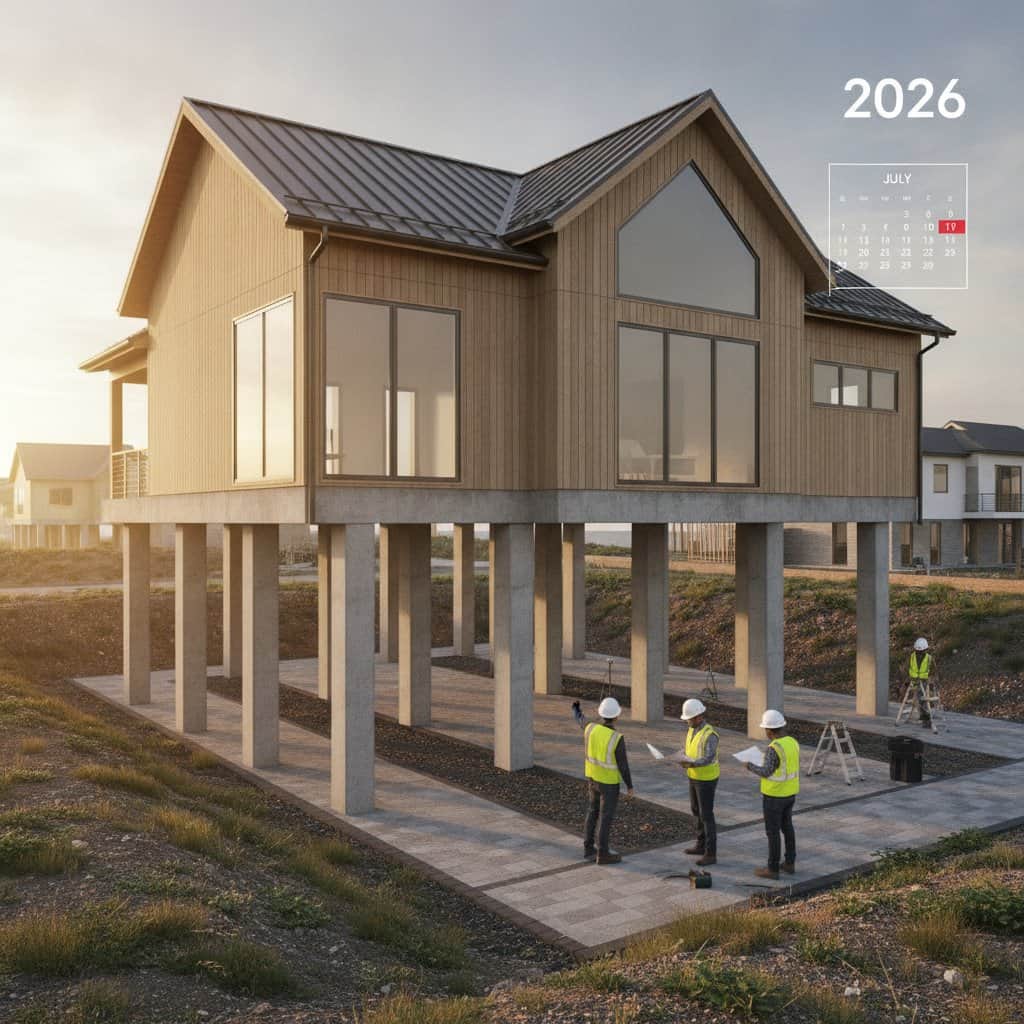
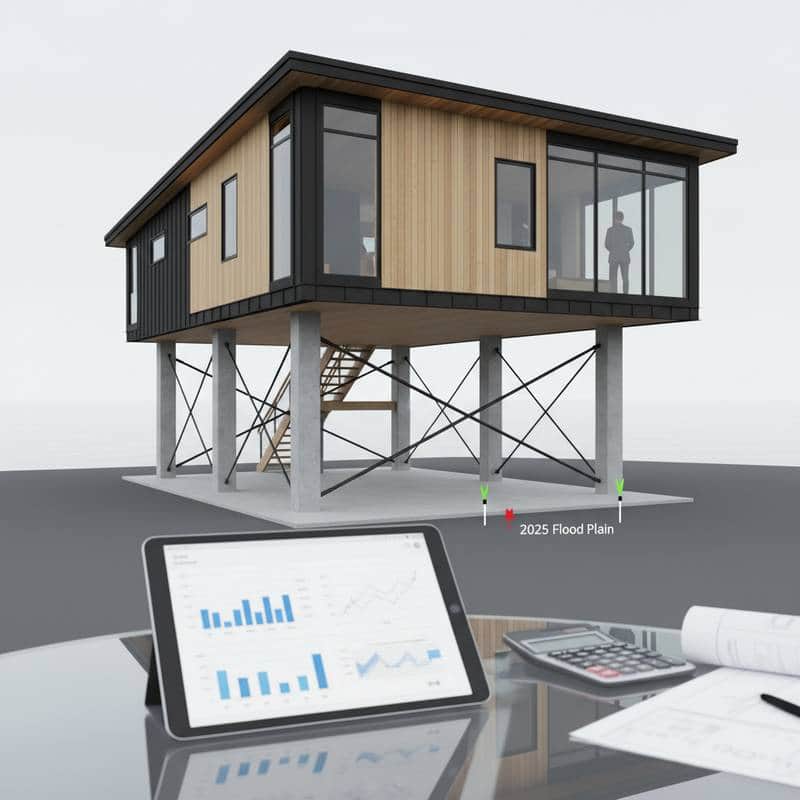
Screw piles involve helical steel anchors twisted into the ground, providing immediate load-bearing capacity without concrete. Systems range from large commercial-grade to compact residential versions, adaptable to diverse terrains.
Key Benefits:
- Eliminates extensive digging, preserving site vegetation and reducing erosion.
- Installation completes in hours, accelerating overall project timelines.
- Reusability supports temporary structures or future relocations.
- Adjustable heights accommodate settling or uneven surfaces over time.
Installation Considerations:
- Apply corrosion-resistant coatings, especially in coastal or acidic soils.
- Engage certified installers to calculate pile depth based on load requirements.
Advancements in manufacturing have made screw piles more accessible and cost-effective for non-industrial use. Their minimal footprint appeals to urban builders facing space constraints.
Mechanisms of Cost Savings
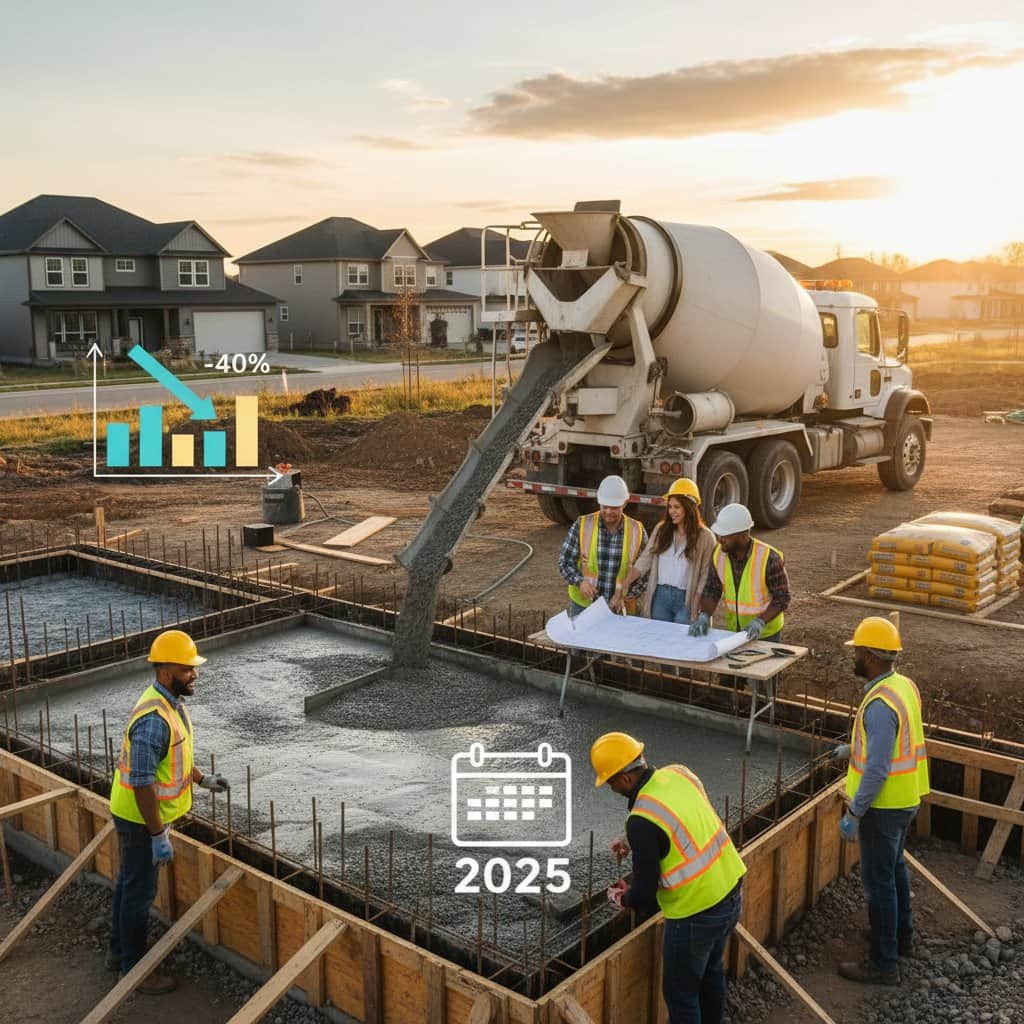
These alternatives target inefficiencies in traditional methods, yielding measurable financial benefits. Concrete foundations require substantial resources from site prep through to finishing, often exceeding budgets by 20 to 30 percent.
Fewer resources mean lower expenses across multiple phases. For instance, screw piles bypass concrete mixing and pouring, eliminating rental fees for pumps and mixers. Hempcrete and plastic panels reduce material volumes by up to 50 percent, as they rely on lightweight components rather than dense pours.
Build times shorten dramatically, cutting labor hours. A standard concrete slab might take seven to ten days to cure fully, whereas alternatives enable framing to begin almost immediately. This acceleration translates to 30 to 40 percent overall savings, particularly valuable for time-sensitive projects.
Waste reduction further bolsters economics. Prefabricated elements generate minimal debris, avoiding landfill fees and disposal logistics. Long-term, integrated insulation in materials like hempcrete lowers utility bills by 15 to 25 percent annually.
Ensuring Durability and Maintenance
Durability concerns often arise when considering non-traditional materials, given concrete's proven track record. However, these alternatives match or exceed concrete's lifespan when installed correctly, backed by engineering standards and real-world applications.
Hempcrete strengthens through carbonation, gaining density over years. Recycled plastic withstands environmental stresses without degradation for decades. Screw piles, when galvanized, resist corrosion effectively in most conditions.
Routine Maintenance Practices:
- Seal hempcrete surfaces annually with breathable coatings to repel water.
- Monitor recycled plastic installations for soil movement and realign as needed.
- Conduct biennial inspections of screw piles, focusing on torque and surface integrity.
These steps require minimal effort, typically a few hours per year, far less than repairing cracked concrete slabs.
Installation Process Overview
Transitioning to alternative foundations involves straightforward steps that empower both professionals and informed homeowners. Preparation focuses on efficiency to maintain momentum.
Step 1: Site Assessment and Preparation
Evaluate soil composition and topography using basic tests or professional surveys. Remove surface obstacles and achieve rough leveling without deep excavation.
Step 2: Material Placement
Position screw piles with torque-monitoring tools for secure embedment. Assemble plastic panels by snapping connections over a compacted base. Erect forms and mix hempcrete on-site for pouring.
Step 3: Securing and Leveling
Use laser levels to fine-tune alignments. Install cross-bracing or anchors to lock components in place, ensuring even weight distribution.
Step 4: Integration and Curing
Allow hempcrete to set for 24 to 48 hours before loading. Connect screw piles and panels directly to framing, permitting immediate superstructure erection.
This process demands standard tools like drills and levels, making it feasible for smaller teams.
Realizing Sustainable Benefits
Beyond immediate savings, these foundations contribute to healthier living spaces and reduced ecological footprints. Enhanced insulation stabilizes indoor temperatures, cutting energy consumption. Breathable materials like hempcrete prevent moisture buildup, improving air quality.
Builders gain flexibility for eco-certifications, appealing to environmentally conscious clients. Homeowners enjoy structures that age gracefully, with lower operational costs over decades. Embracing these options positions projects as forward-thinking investments in both economy and ecology.